From the end of my week long Living Local Tour (which was complete following breakfast on our last morning in Quito) I had another 12 hours until I had to head to the airport for my trip home, and so of course I booked another day tour. This one I had been looking forward to all week: a hike up to the base camp of Cotopaxi Mountain, which actually happens to be a volcano.
Our group consisted of our guide Geraldo, myself and Jenna (my fellow Albertan from our Amazon tour group) one man from Italy, one man from France, and then 5 folks from the UK: two young guys in between high school and university on a gap year of travel, and a husband and wife and her cousin just stating their adventures between Ecuador and the Galapagos.
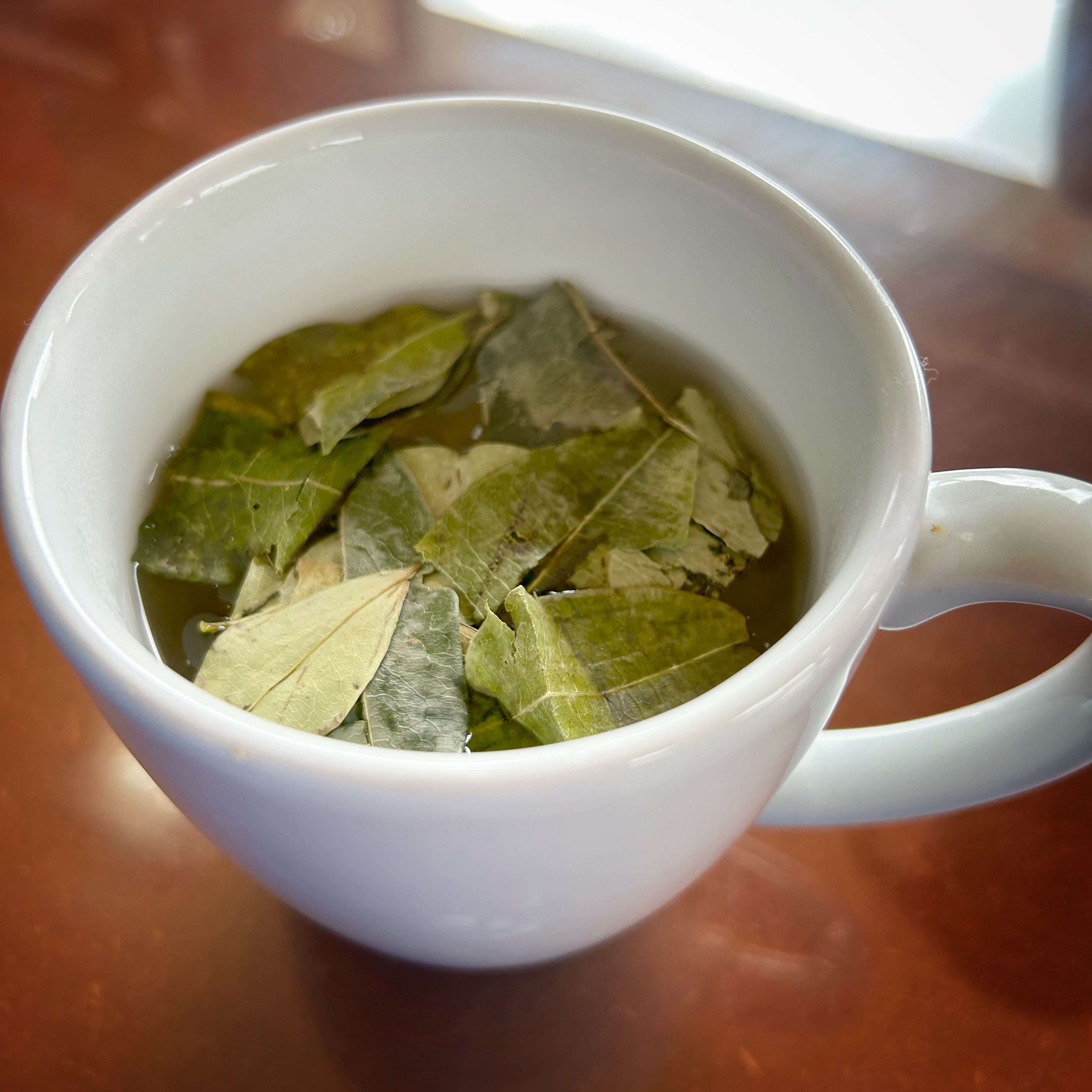
We left early in the morning with a stop about halfway to Cotopaxi National Park to grab breakfast and some Coca Tea. Coca tea is made from coca leaves and is used by the locals to help with altitude sickness. Since I’d spend the last four days only 400m above seal level and was about to head to about 4800m, I thought it would be a very good idea.
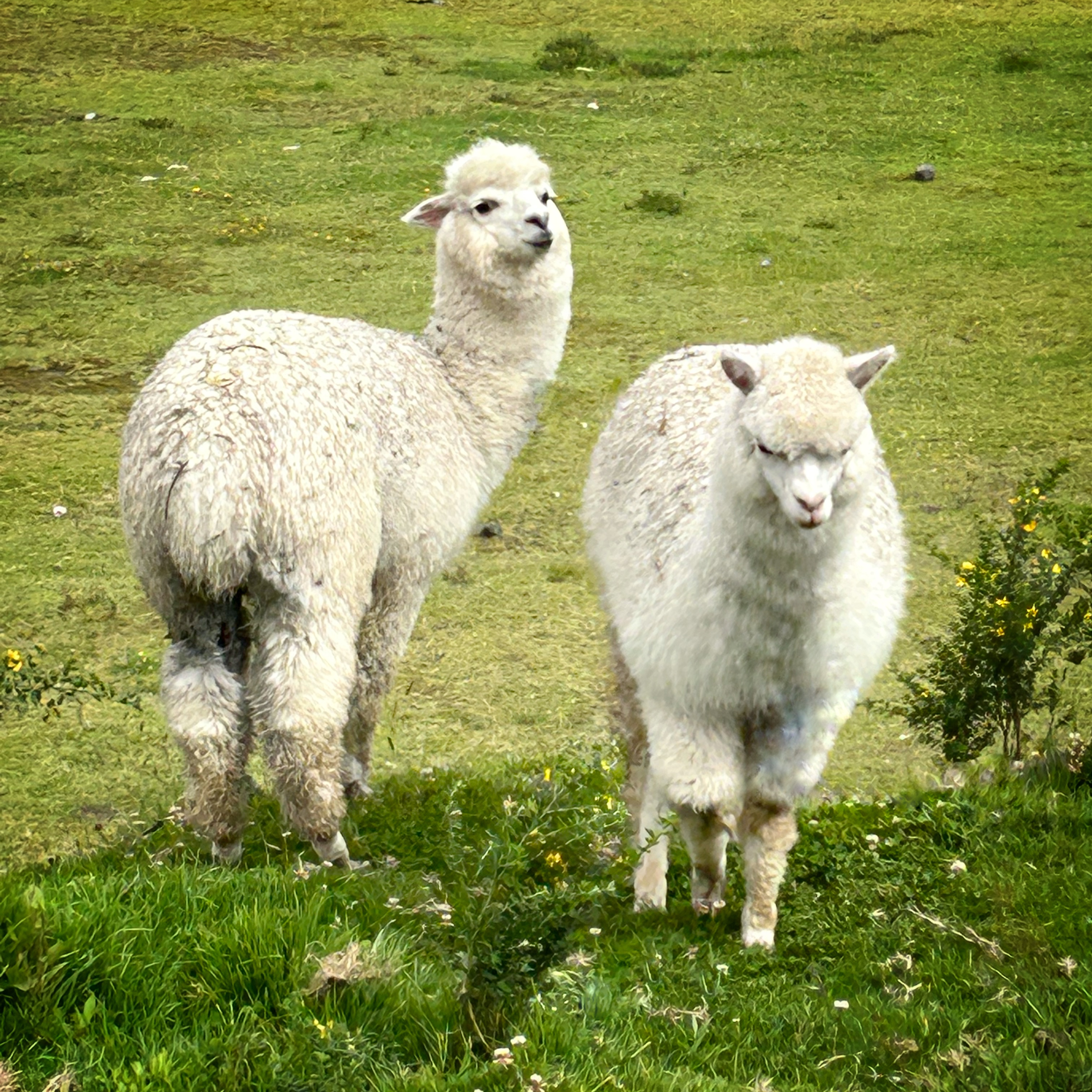
There were also a couple of cute alpacas munching on the grass outside of the cafe we stopped at.
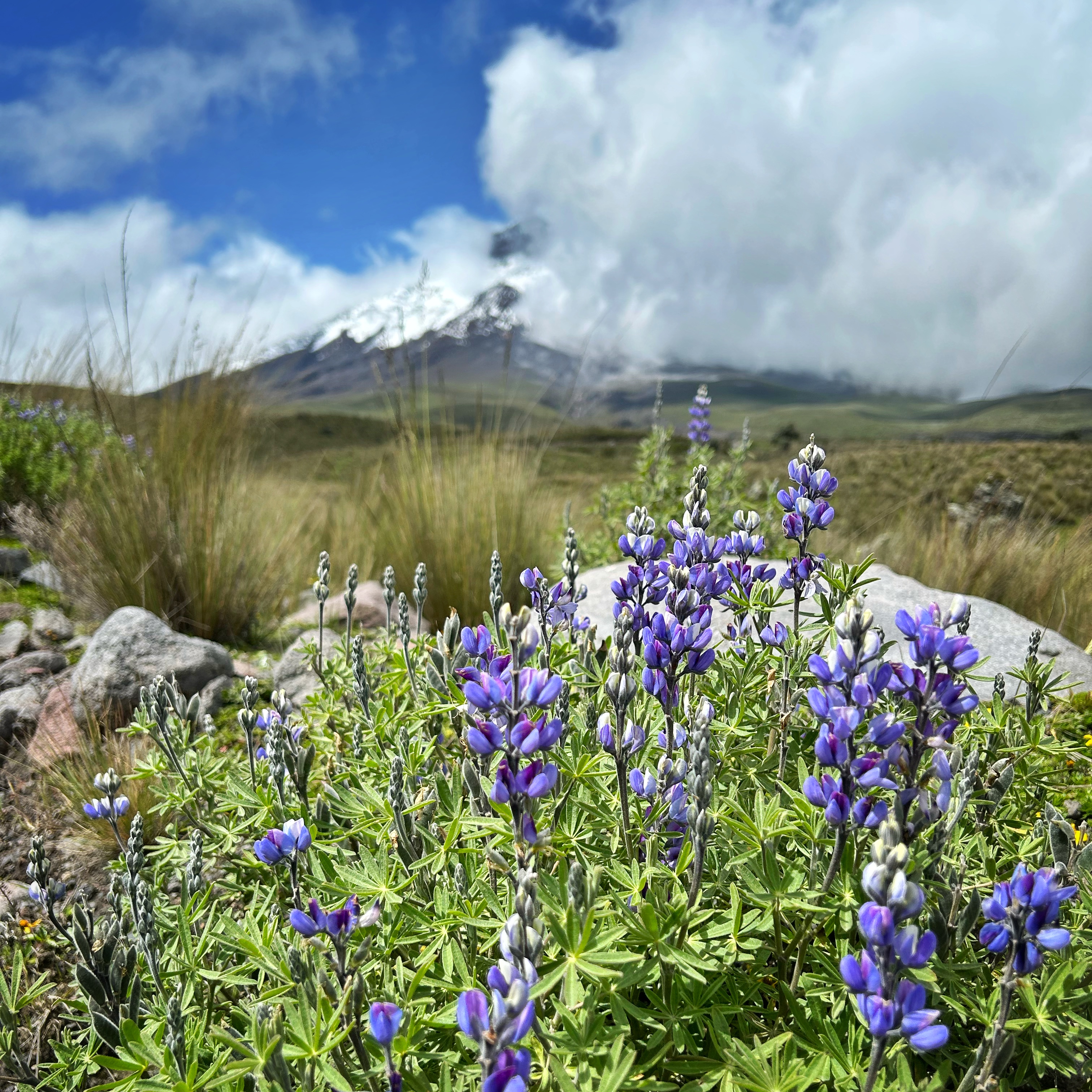
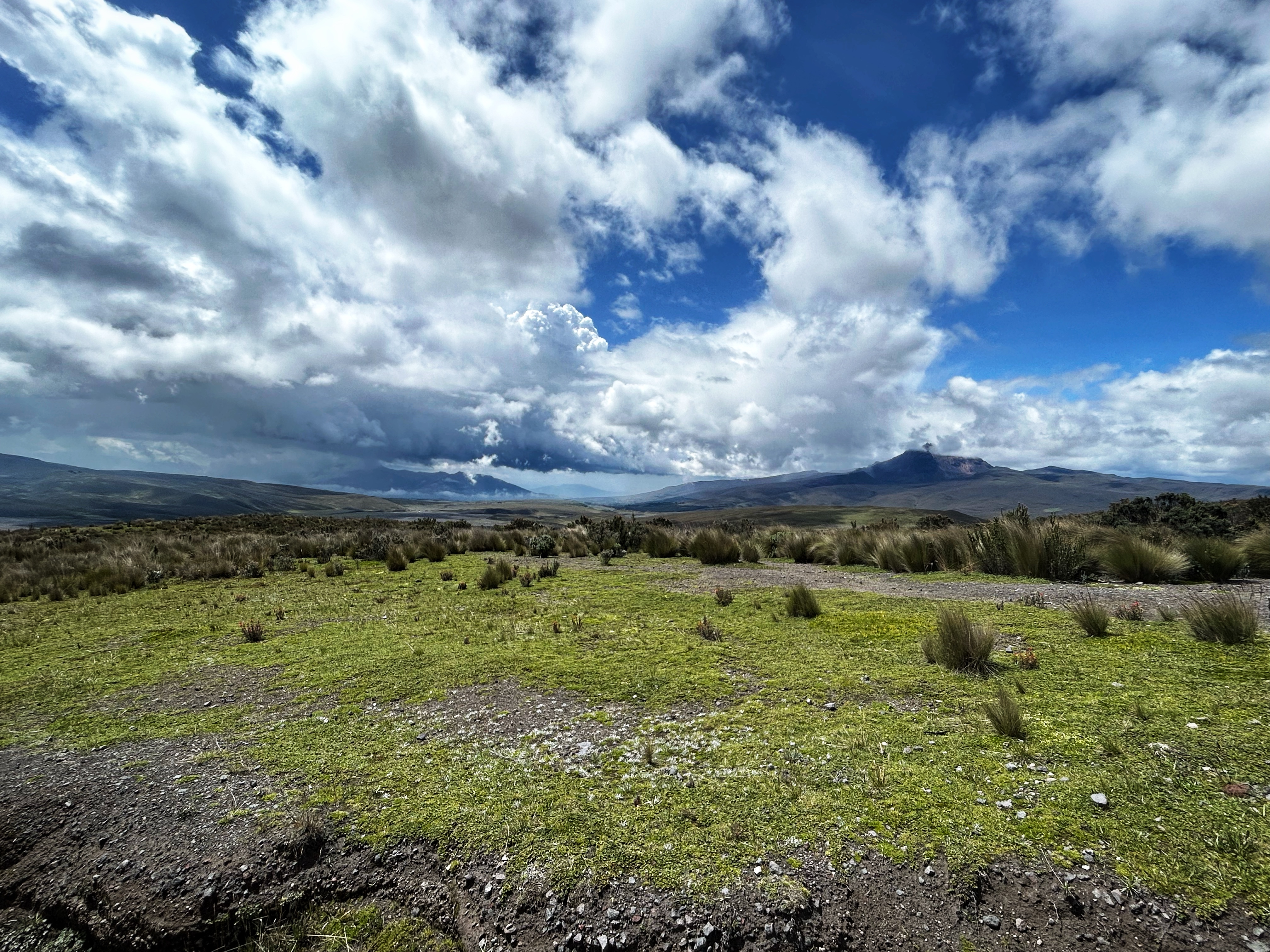
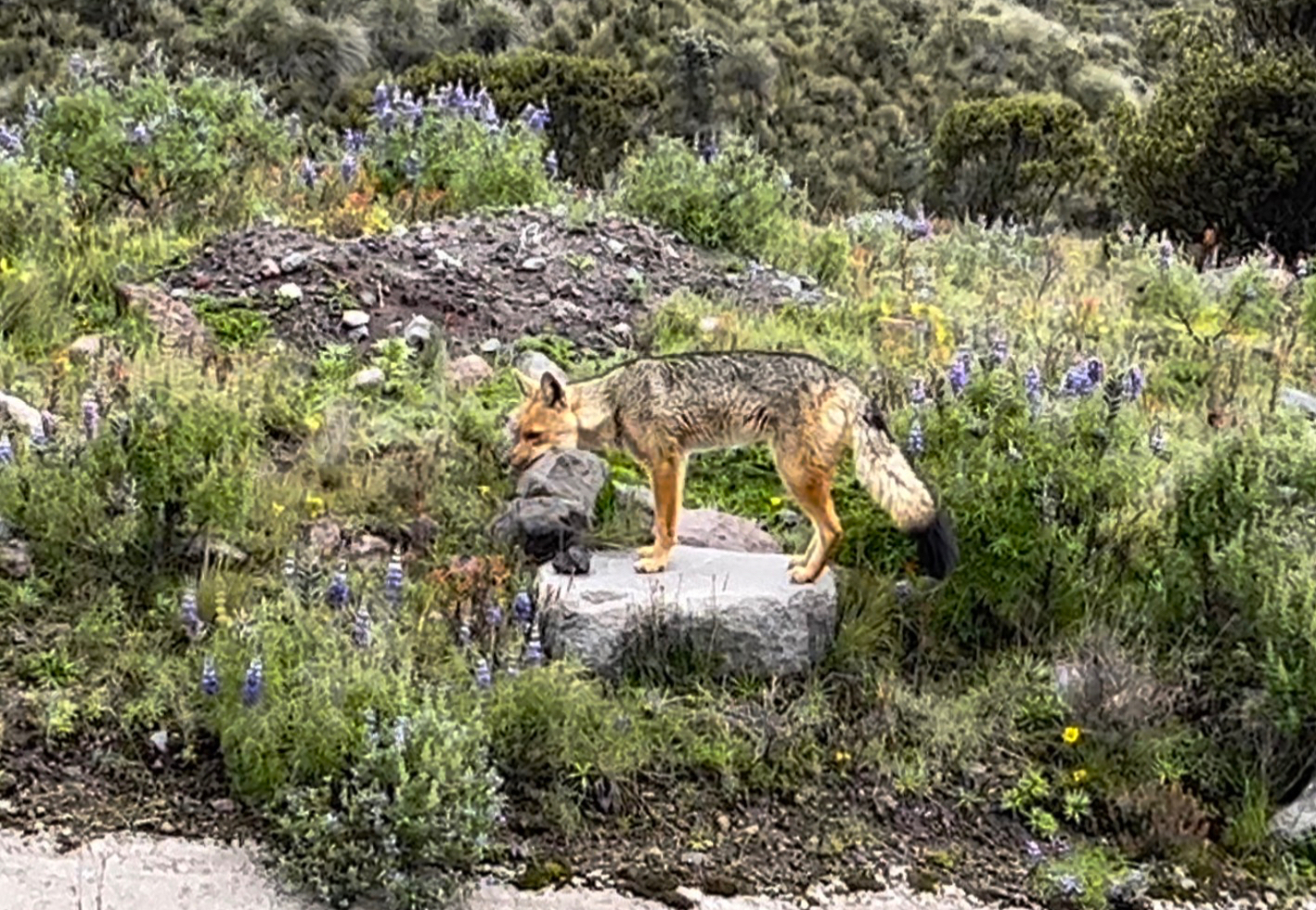
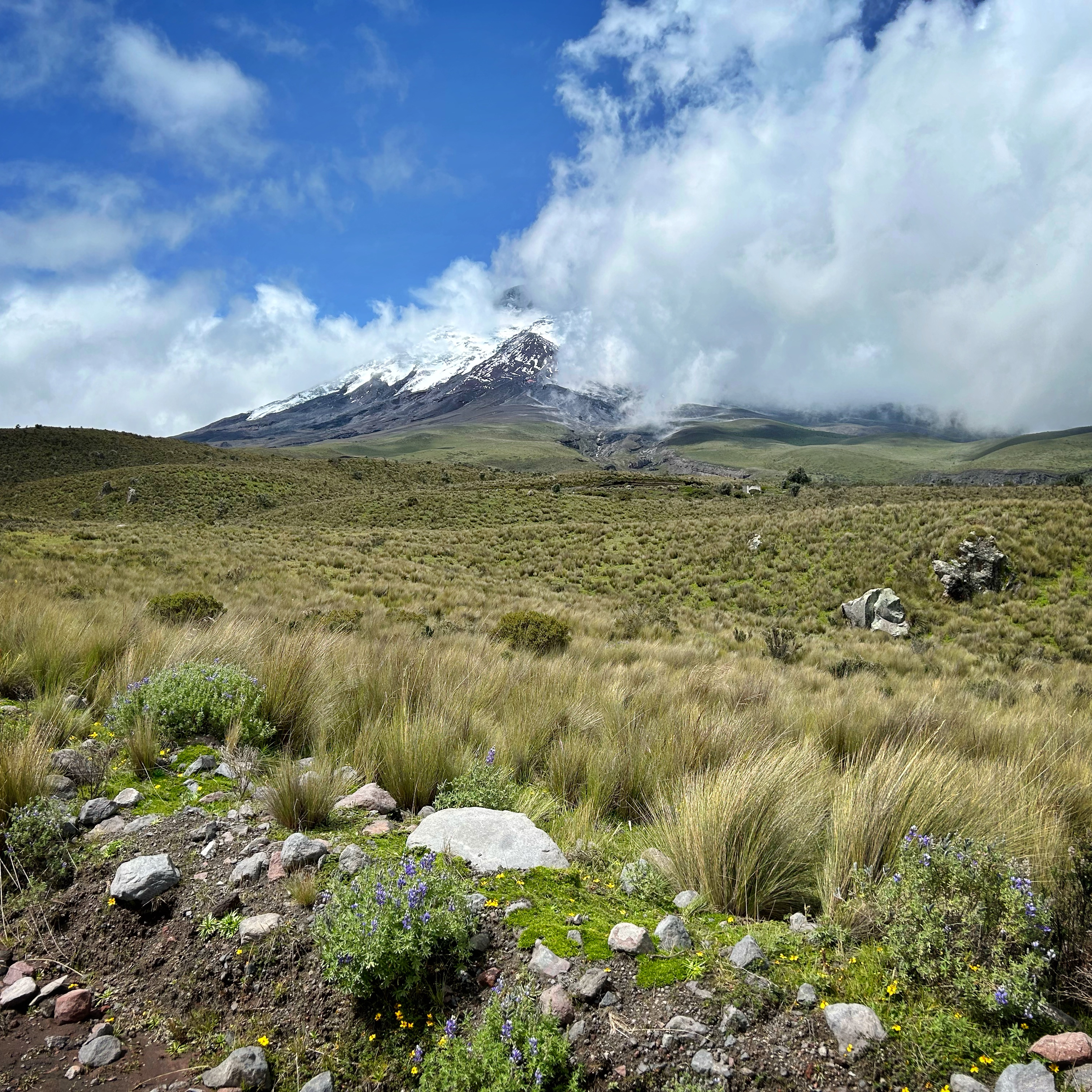
We drove past pine tree forests that reminded me of home that then opened up into wide expanses of flat fields with wildflowers, low shrub, and a neverending sky full of clouds. Cotopaxi National Park is over 82 000 acres and home to incredible wildlife including deer, foxes, condors, bears, jaguars, and wild horses. The park is known for the beautiful Andes mountain range, and we could see the massive Cotopaxi Volcano off in the distance with swirling clouds dramatically sweeping across to first cover the summit and then reveal it again over and over as we approached. On our way in we drove by deer running through the grasses, saw wild horses grazing in the wildflower fields off of the main road, and caught sight of a beautiful fox (the size of a coyote!) near our starting point of our hike wandering into the mist.
In October of last year the volcano started spewing ash and sulphuric gas into the atmosphere again, so hikes to the summit at this time are forbidden. Even though it is considered relatively safe to hike to base camp, Cotopaxi is the most active volcano in Ecuador and so there are multiple seismographs and instruments constantly monitoring the activity of the volcano (we were told it is the most monitored volcano on the planet).
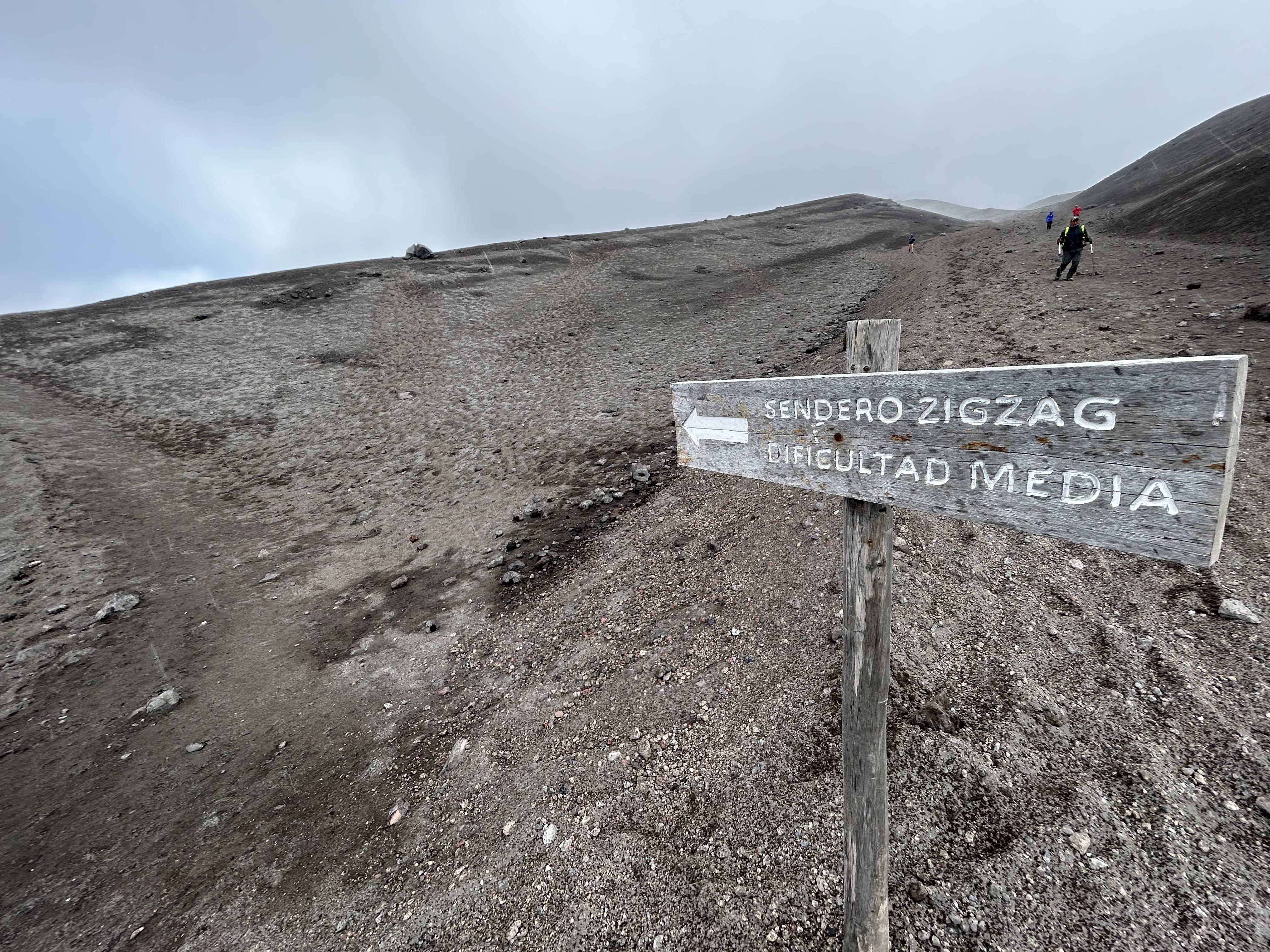
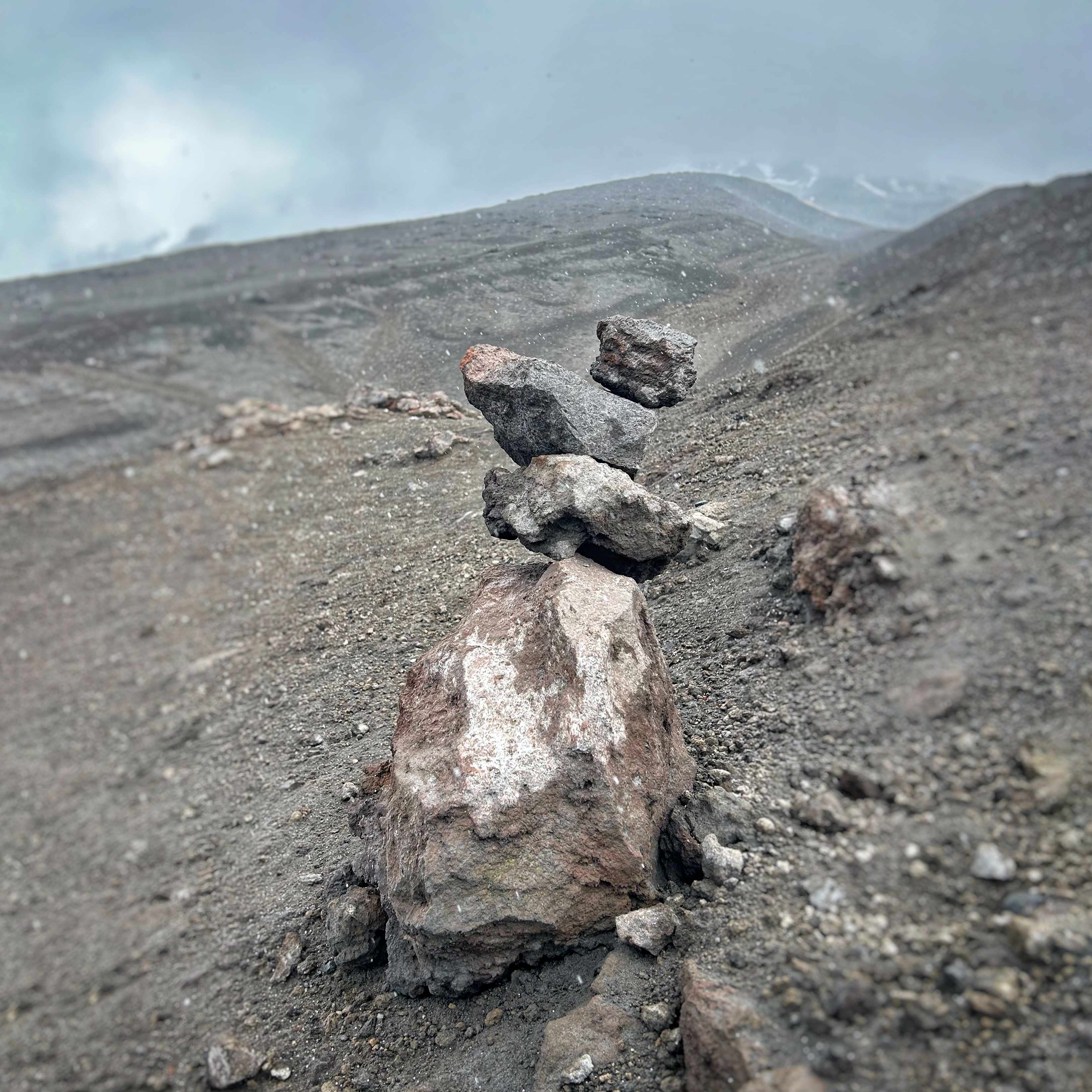
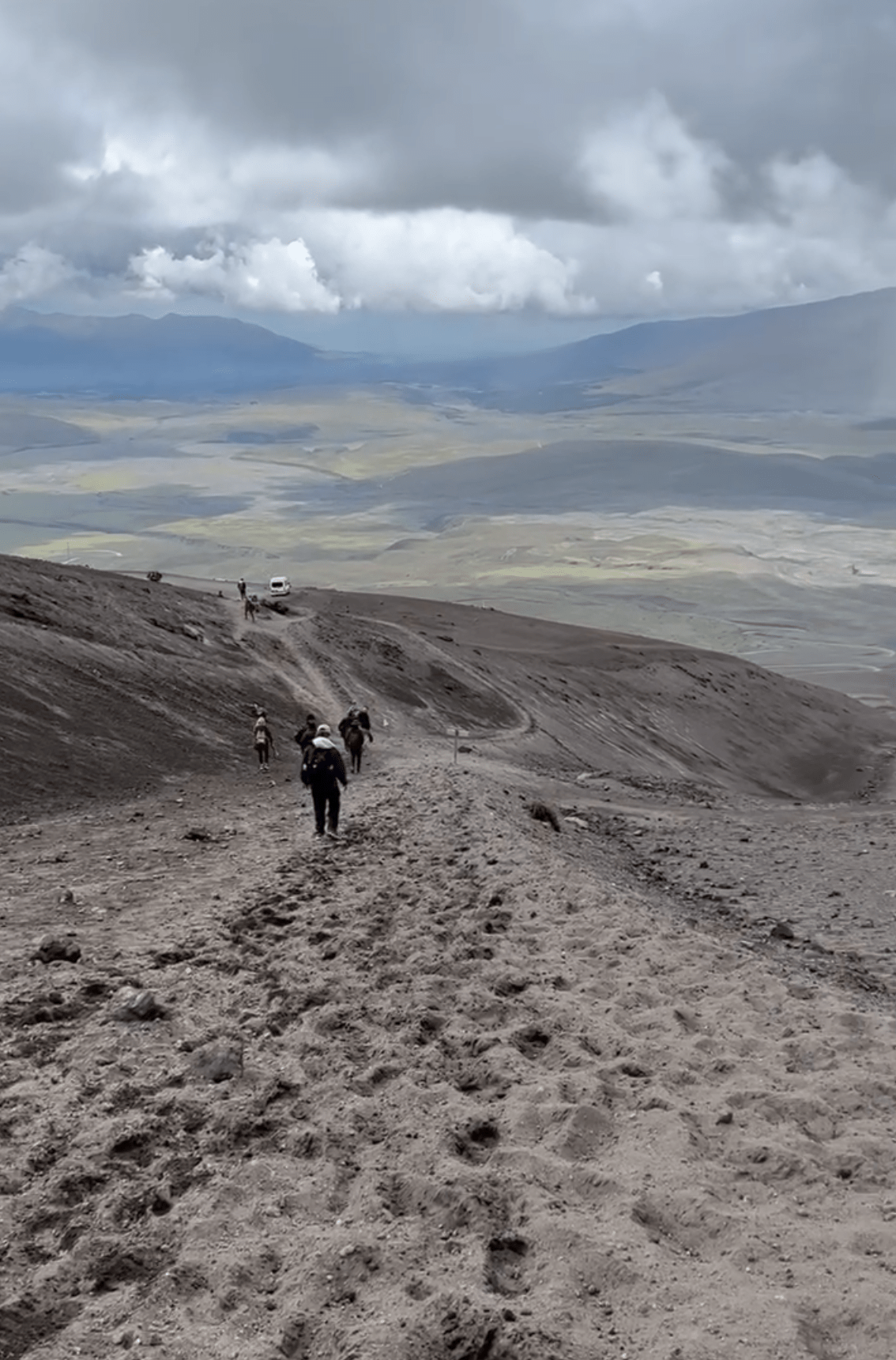
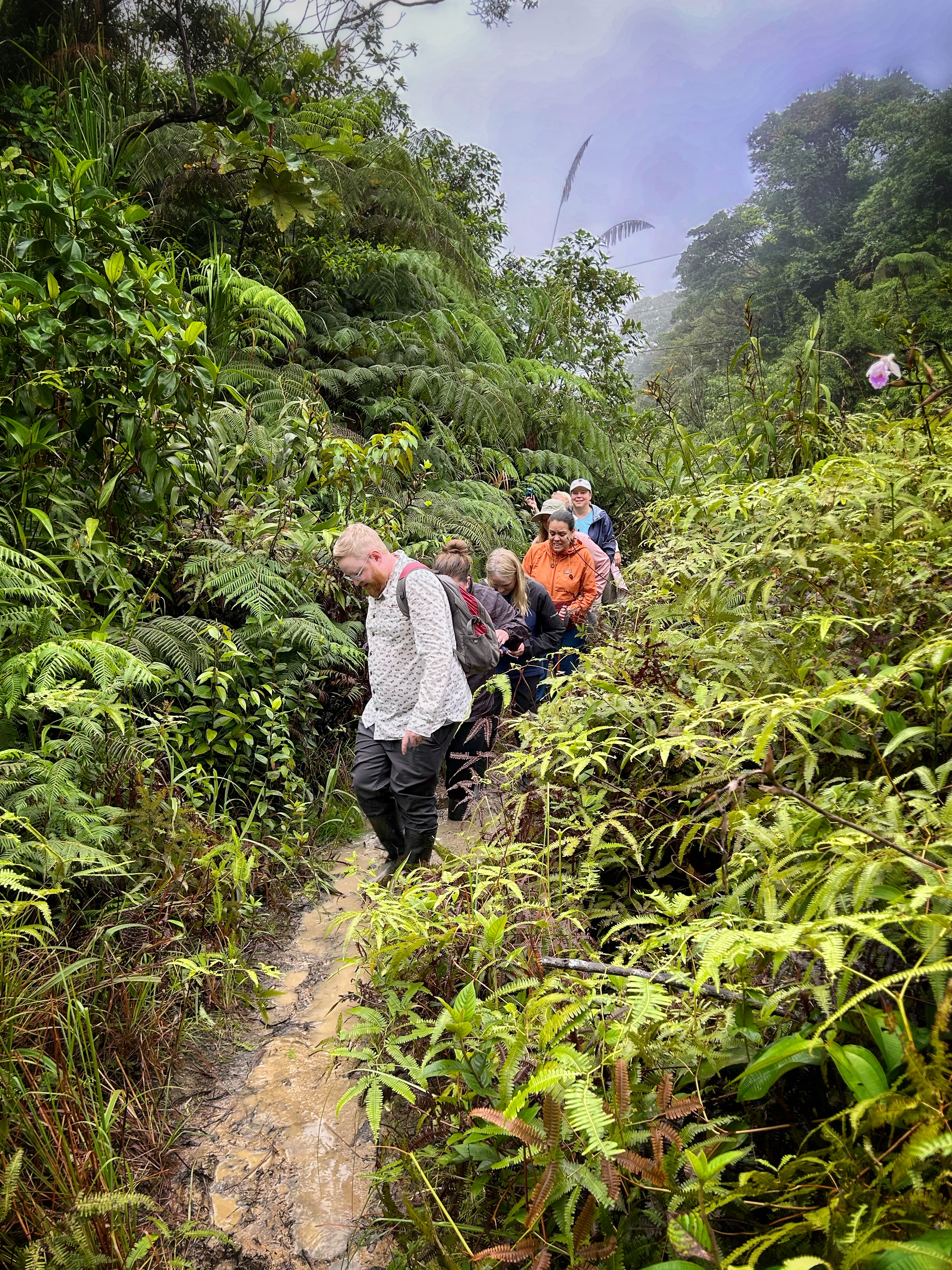
Cotopaxi in the local Quechua language means ‘neck of the moon’, and the terrain going up this mountain is definitely moon-like. The ground is a mix of dirt and sand and shale-like stone, and as we climbed the switchback path, the clumps of little white leafed grasses became fewer and fewer as we rose, until nothing grew, and eventually we even came across some snow.
The hike to base camp takes only about one hour from the parking lot but with the altitude it’s the amount of oxygen you can access to breathe that is the real challenge. Even beginner hikers can do the hike and you don’t need any fancy gear either- although a good rain jacket/windbreaker jacket is important when the wind picks up!
We were reminded regularly to stay hydrated (they recommend 2L over the day) and that “slow and steady” is the best pace, especially if you are not acclimatized to the altitude.
There was a faint smell of sulphur and occasionally you could see small curls of grey smoke winding their way into the white cloud cover above the peak of the mountain.
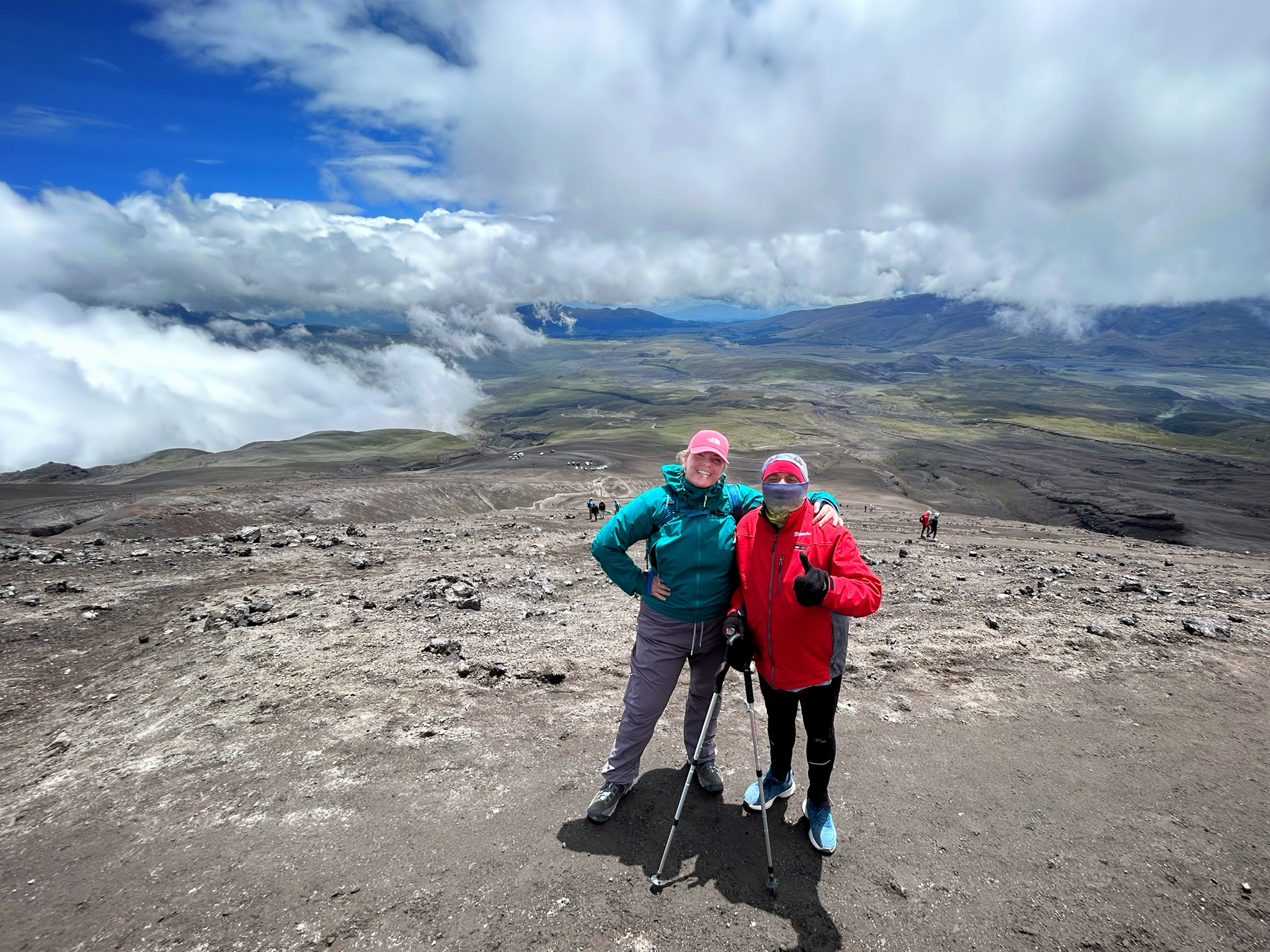
Me and our guide Geraldo
One of the Brits in our group got about halfway before needing to head back to the bus with a bad headache that worsened as they climbed higher. Jenna wasn’t feeling well either and at one point had decided to turn around as well, but as our group got nearer the top we looked down to see Jenna slowly making her way up the path with our guide Geraldo as her patient and supportive company until she made it all the way to base camp to join us!
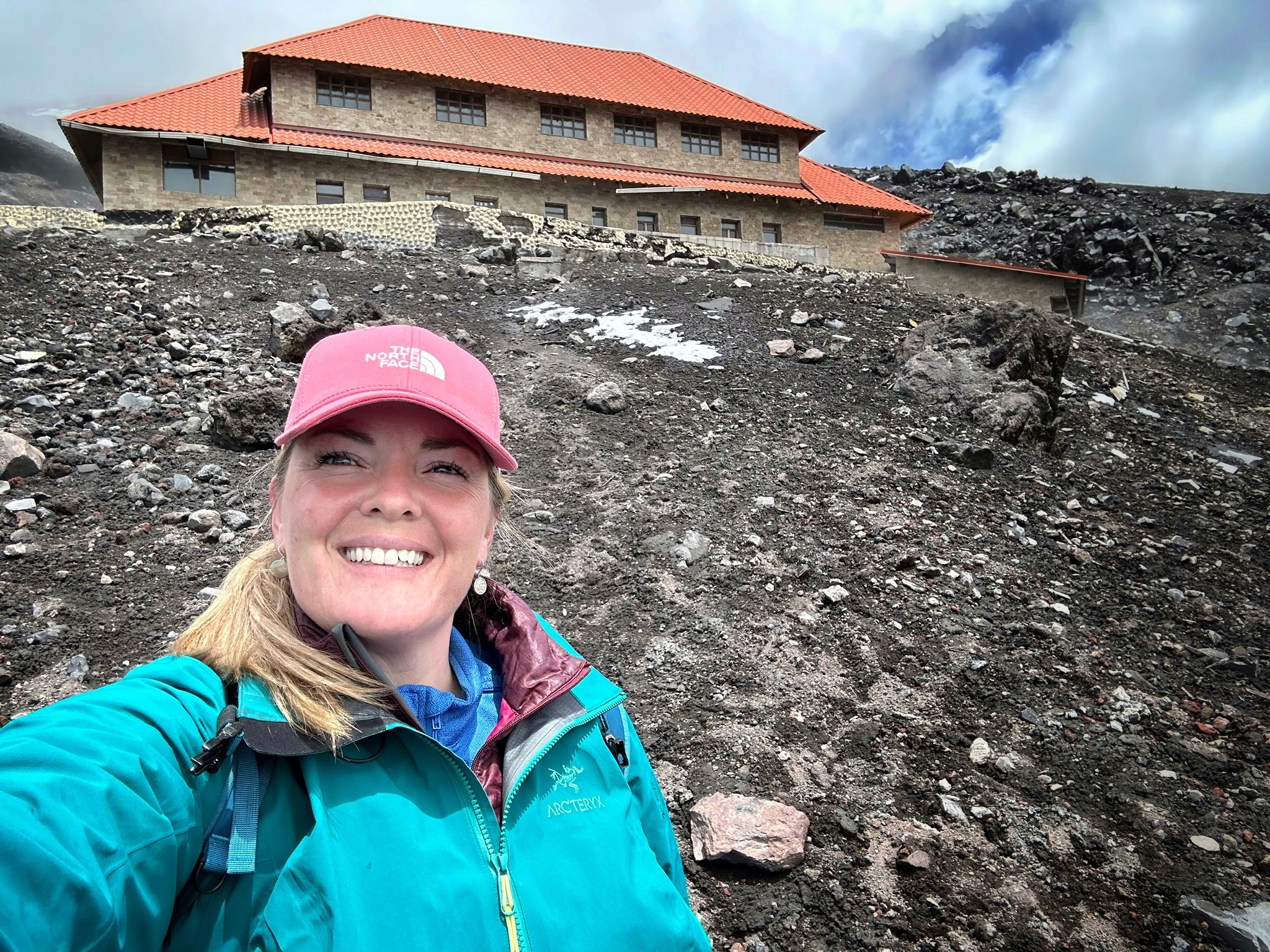
Jose Rivas Refuge is the official name of the Base Camp building is at 4810m above sea level), and a couple of the guys went a little higher to the edge of the glacier to get to the 5000m mark, but were not allowed any further up the volcano than that for safety reasons.
If you wanted to hike to the summit of Cotopaxi (when it’s not actively erupting, of course), it’s not only highly recommended to stay in Quito for several days to acclimatize to the altitude, but you must hire a guide for the hike. You arrive at base camp in the afternoon to rest in the hostel-like accommodations before a late night / early morning (aka 1:00AM) departure for the summit and the strenuous 6-8 hour hike to the summit, followed by a 3-4 hour descent. Gear is often included along with some training (ie. how to wear/use crampons and ice-axe techniques). They say that only 72% of hikers successfully summit Cotopaxi. I’ve also come across the advice from several people that a good training hike is summiting a little mountain you might have heard of: Mt. Kilimanjaro…. !!
Base camp feels like a Scandinavian Lodge made of wood and brick with a beautiful orange roof you can see from quite a distance on a clear day. The ceiling is draped in international flags, and the windows along the back are covered in stickers from around the world. Groups of hikers grab tables and order refreshments, taking selfies and drinking hot chocolate and coca tea.
Here you can buy hot drinks, bottled water, both salty and sweet snacks, and even purchase stickers and badges as souvenirs! They also have an official stamp with the Cotopaxi Mountain icon and altitude that you can stamp in your passport or on a piece of paper as a memento.
We ordered hot chocolate and stamped scrap pieces of paper and our notebooks to document our achievement.
The hot chocolate was the best I’ve had in a very very long time. Served in a comforting clay mug, it was piping hot, perfectly sweet and lightly spiced with cinnamon and chiles. It felt as celebratory as champagne and we toasted each other, clinking mugs and taking photos.
I would love to say that the view was amazing but by the time we reached base camp the clouds had moved across again and we could barely see anything.
The descent is a pretty straight line back down, and with more of the soft sandy earth below your feet, I discovered that if I walked down the right side of the trail it was like stepping onto a escalator or elliptical machine with the sand letting me sink with each step- the easiest, most pleasant ‘down’ of a hike I can remember. (And with my whitewater-broken toe, this was a major coup!)
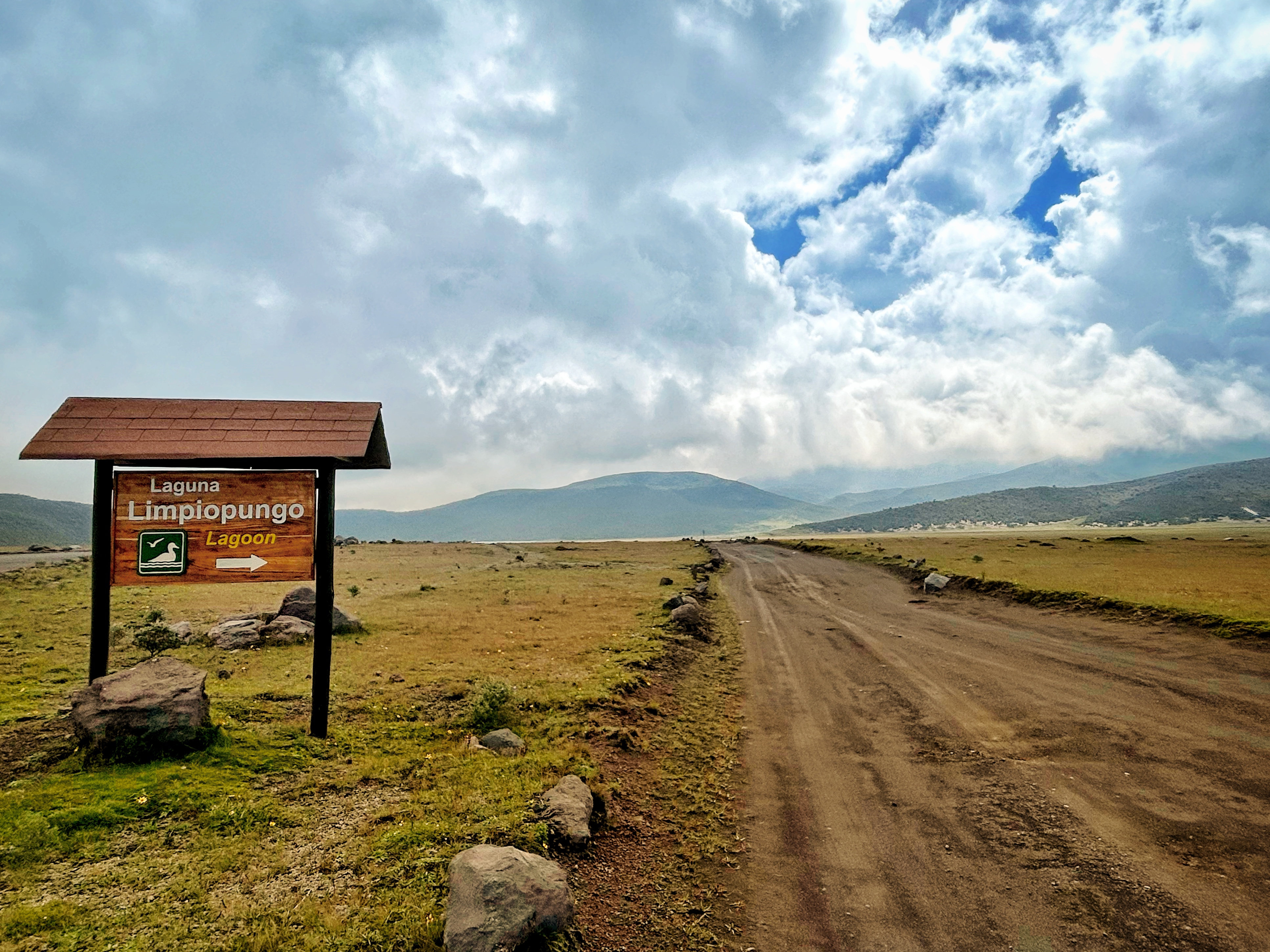
In no time at all we were back at the van, and given the option to mountain bike down the 40-50 minutes to the lake we had passed on the way to the volcano.
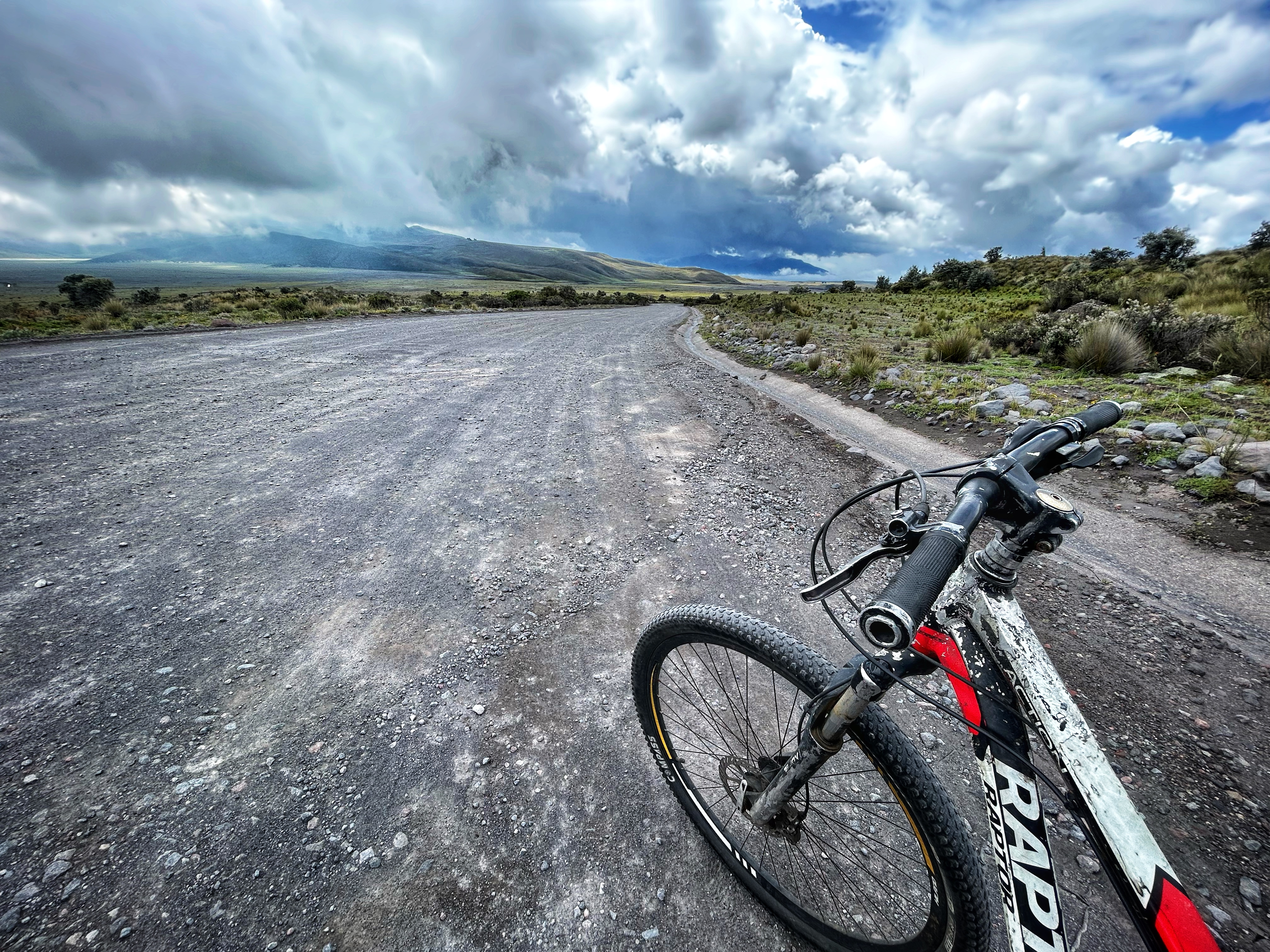
I am definitely not a mountain biker and wasn’t sure if I’d enjoy it, but seeing the majority of the group jump at the chance I figured that I may never have this opportunity again so I strapped on a helmet, hopped on a bike, and started down the VERY bumpy, rocky, and winding road to the lake.
About half of the group were incredibly comfortable on the bikes and flew by me down the hill and out of sight. The other half ended up behind me, going slowly with the van following close behind them.
Within about ten minutes I was completely on my own and carefully maneuvering over gravel and mud, ruts and turns through these stunning alpine meadows with wildflowers galore, and views of mountains all around.
It was incredibly quiet and truly peaceful. Occasionally I stopped to simply stand in wonder of the landscape around me that was both stunning and somehow familiar, reminding me of the Rocky Mountains back home.
During one of these glorious pauses in my ride, two huge foxes appeared out of the grasses across the road and started wandering in my direction. I switched my camera to video mode and watched as they came closer, with one crossing the road to my side and curiously walking almost right up to me!
Please excuse the poor quality screenshot of the video here. But know they were majestic.
I felt an indescribable combination of awe and disbelief and delight at coming across them in this wilderness. As the one fox crossed to my side of the road and towards me there was an additional, albeit minor feeling of fear in their casual, confident approach, and at one moment I wondered if there were more on the ledge behind me and I was about to be ambushed from behind (Perhaps I had velociraptors on my mind?). This of course was not the case and as soon as I straightened up and looked behind me the fox quickly crossed back to the other side and up into the wild flowers.
I will never forget the magic in that moment.
Once the two foxes had fully walked out of sight I continued on the road to meet the first half of my group at the lake, with the last few cyclists and the van arriving about 15 minutes after me.
We stopped at a beautiful little restaurant outside the park and were served a delicious lunch with soup (of course), chicken, beans, rice, and vegetables.
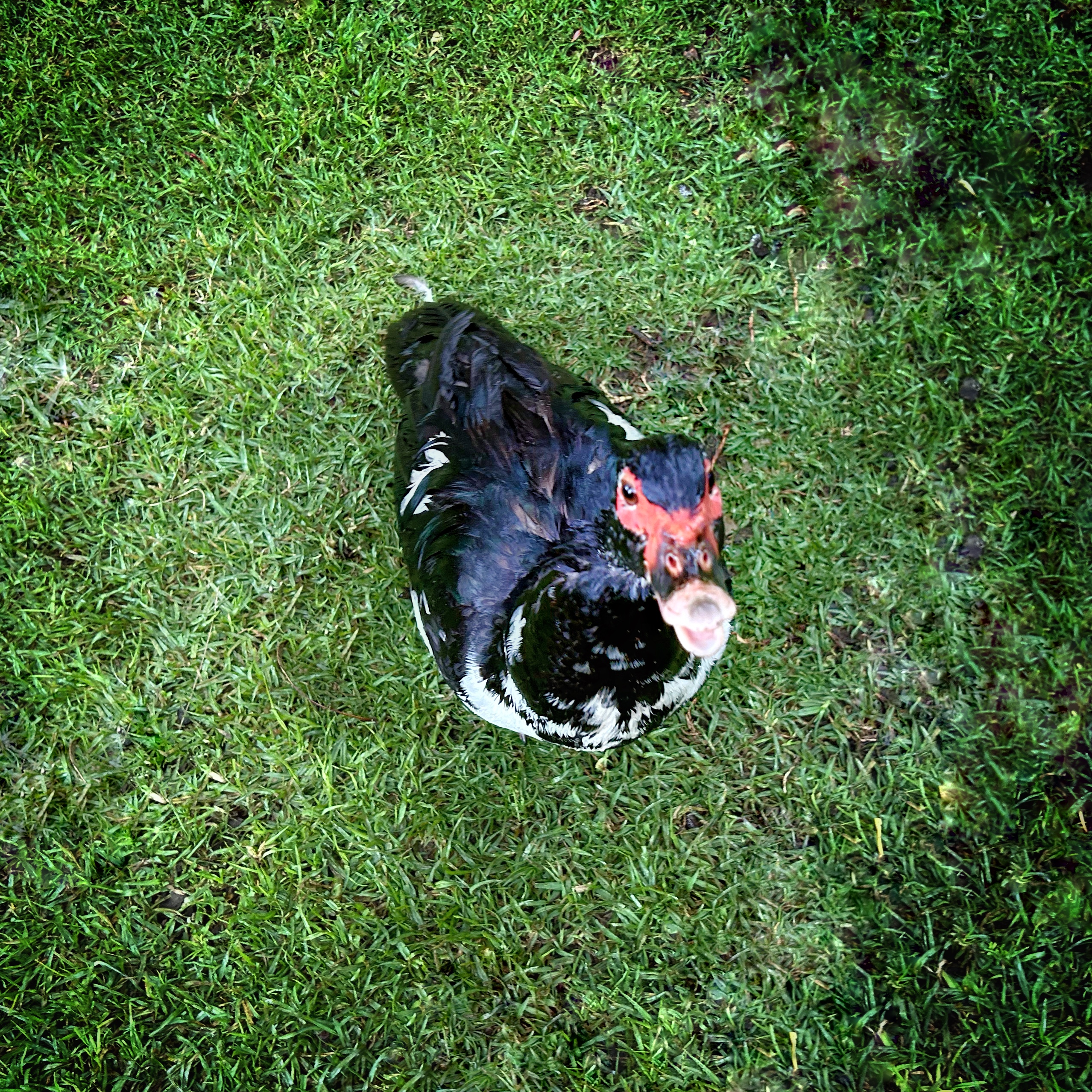
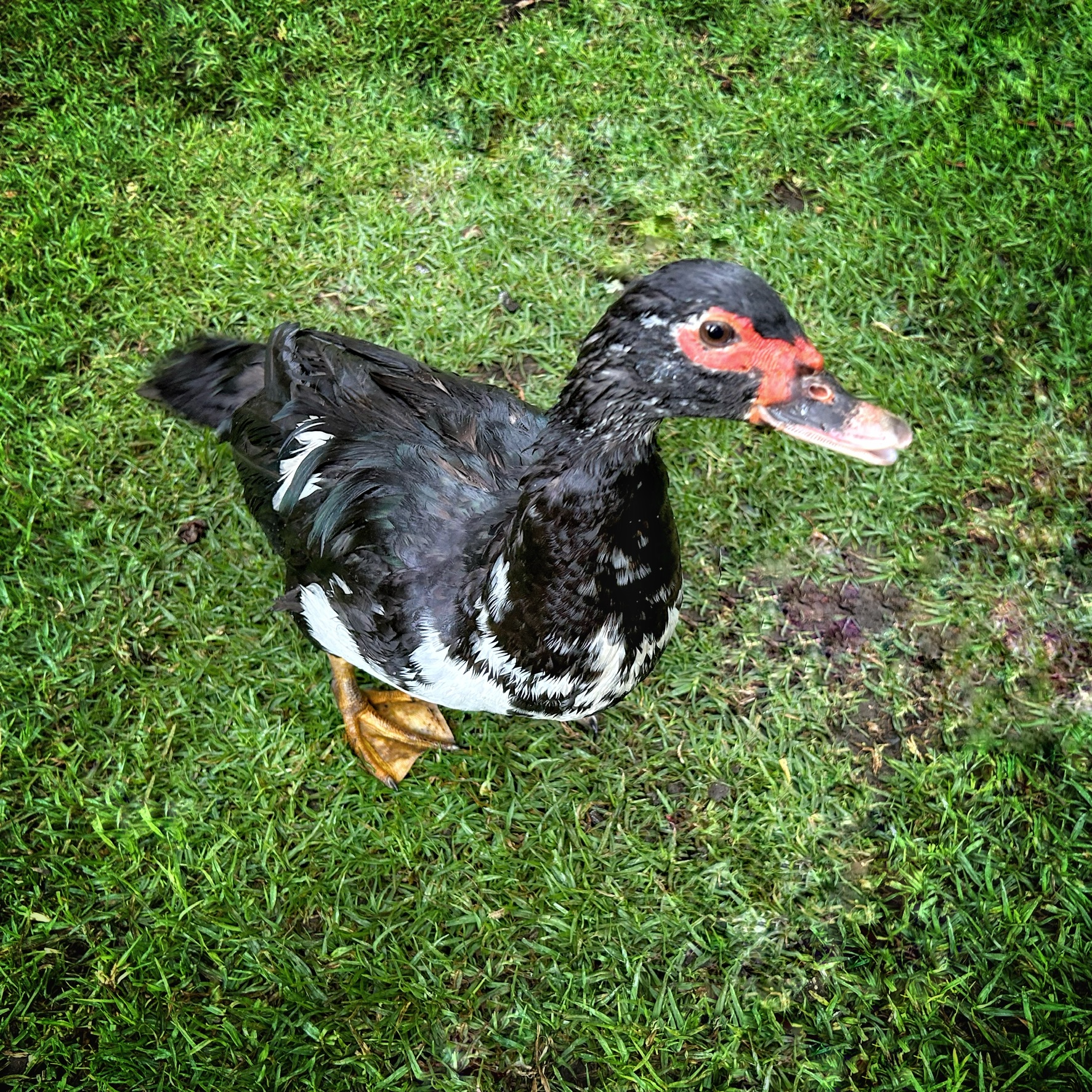
The yard outside had alpacas, ducks, and dogs, and we were invited to feed strips of carrot to the alpacas. It wasn’t too long before a couple of friendly ducks wandered over and waddled around our ankles, quacking excitedly. Upon receiving carrot pieces themselves, I swear they wiggled their tails like dogs wagging in delight.
It rained a bit while we were at the restaurant and was a bit misty as we climbed back into the bus for the ride back to Quito. It was a quiet drive with most of us napping against the fogged up windows.
Another unforgettable day in Ecuador and another awesome adventure had.
And just like that, the trip was nearing its end, I had just enough time to enjoy a hot shower at the hotel, repack my bags for the flights home, and an early arrival at the airport to peruse the possible last-minute souvenirs to bring home.
And this concludes a trip full of adventures that I will never forget.
We left the cool and rainy spring weather of Quito early Saturday morning to head into the the Napo Province with an elevation drop of almost 1000 meters and a temperature increase of about 20 degrees for our stay in the Amazon rainforest at a hostel-type housing with a local family.
We were a group of 15- made up of four Canadians (myself and an Edmontonian named Jenna representing Alberta, two Ontarians: Faraneh and Siobhan), seven Americans (buddy travellers Angie and Adrianne, solo travellers Ryann, Mattie, and Laura, and mother/daughter duo Donna and Kat), Fiona from Switzerland, Enis from Turkey via Chicago, and Dacia and Adam -a couple on an incredible extended honeymoon- moving to Australia from the UK. Matti -from New Jersey- was my awesome roommate for two of the nights of the trip, and she brought a camera with a zoom lens practically the entire length of her suitcase with the goal of catching some good shots of wildlife in the jungle. We were one person short of a full group because Nydia, a friend of Angie and Adrienne, got sick upon arrival in Quito, so sadly she had to stay behind.
A long bus ride (6+ hours) and many stops & local salty snacks later (plantain chips, anyone?!), we pulled up to the end of a jungle walkway over a stream and surrounded by hanging vines and elephant ear-sized monstera leaves with a misty drizzle of rain.
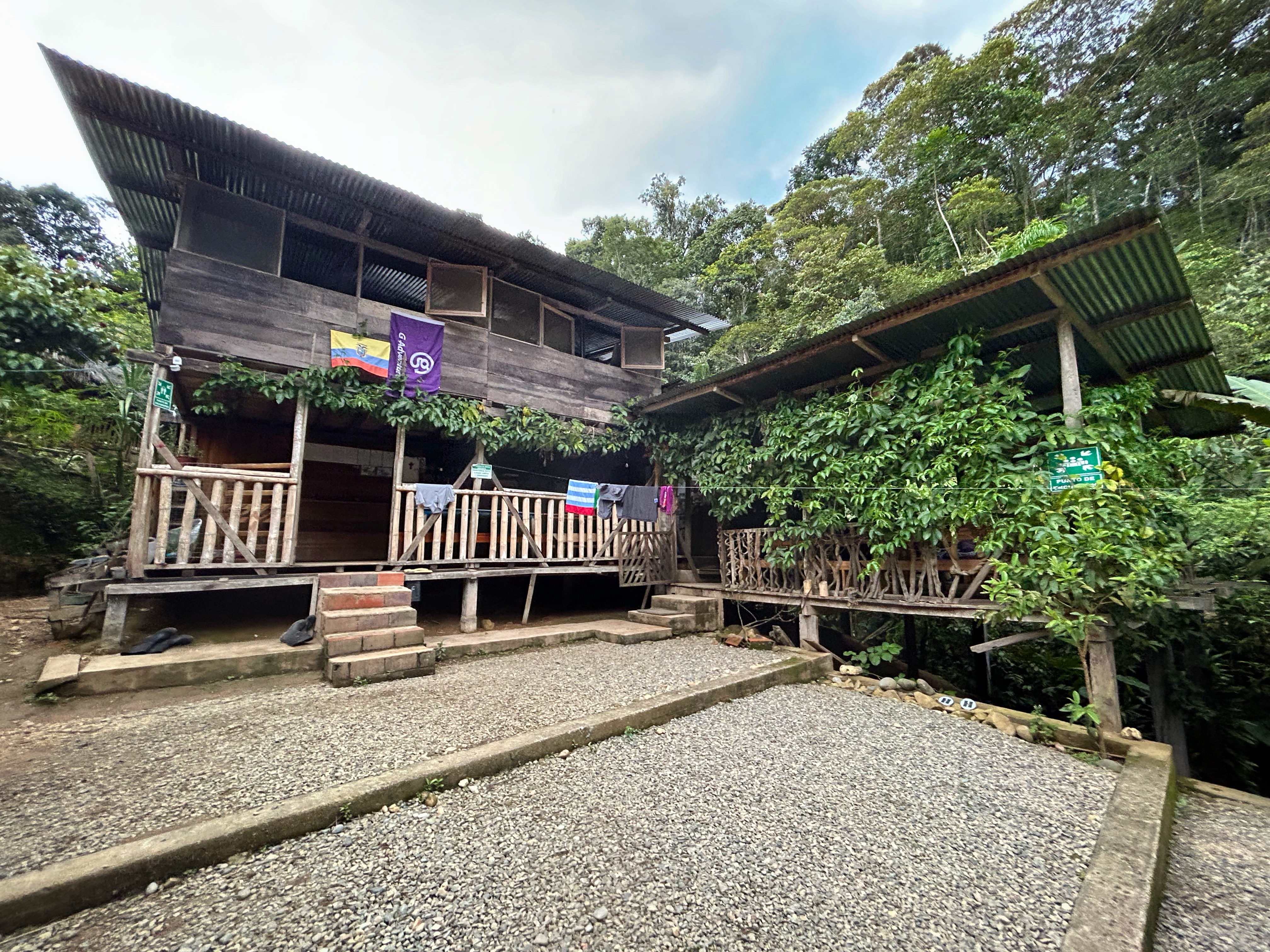
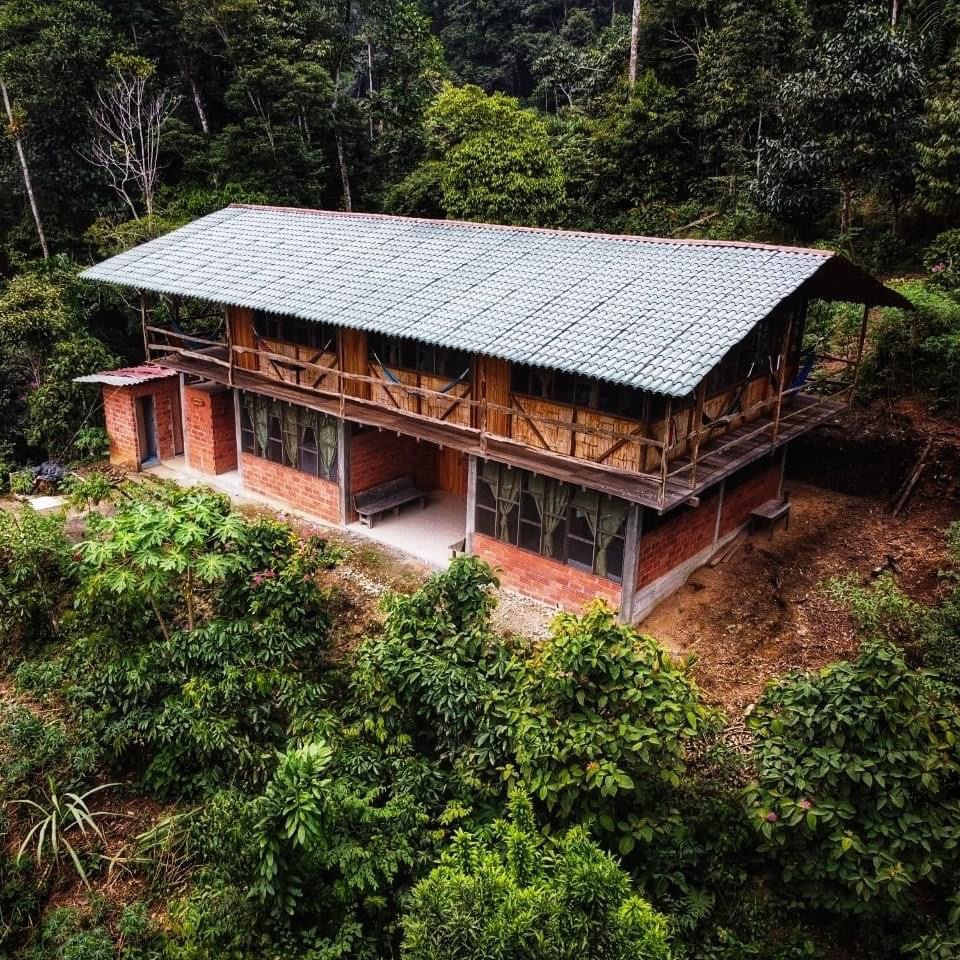
We walked up the pathway to find ourselves at the wonderful Cabañas Pimpilala, the home of Delfin and Estella, their family, and staff of local workers who host multiple groups like us year round.
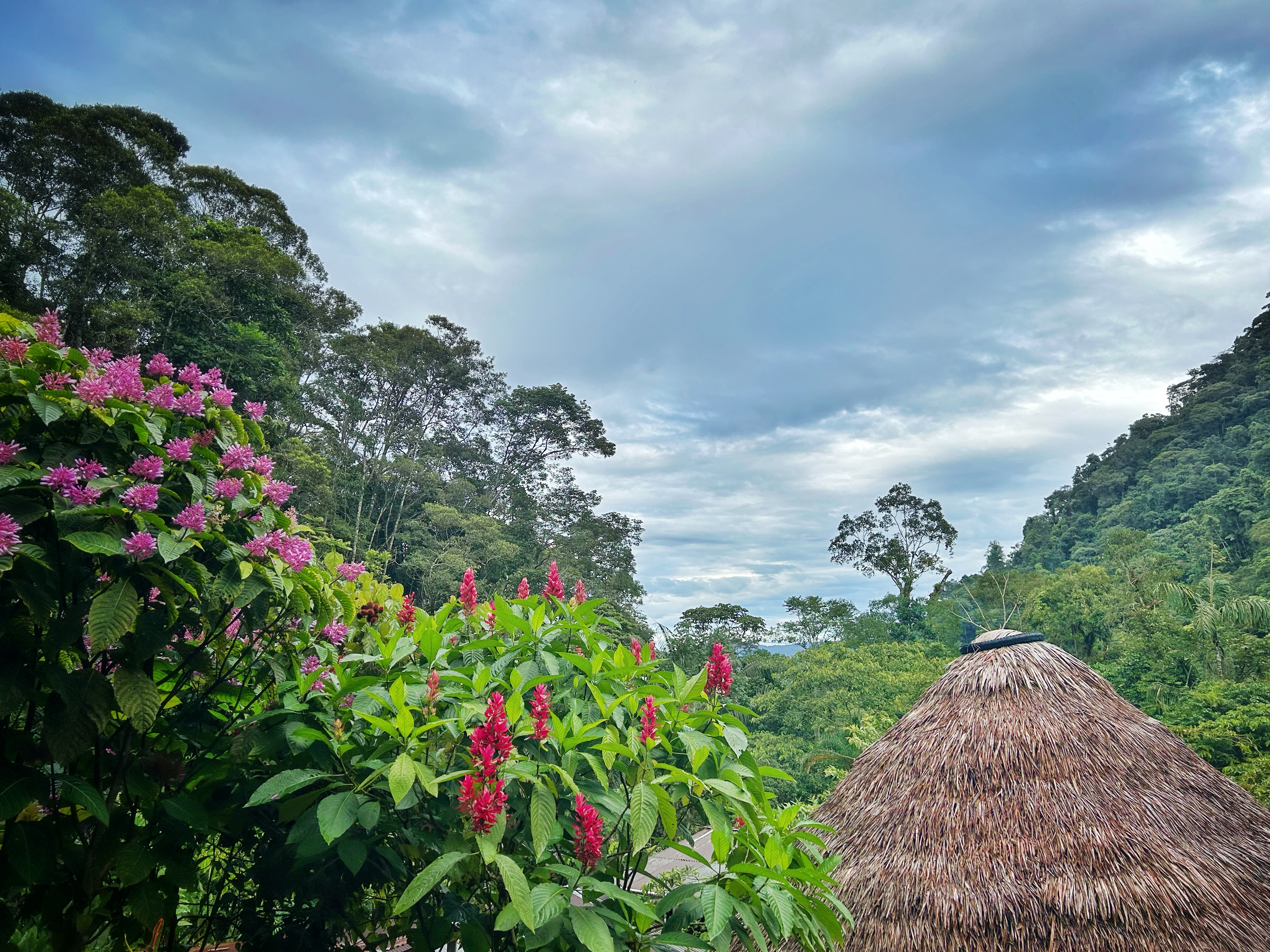
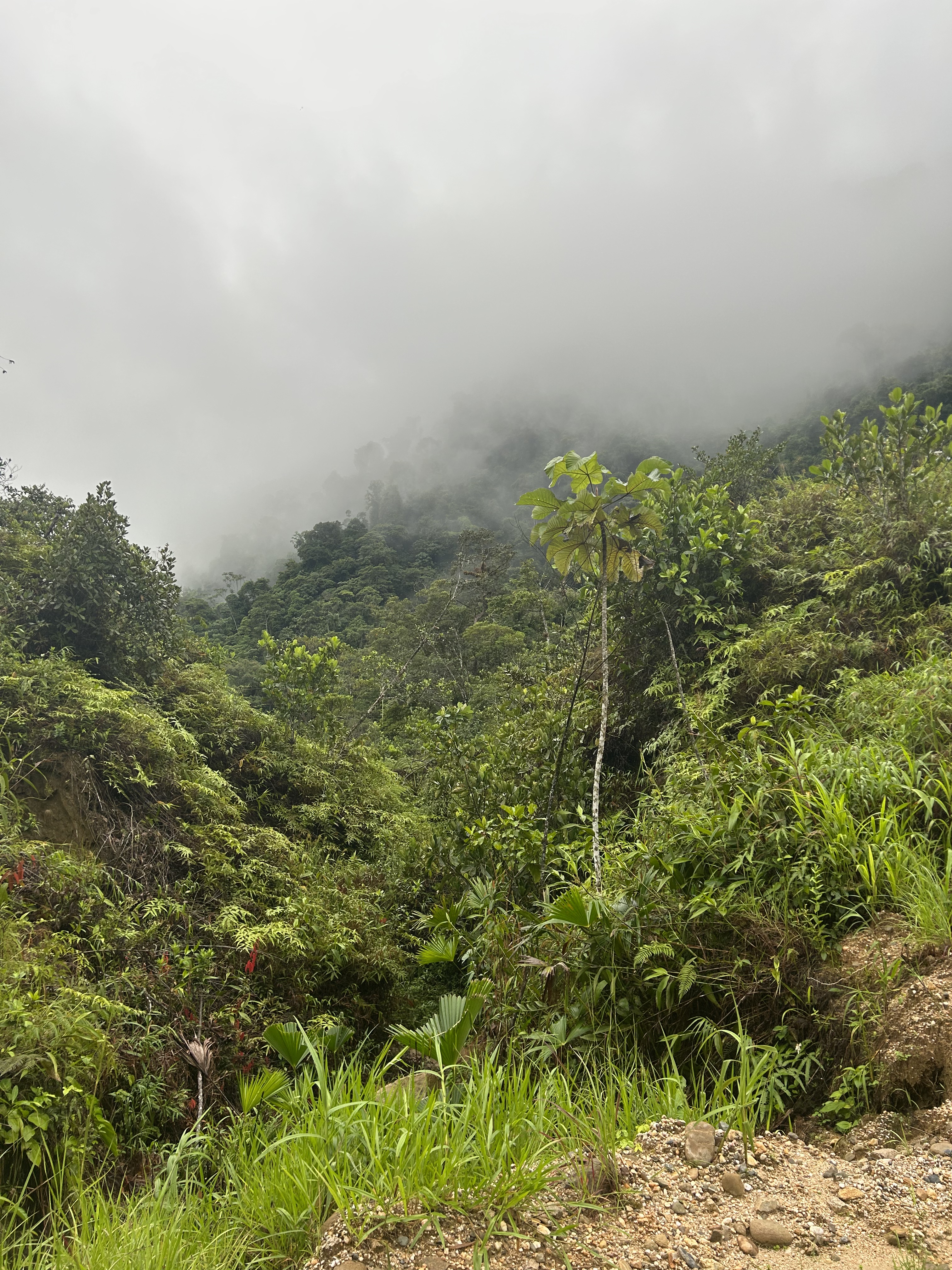
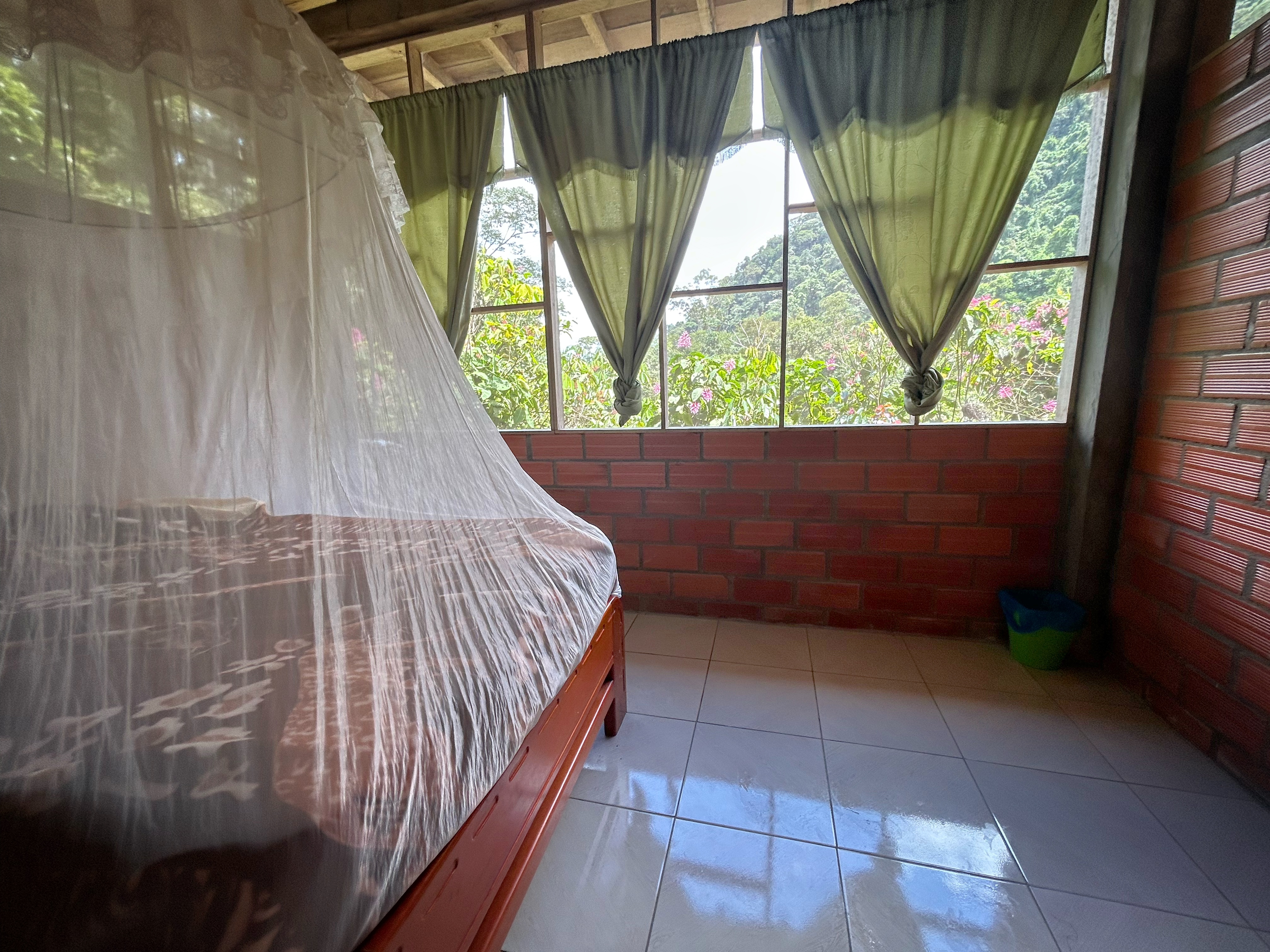
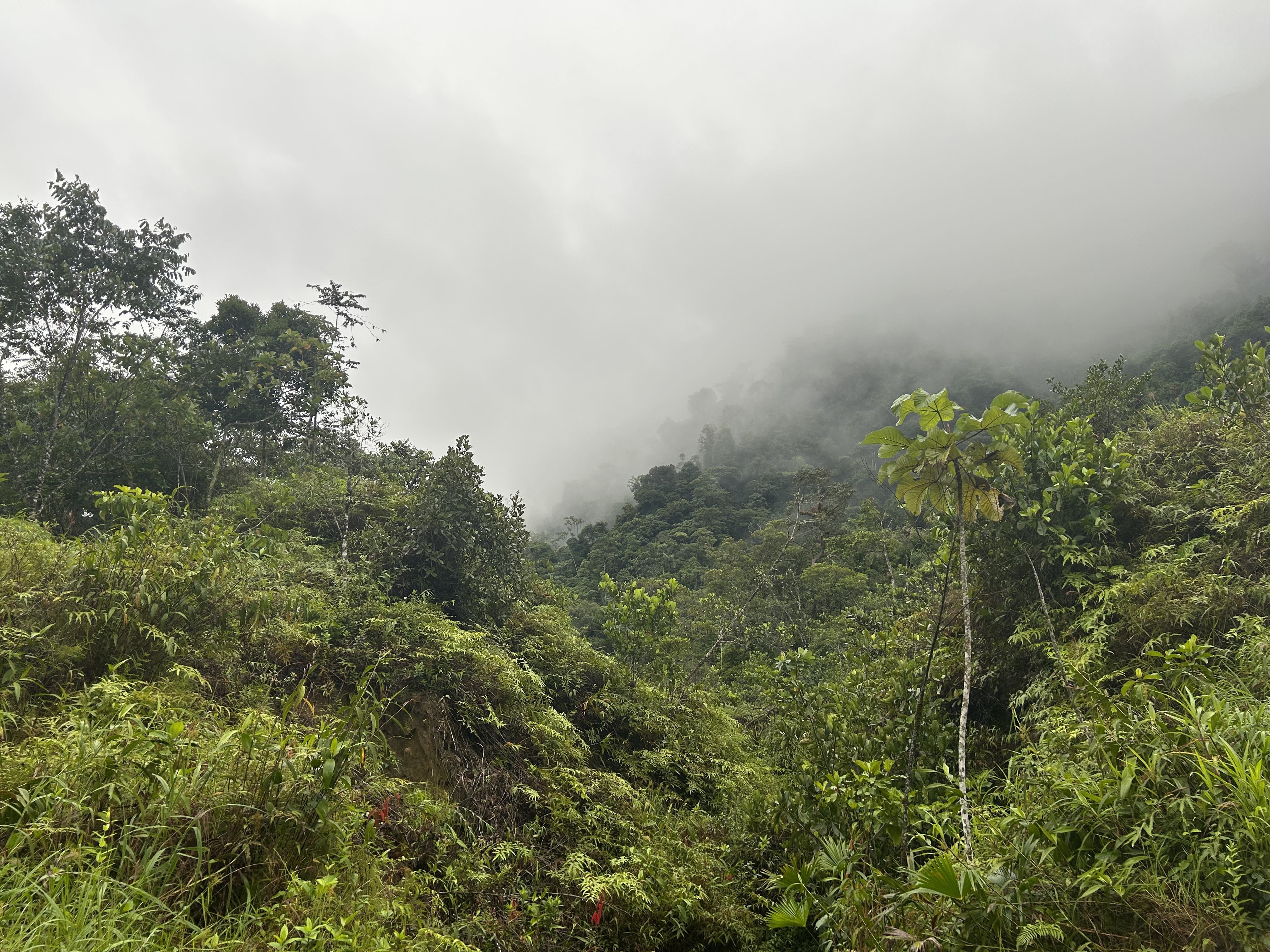
I was delightfully surprised to receive my own room with an incredible view above flowering bushes with jungle hills and misty mountains in the distance.
From the Facebook page of Cabañas Pimpilala: our accommodations. My room was on the lower right.
The week was absolutely FULL of activities and adventures, all slightly dependant on the weather as we are in the shoulder season between the rainy season and dry season. (It rained every single day at some point, whether for a brief sun shower, an hour long torrential downpour, or a thunderstorm as we were heading to bed). The night rainstorms were the most common, and miraculously, the rain never negatively affected our daily plans!
The setting was exactly as I pictured for rustic jungle living with no electricity in our rooms, mosquito nets around the beds, the sounds of geckos calling at night and bugs chirping and buzzing, butterflies and humming birds everywhere, and colourful flowers on the nearby bushes and trees. I also loved how you never went too far without a small river or stream so the sound of water was the Amazon Rainforest underscore.
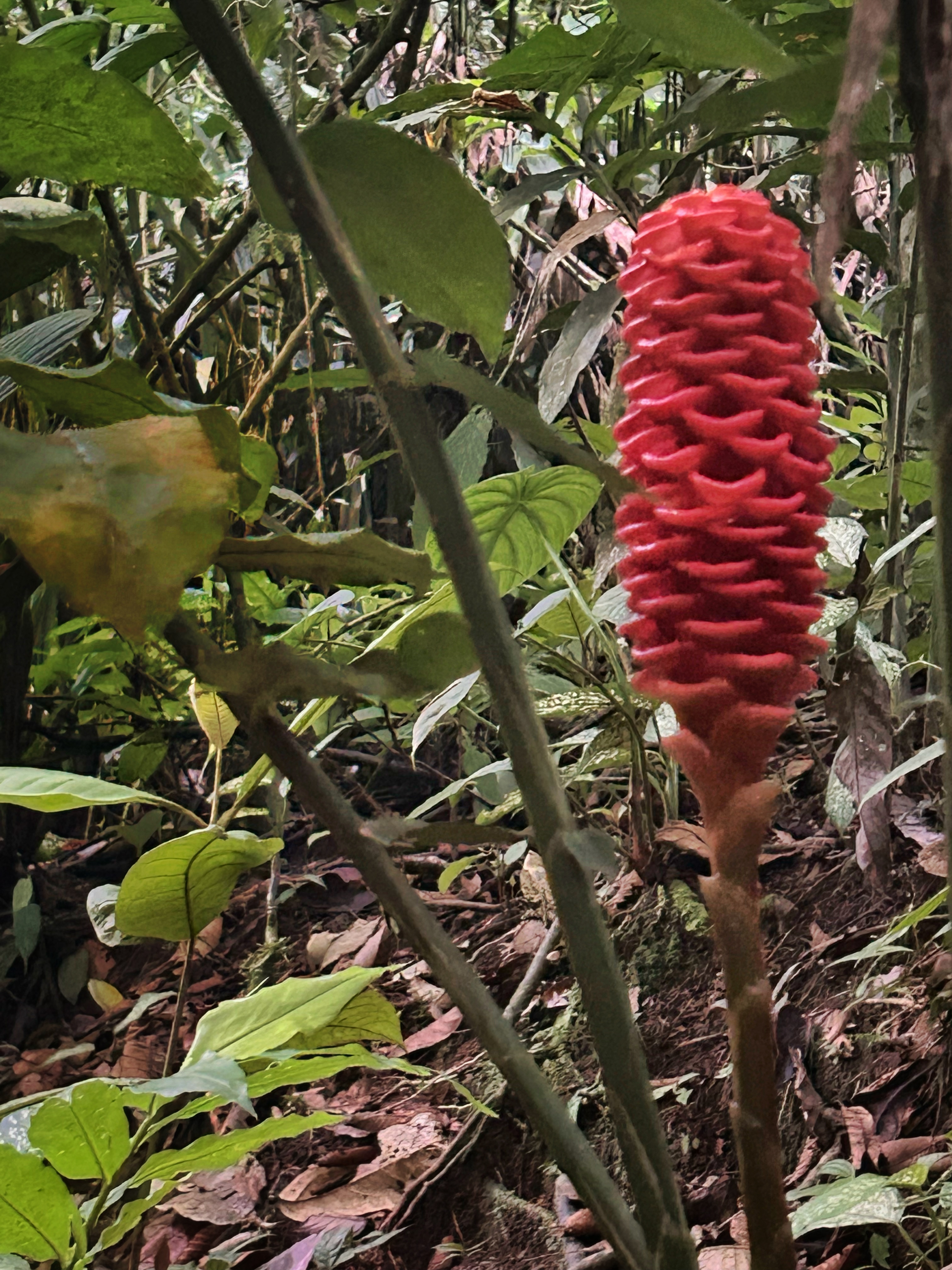
The first place I ever saw these beautiful ‘natural shampoo and bug repellent’ flowers was in Costa Rica.
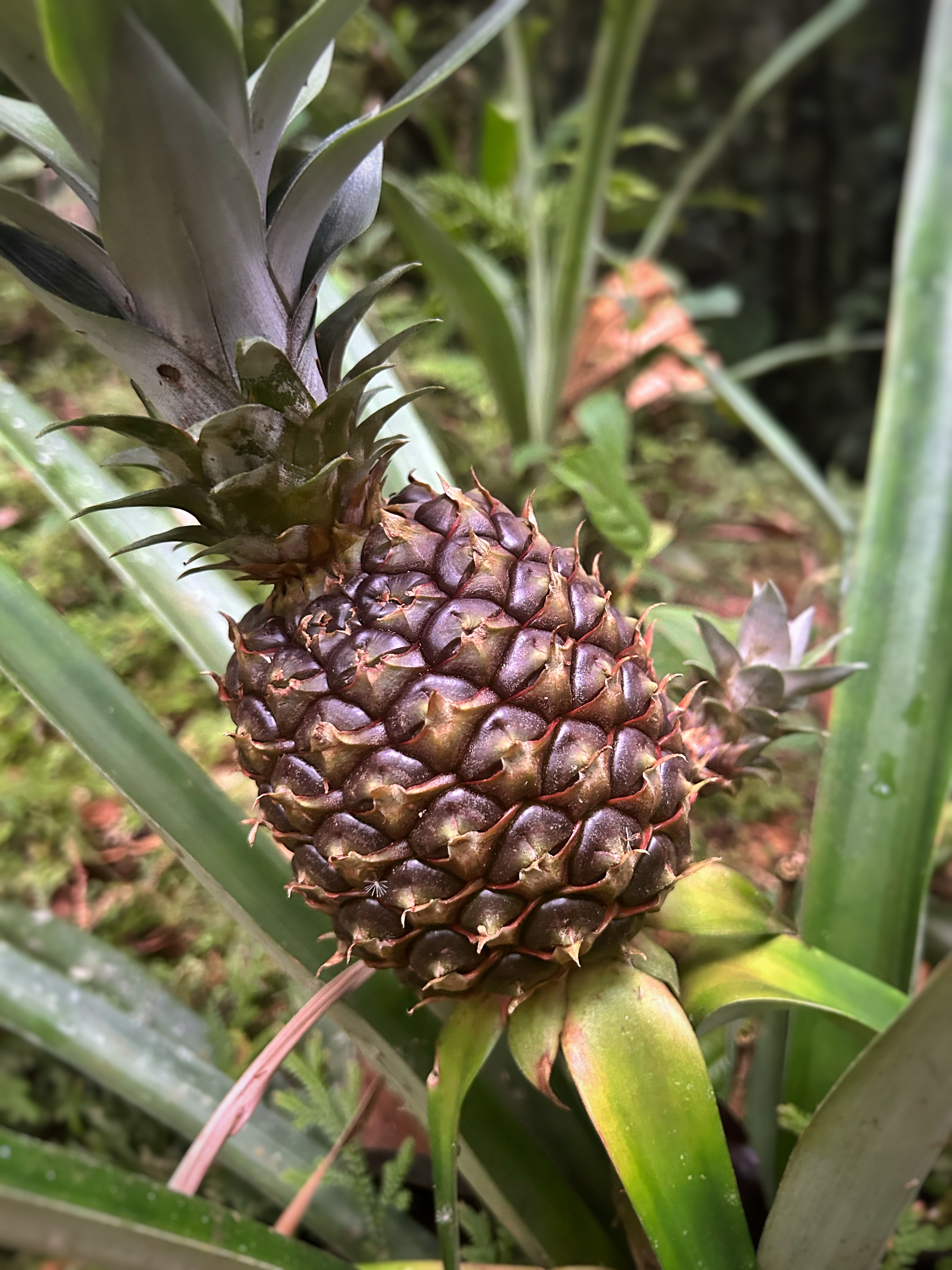
there were a few small pineapple plants growing behind our building- have you ever seen how pineapples grow- in low plants on the ground?
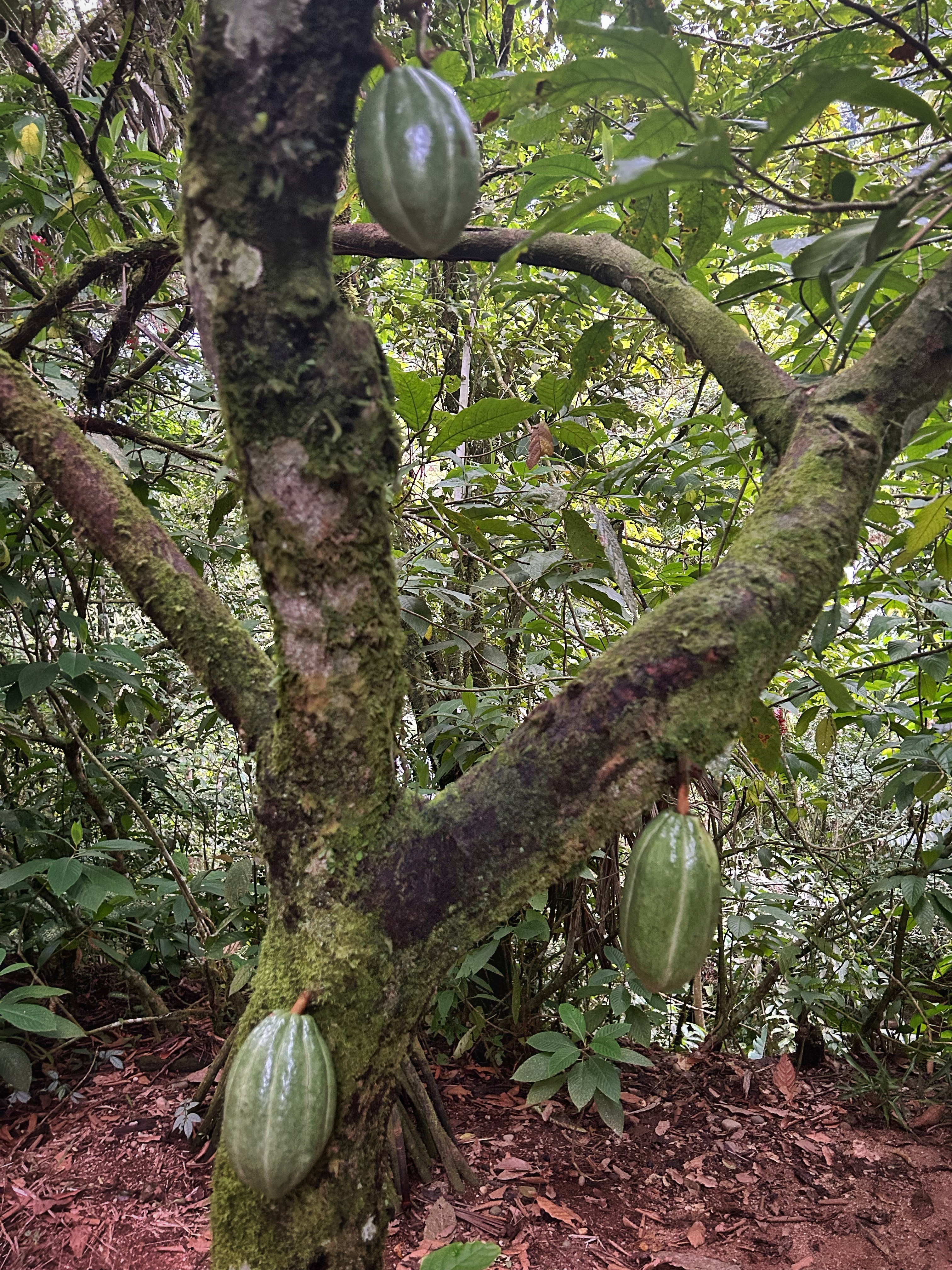
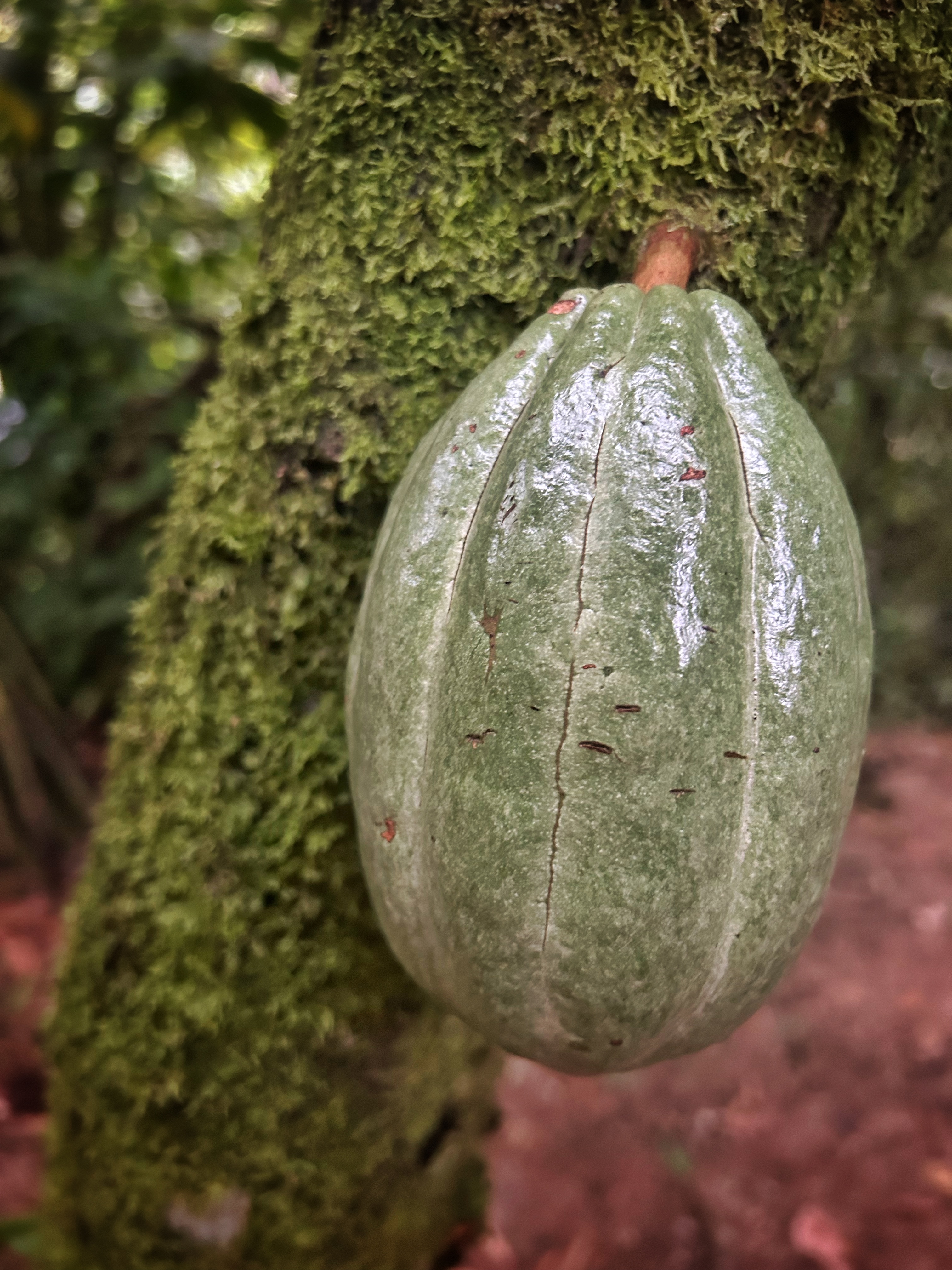
cacao trees are plentiful around the property- they almost don’t look real!
The family was incredibly kind and welcoming to our group, and we felt very well taken care of. The food was generous and varied, and every lunch and dinner had two courses, always beginning with soup. The soup flavours ranges from broccoli to chicken to potato to vegetable and corn, and they were always filling and delicious, with the occasional milder soups that we would punch up with a little hot sauce or the fresh and spicy salsa they served at every meal. Often, a fresh bowl of toasty popcorn was served as the topping for the soup (but most of us just ate it by the handful). There was always rice or plantain or yucca or corn included in the main course (and sometimes: all of them!). We had fire-cooked tilapia, grilled chicken, stewed beef, and a variety of different seasonings and vegetables alongside. It was simple, local, good food.
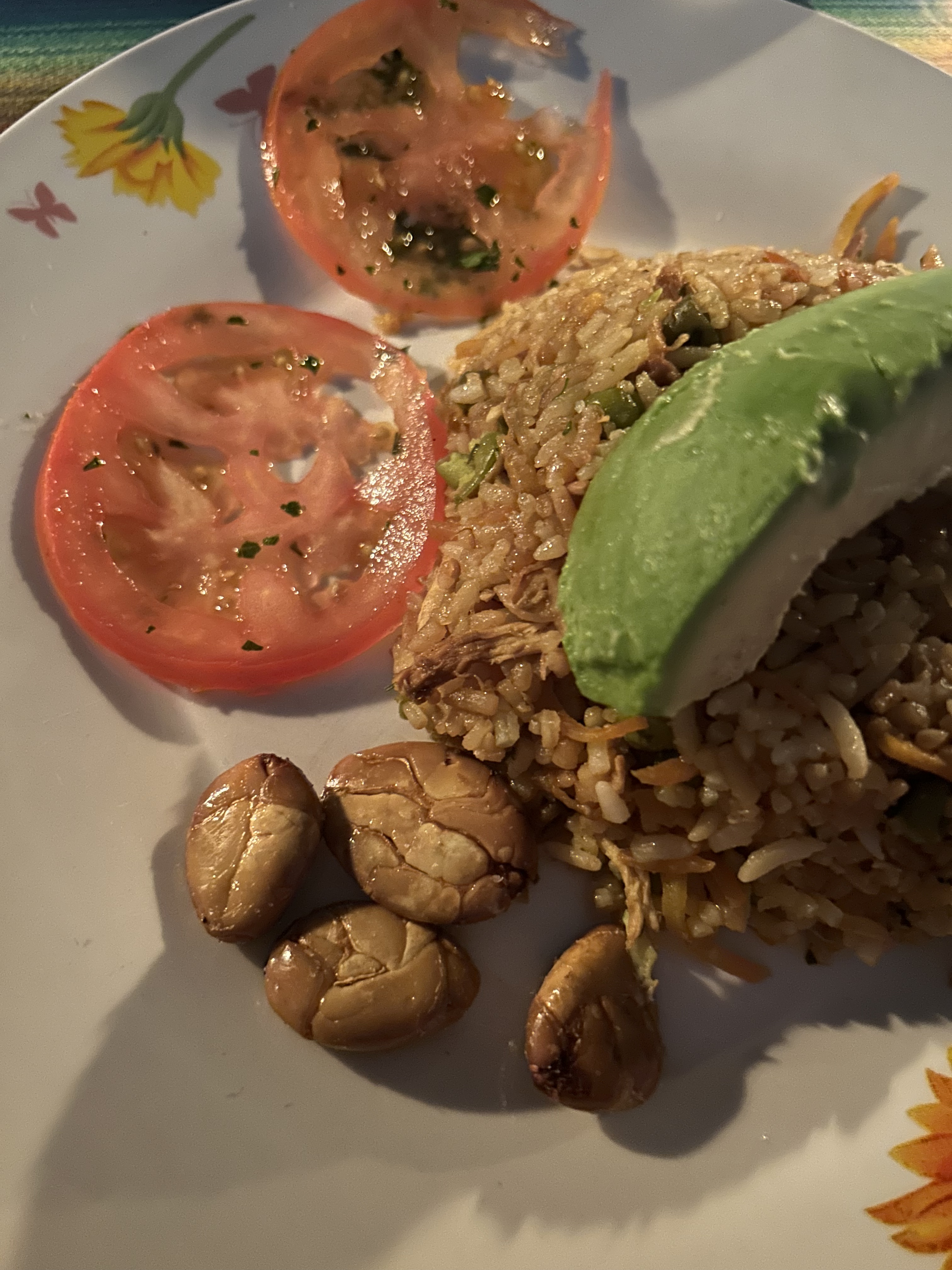
A chicken and rice dinner with fresh avocado and tomatoes and roasted white cacao beans
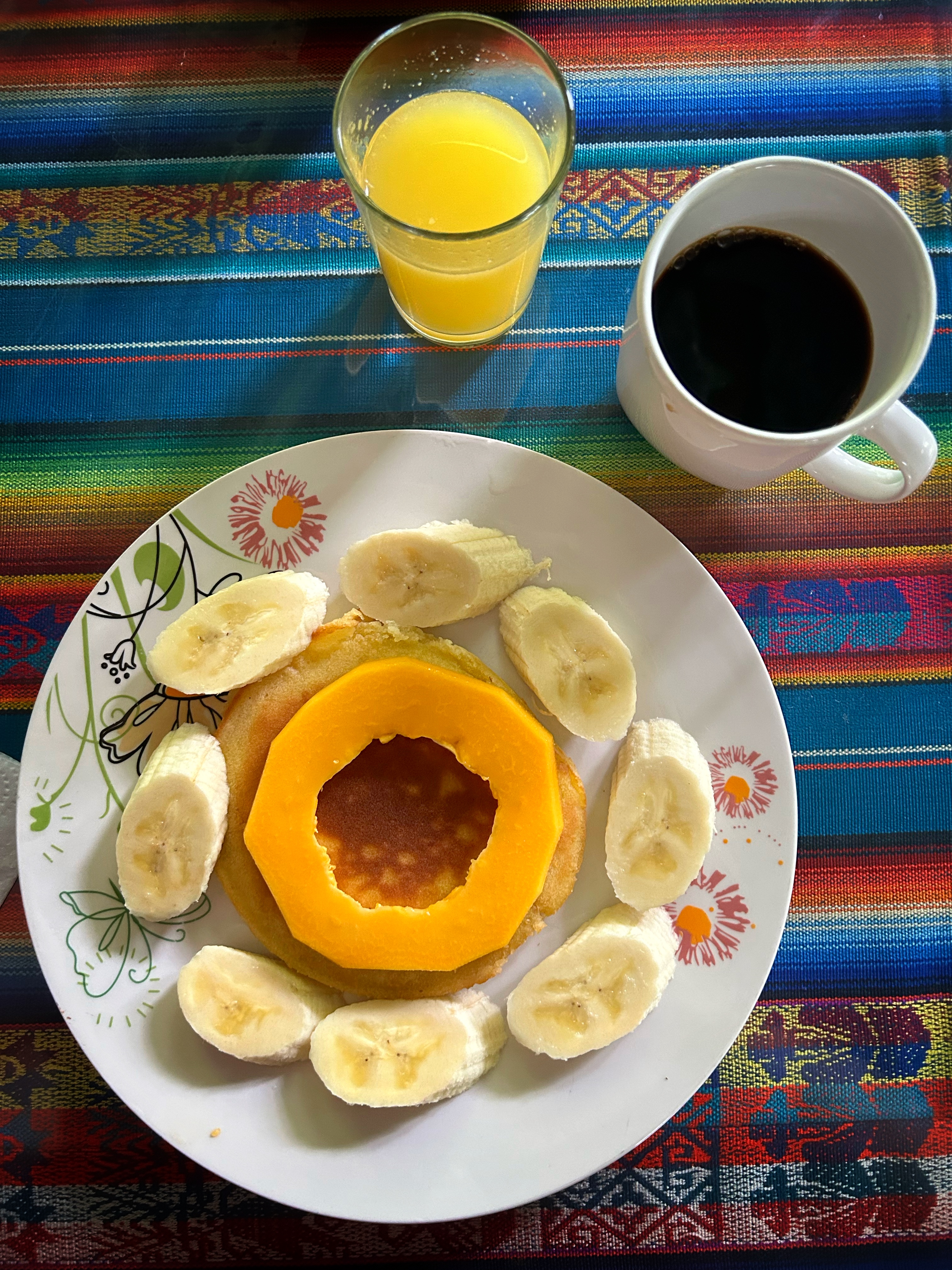
A plantain pancake with papaya and banana, coffee and pinapple juice for our last breakfast
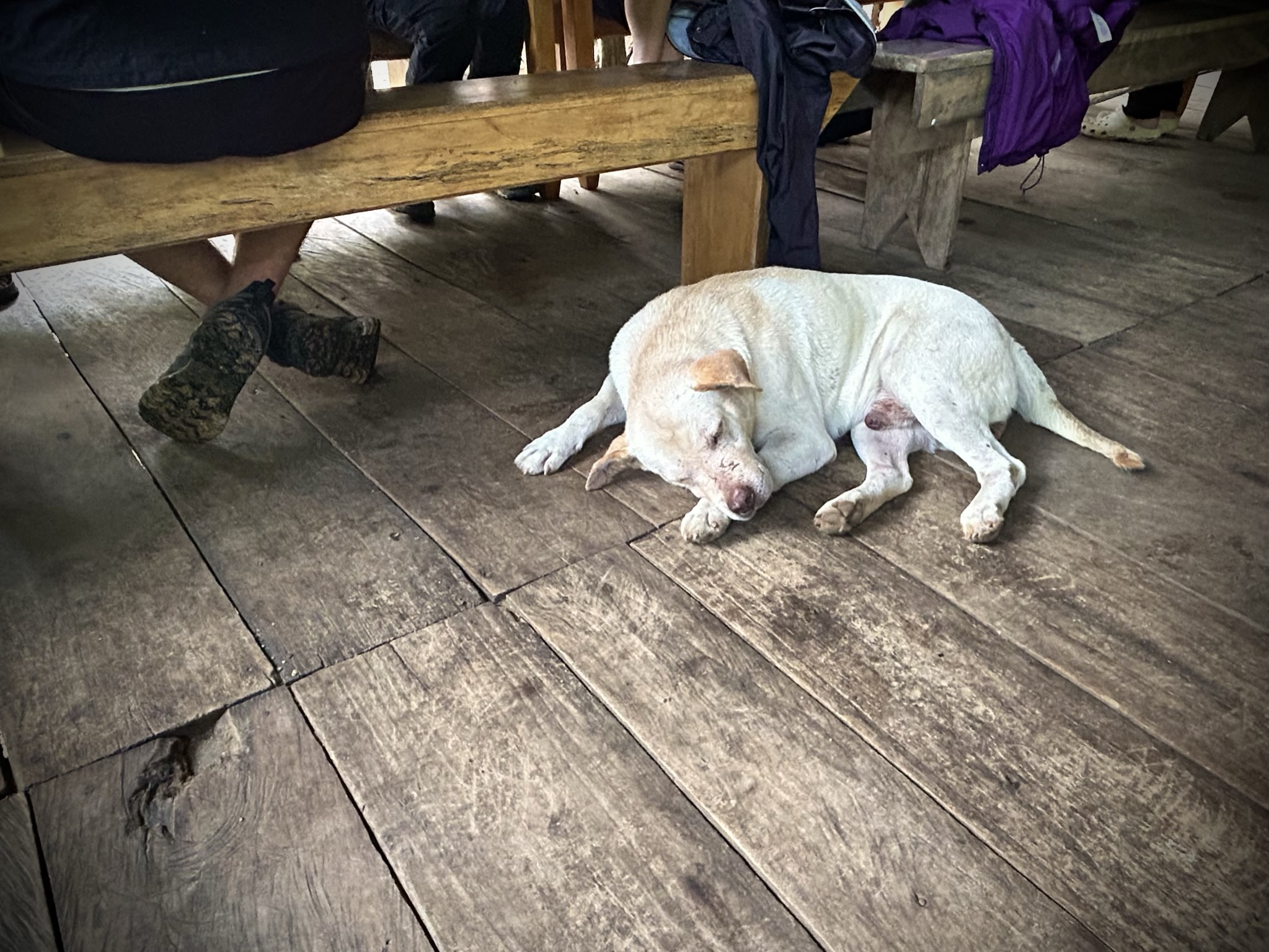
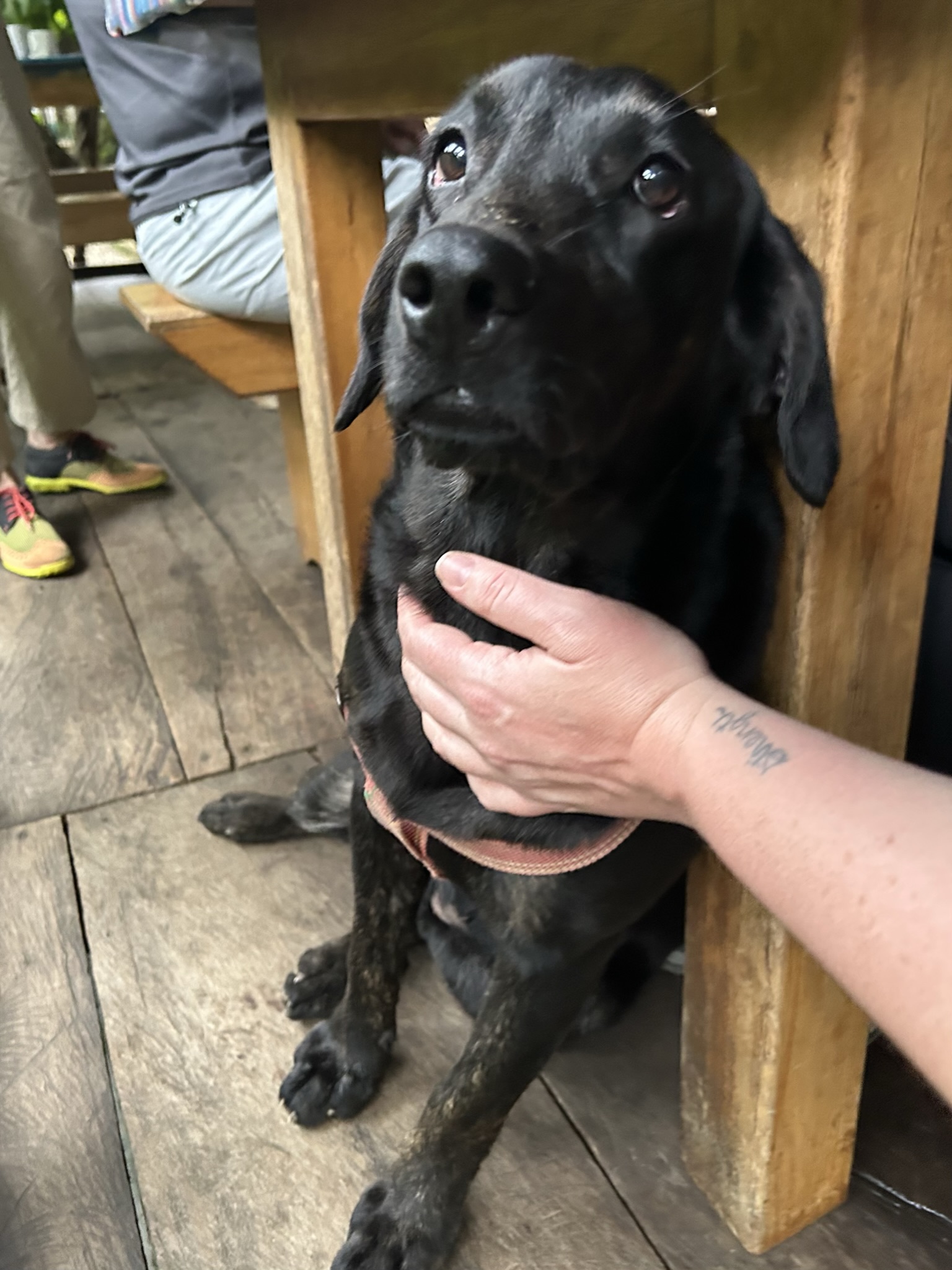
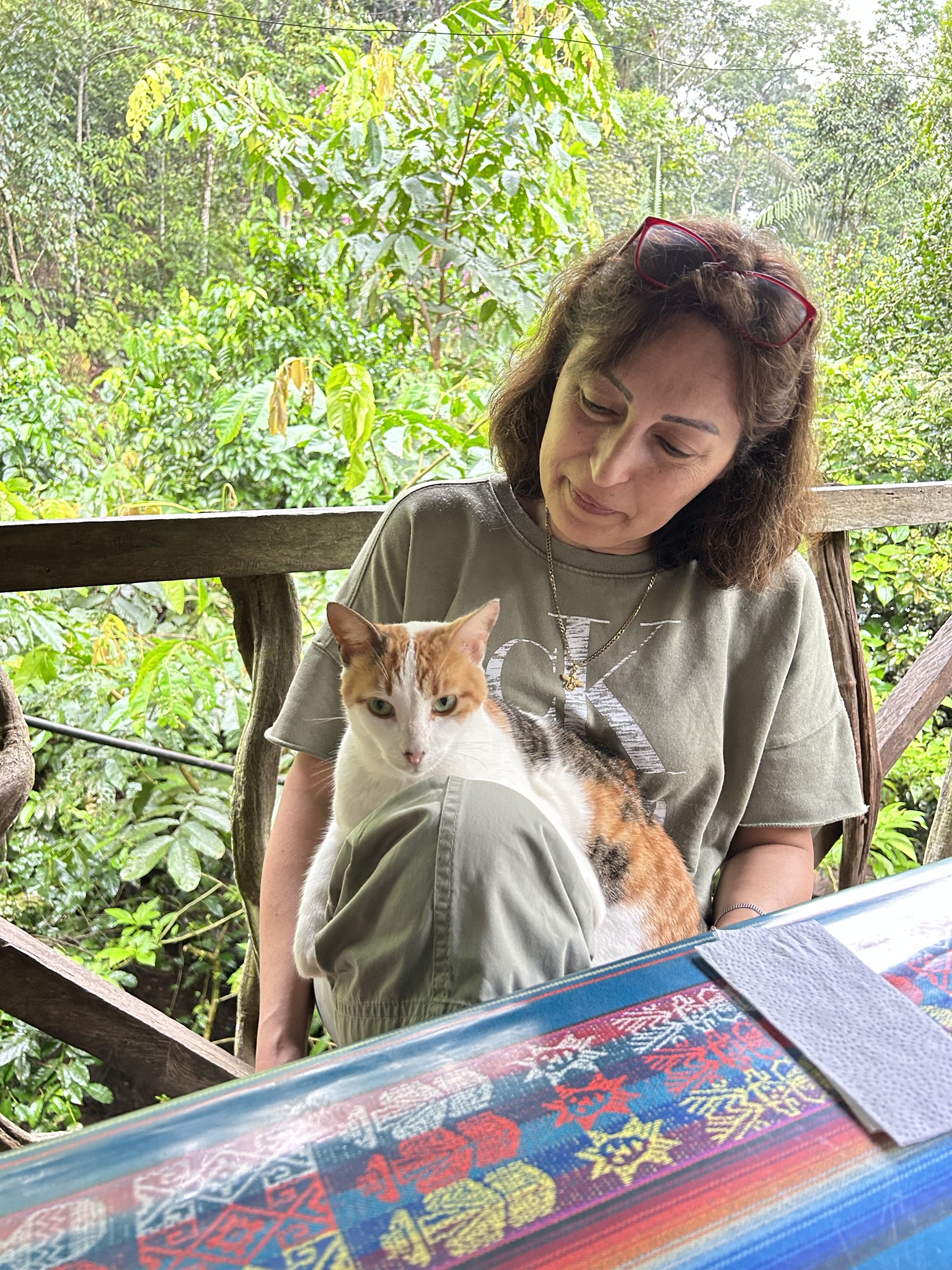
The family pets were friendly and with one cuddly cat and two sweet labradors, we felt even more at home.
The family also had a large coop of chickens with a couple of roosters that ensured none of us truly slept much past 3:45 in the morning, seemingly having a competition of who can be more impressive in their crowing.
Our generous host Delfin.
We went for small hikes and wandered through winding paths near the property, learning about many of the plants, some with healing properties like the “Dragon’s Blood” tree used for both skin irritations and injuries as well as ingested to help with certain illnesses. You can buy small bottles of this dark red sap all over the place in Ecuador, as well as other medicinal plant salves and waxes and balms.
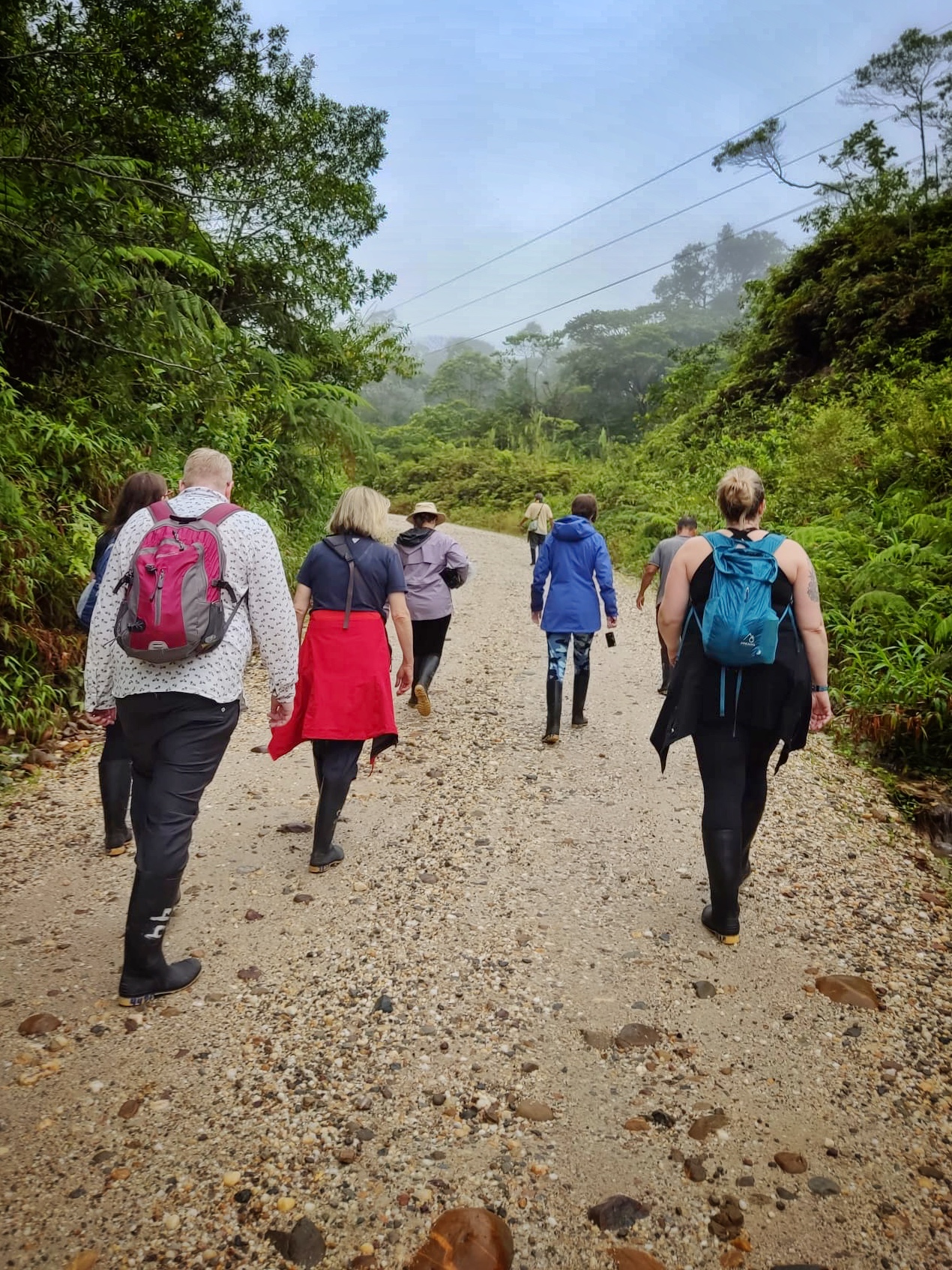
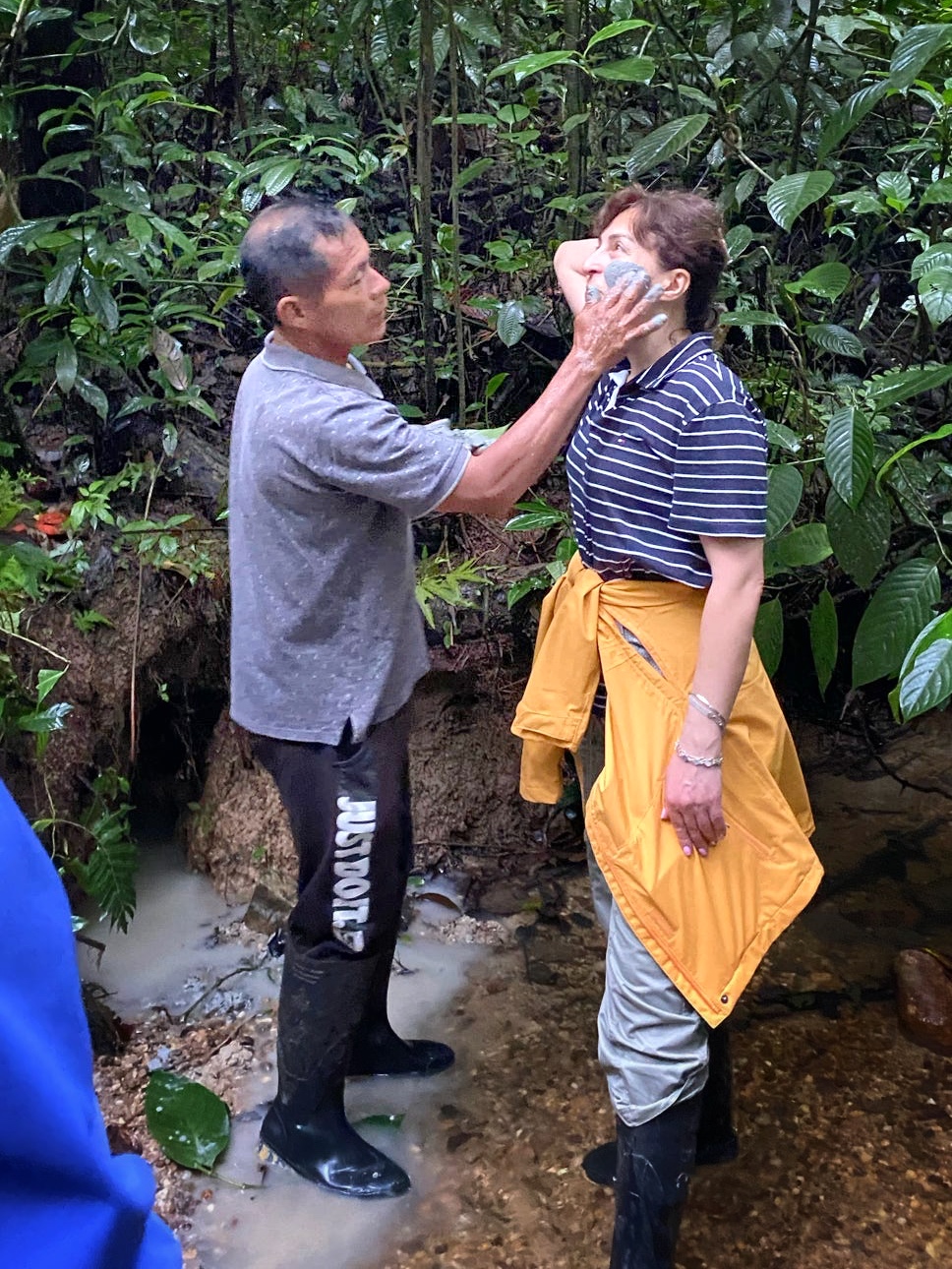
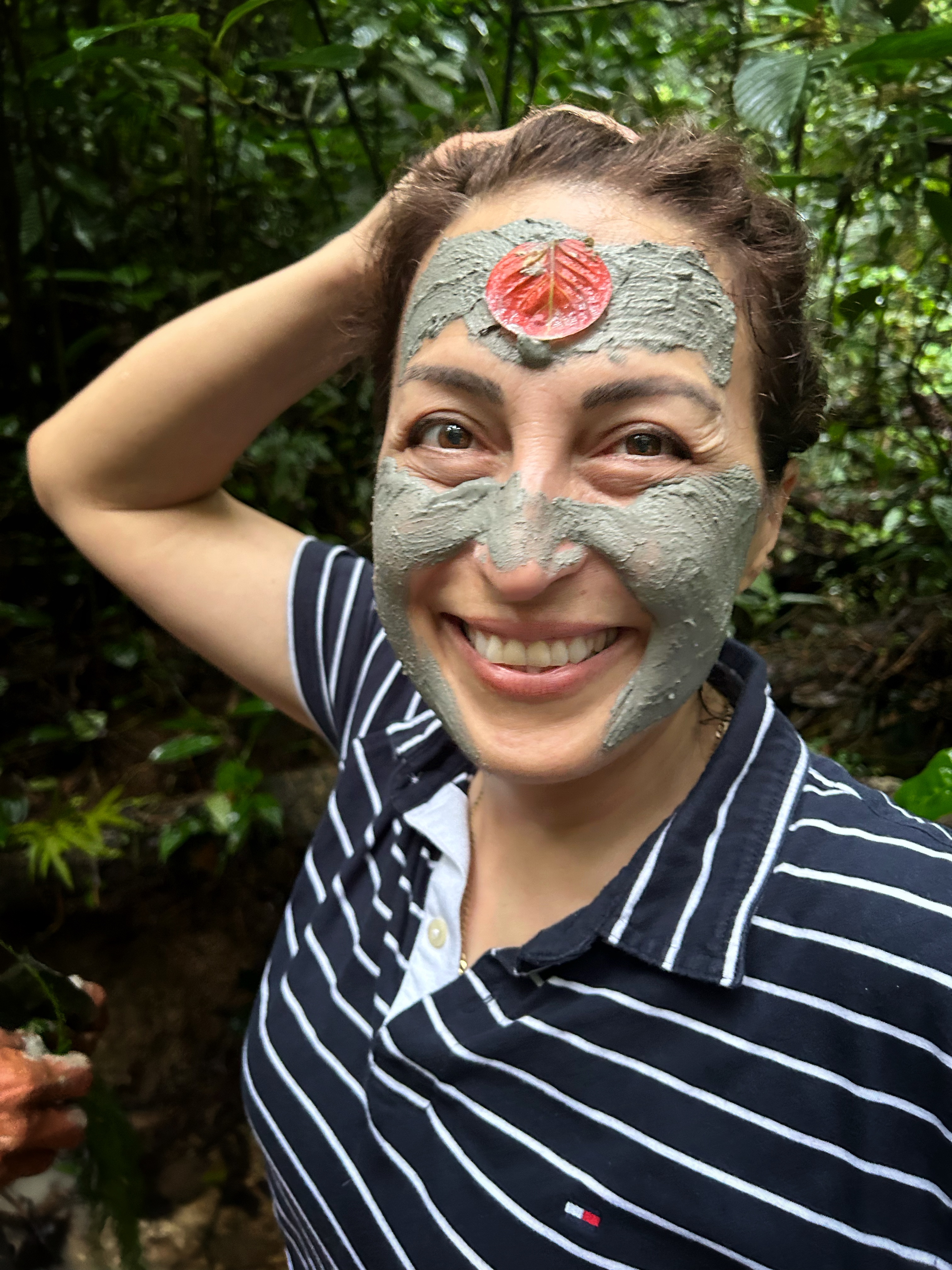
On one of these walks we followed a small stream into a little alcove where our guide Miguel gave us all mud masks complete with decorative leaves, and we let them dry as we walked back home.
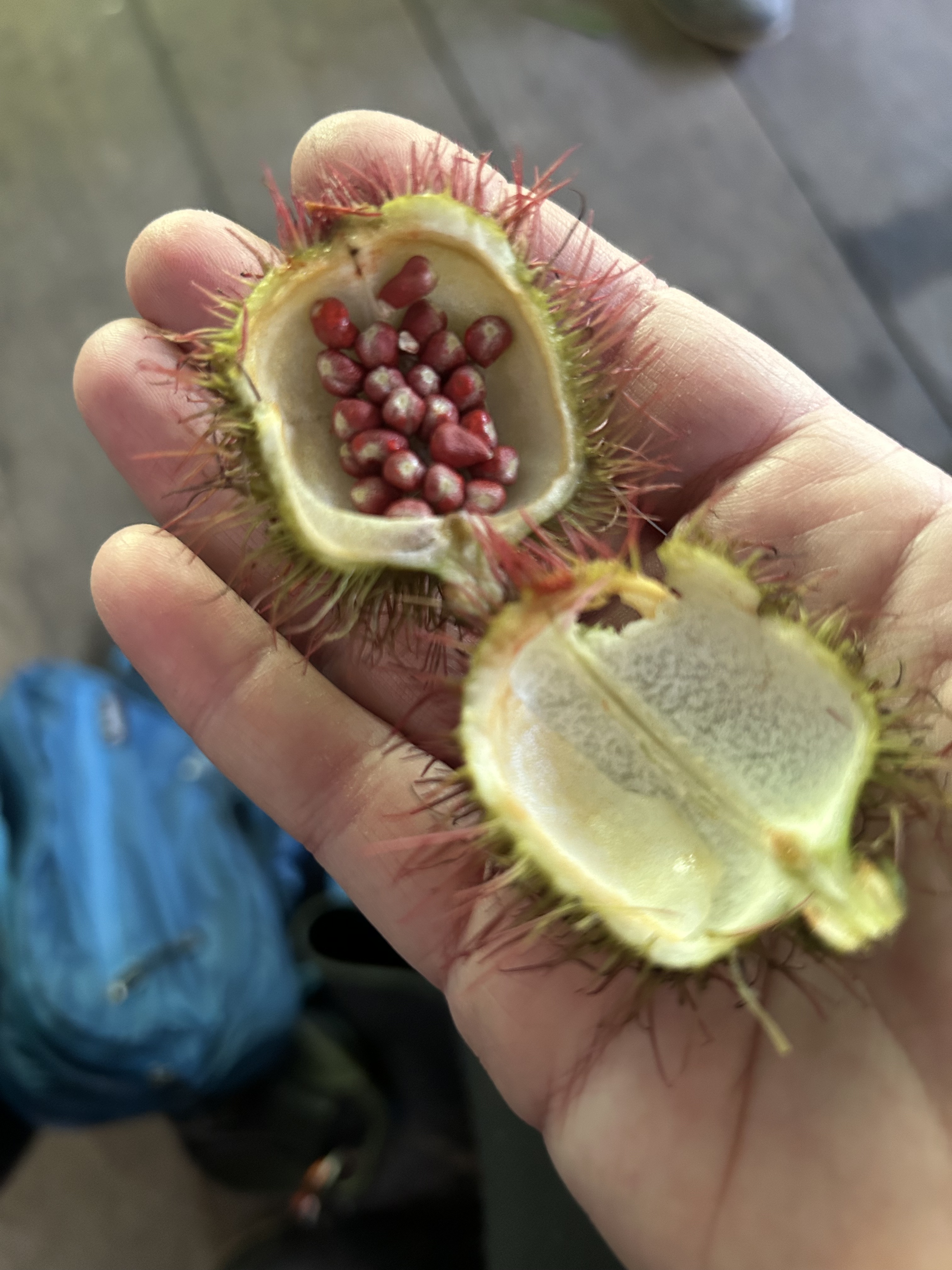
A local fruit’s seeds – “Olecho petito” – are used for a natural paint and it was used to paint symbols on our cheeks as we were taught about important symbols to the local indigenous communities. We were shown symbols like the circle of life, Pacha Mama (or Mother Earth), medicine bags, and the protectors and leaders of each community.
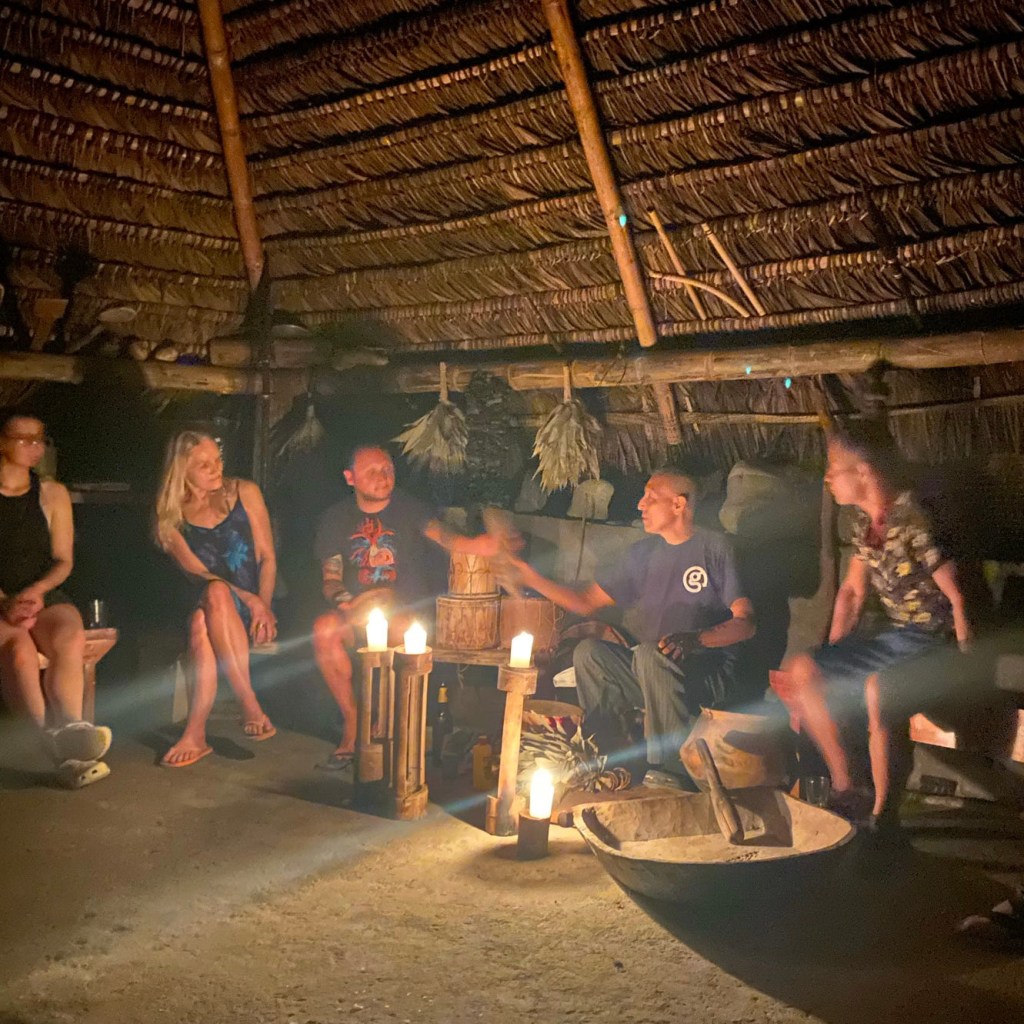
Delfin is the son of a traditional Shaman, and we were lucky to learn about the revered position of the shaman in the local communities and how someone trains from as young as age 5 and are not truly considered a shaman until the age of 45. We were told about the rituals of healing practices and medicine, preserving traditions, weddings and death practices. Delfin would enthusiastically share these stories and information in Spanish and our G Adventures CEO Alejandro would translate.
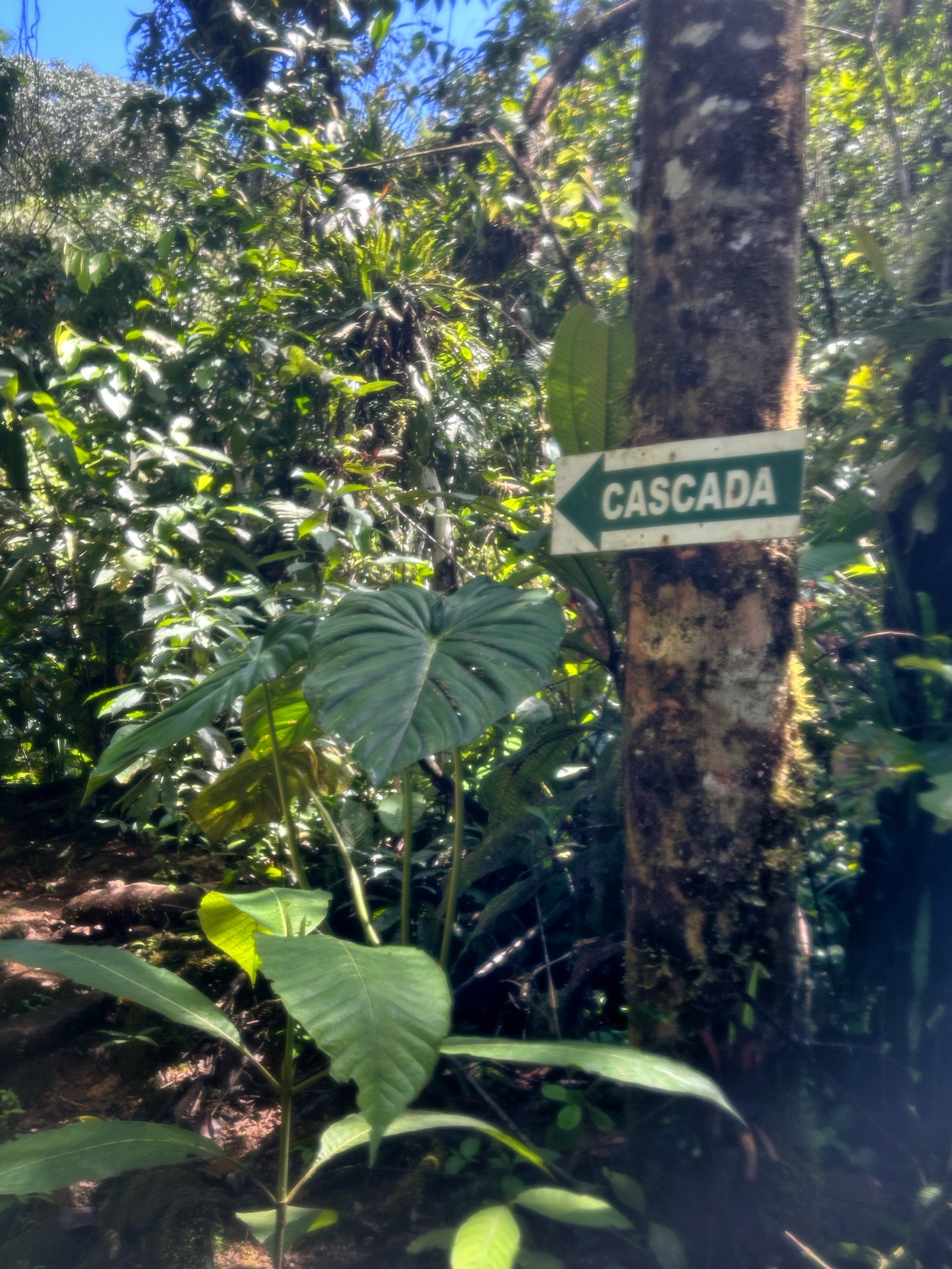
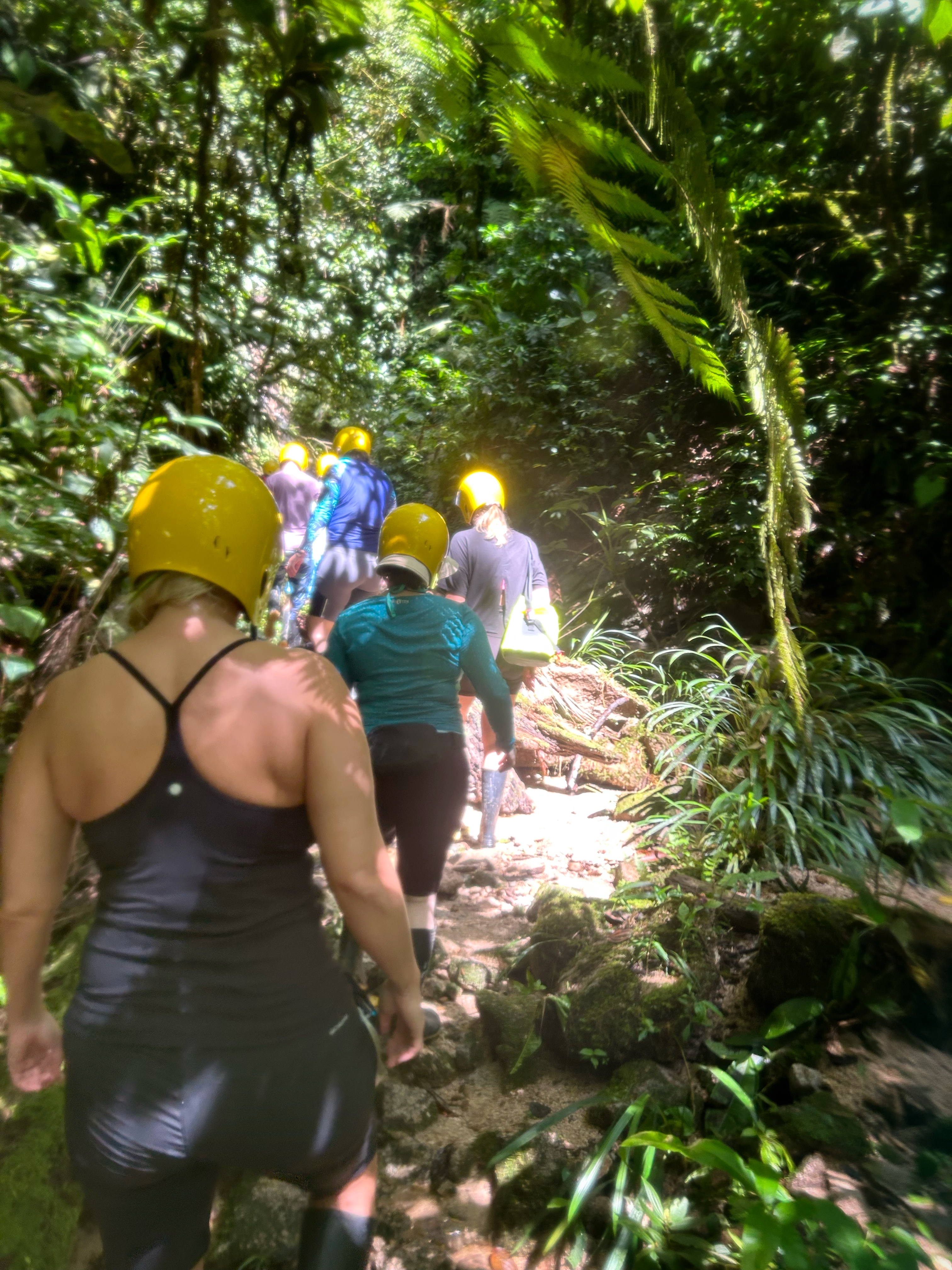
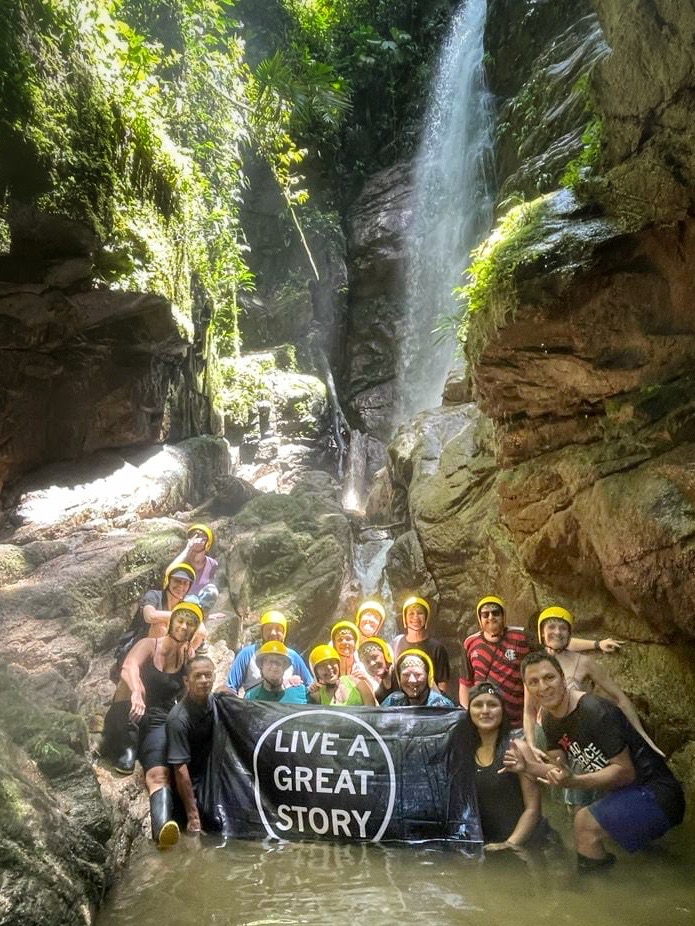
The first major highlight of the stay was the “Waterfall Climb” at the Cascadas Pimpilala. We were each given a helmet and a pair of rubber boots, and I was definitely skeptical as I have never thought of rubber boots as grippy, active footwear…
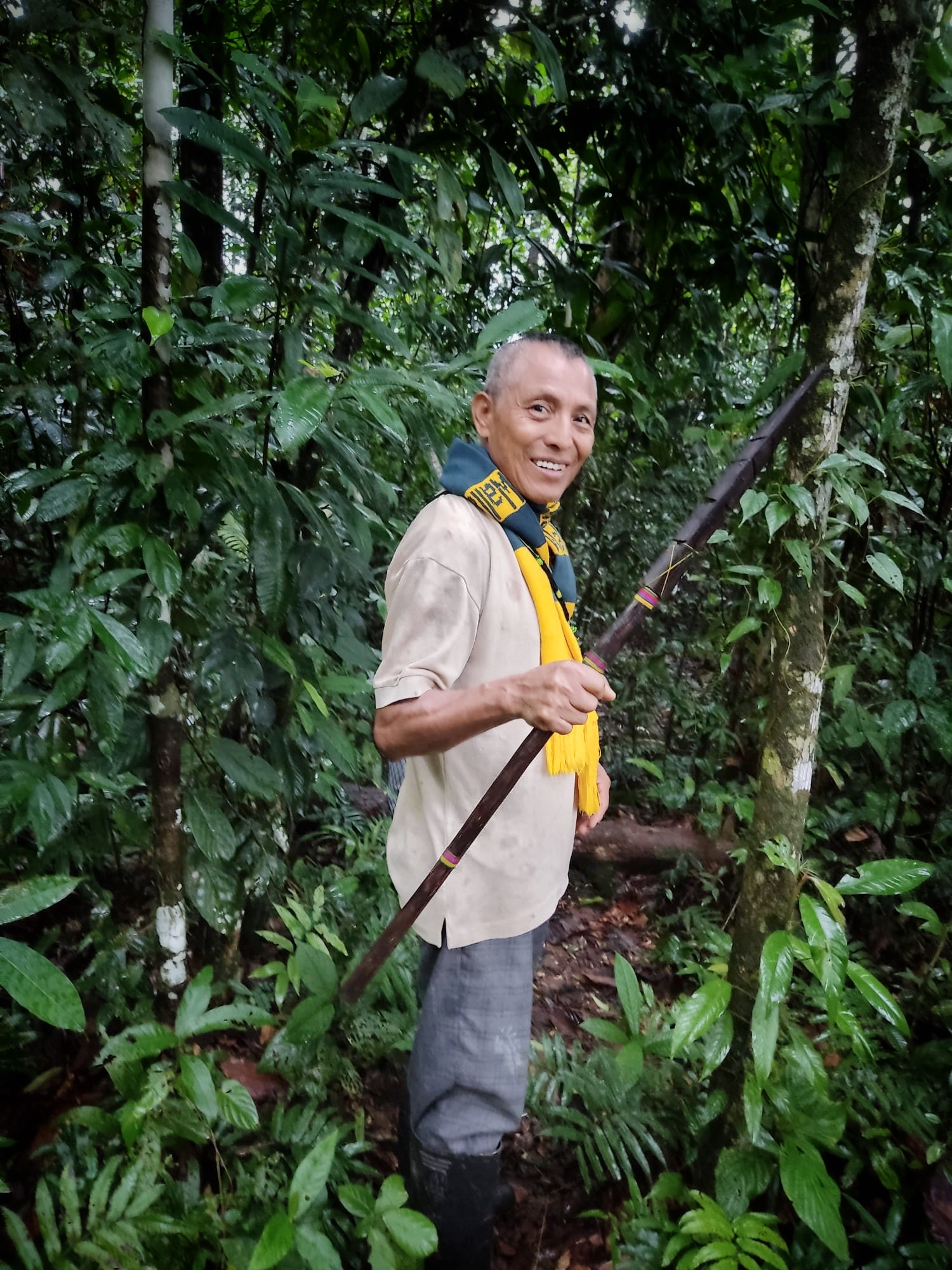
Led by the spry and always smiling Miguel and the Delphin’s son and constant comedian Rolando, we hiked up the nearby stream and I was surprised to discover how rough all the rocks were; even when they appeared to have lichen or moss on them, they were grippy and rough like large grit sandpaper. And Rolando’s sister Maria ended up joining us as our photographer!
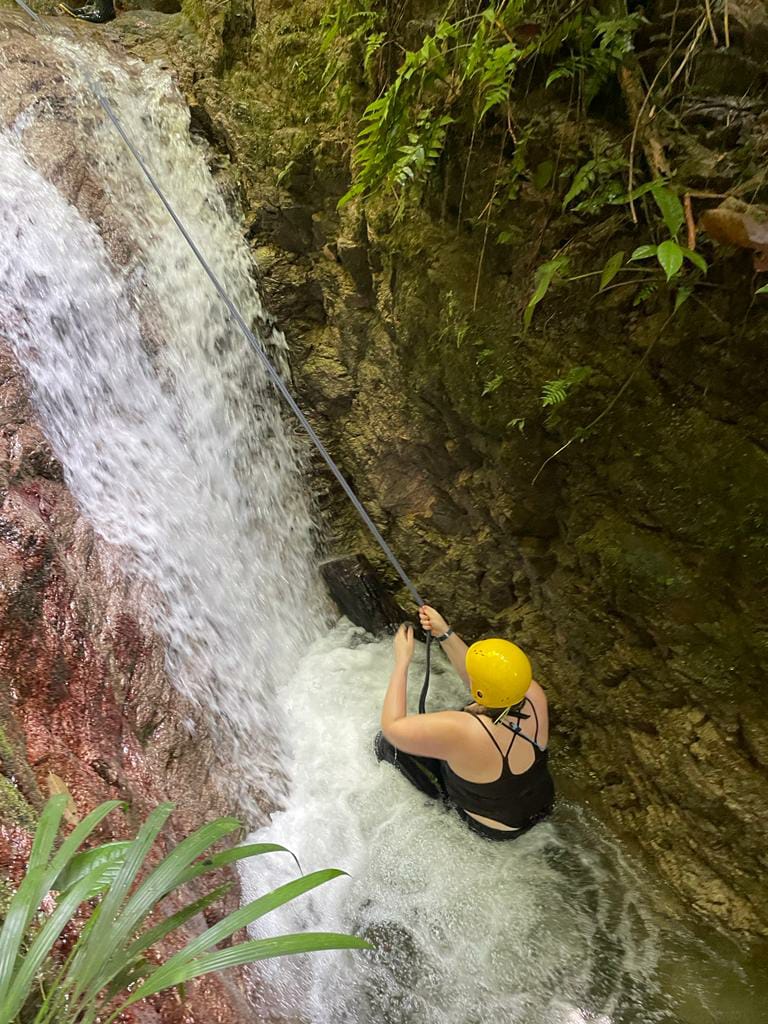
Slowly but surely we climbed up the rocks on the side of some waterfalls, directly up the centre of others with water cascading over our shins and around our ankles, along logs with notches carved into them and ropes tied around large rocks or to nearby hooks and tree stumps. Occasionally we had to jump into the pools of water below before climbing up, and it was fun to cheer on and celebrate each person’s success as we worked our way up to the destination at the base of the huge, final waterfall.
It was an absolute blast and we were all happily drenched with our socks completely saturated and our rubber boots heavy with water, and many of us took the opportunity to take one final swim (sans boots and socks) in the pool built into the base of the river. The warmth of the late morning sunshine was the perfect end before we headed back home for lunch.
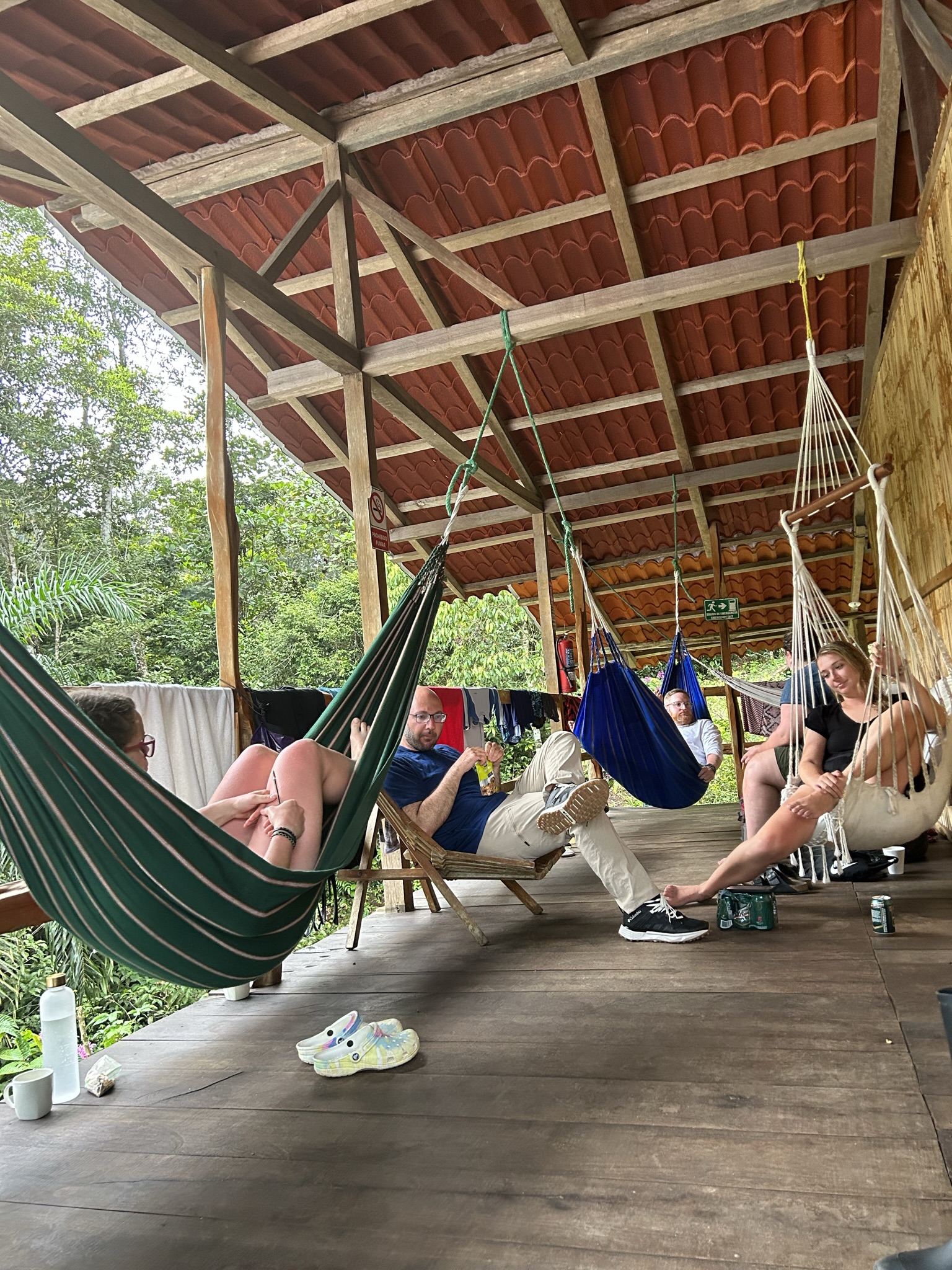
We took great advantage of the multiple hammocks around the property- I particularly loved the upper level of our accommodations which had an outdoor ‘living room’ of long fabric hammocks, hammock chairs, benches, and lounge chairs. We would also (very optimisitcally) hang our wet garments and towels all along the railings with the hope that we would get enough afternoon sun to dry them a bit, but as we were told only half-jokingly and we all learned it to be true: “nothing truly dries in the rainforest”.
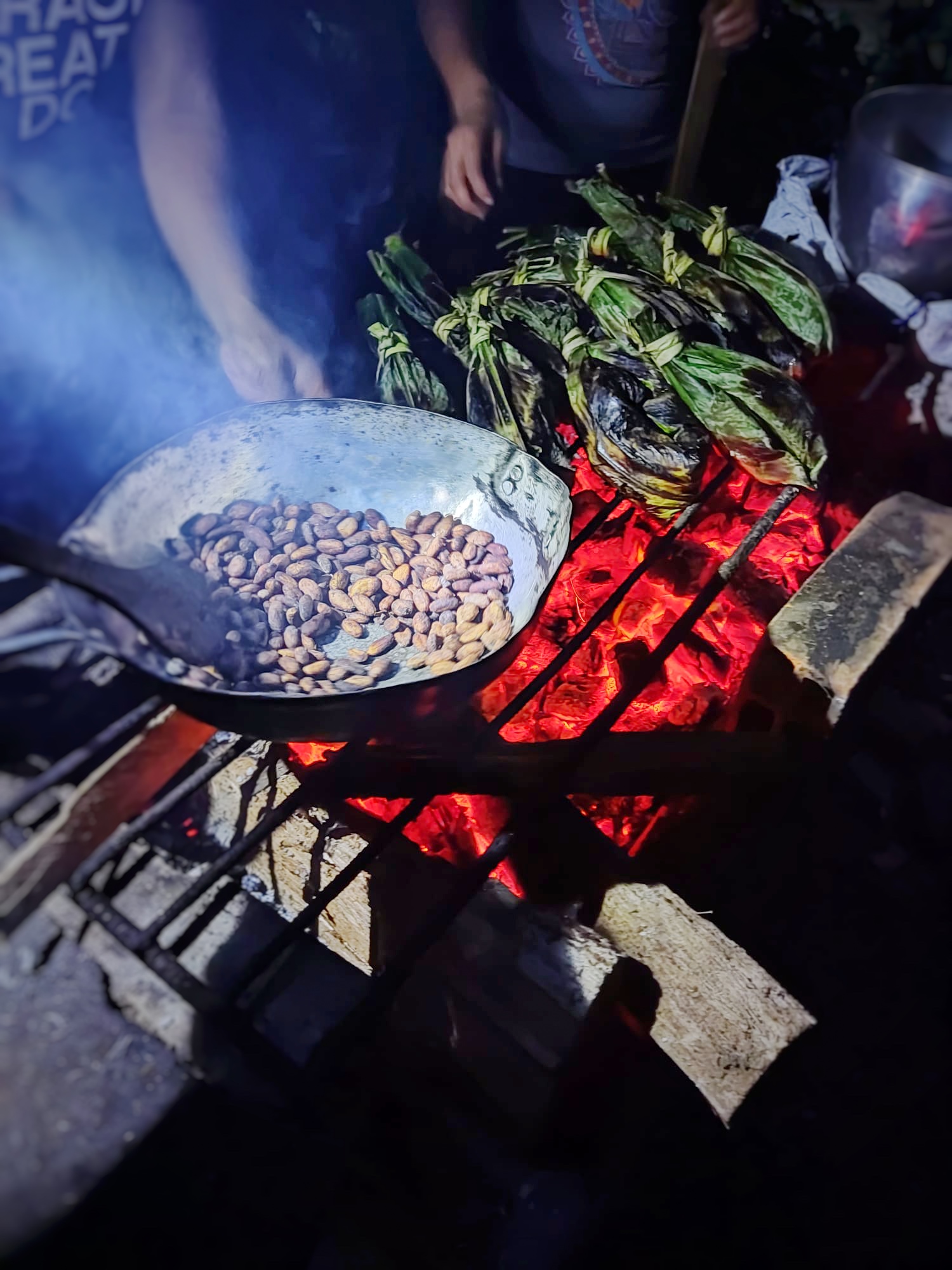
One evening we helped make some chocolate from the fruit off the trees nearby, learning about the cacao plants that dotted the property, and getting to taste fresh cacao seeds (my favourite), watch them roast some sun-dried seeds over a fire (along with the banana leaf wrapped tilapia we would have for dinner that night) and then help shell the piping hot husks off before taking turns grinding them into a paste. For dessert that night we got to dip fresh strawberry and banana slices in the warm melted ‘fondue chocolate’ that was a combination of our melted cacao paste, sugar cane syrup, and milk. (Photos below by Ryann!)
The included activities of the next day were to visit a nearby lagoon and go swimming followed by a bike ride to the nearby school that Delfin and Estella started for the local kids.
The optional (aka additional cost) activity, was white water rafting down the Napo River with Rios Ecuador. 🤩
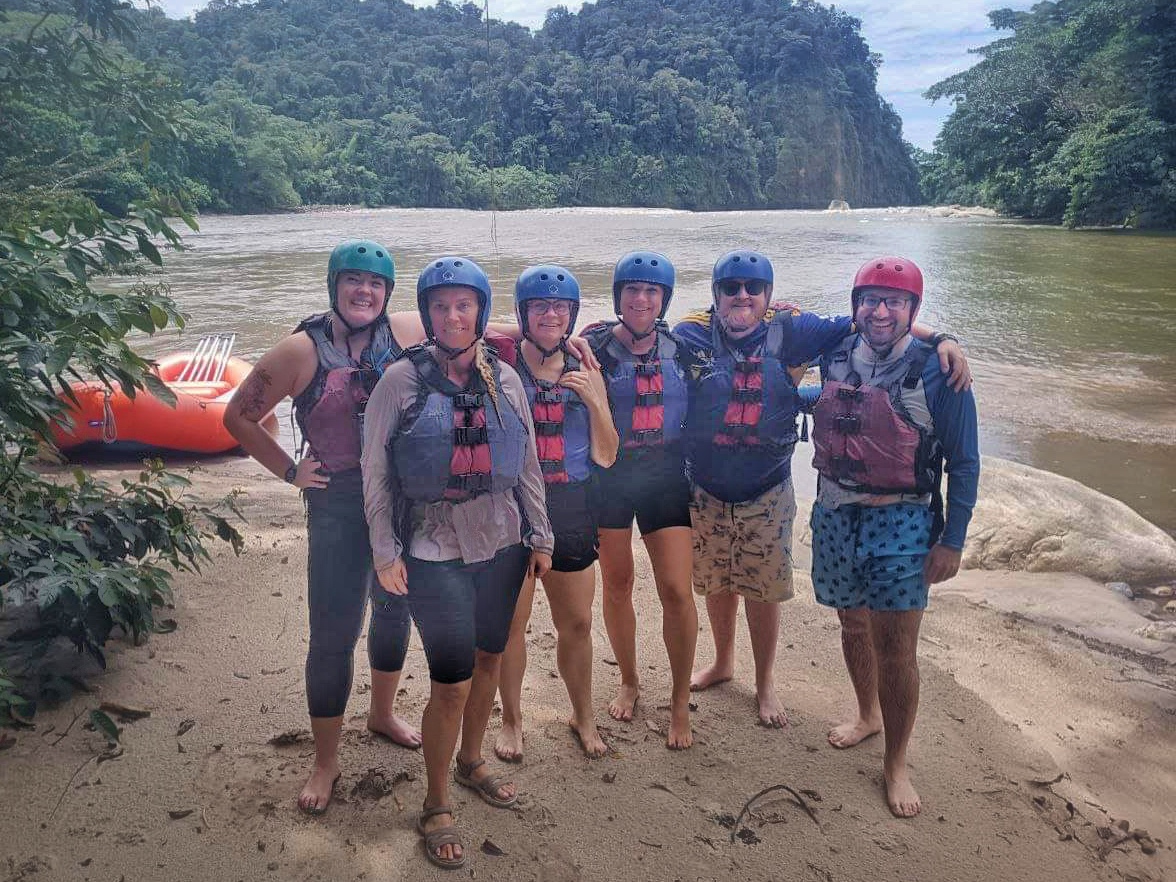
I had always wanted to go white water rafting but I had yet to actually ever try it, and I knew this would be an incredible day, hoping others would feel the same about the oppportunity. Luckily, five other people in our group wanted to go as well: Adam, Ryann, Fiona, Enis, and Kat. Of the six of us, Kat was the only experienced white water rafter -who had rafted levels four and five- while the rest of us were total newbies.
The river/rapids we went down were considered a level three and was comprised almost evenly of busy rapids and calmer ‘pool’ areas -so we would have the chance to both have some excitement and work and paddle hard for a bit and then we would get a break to enjoy the scenery, take pictures, and relax. This quickly became the second major ‘joy’ moment of the week, and definitely one of the most memorable days of my life.
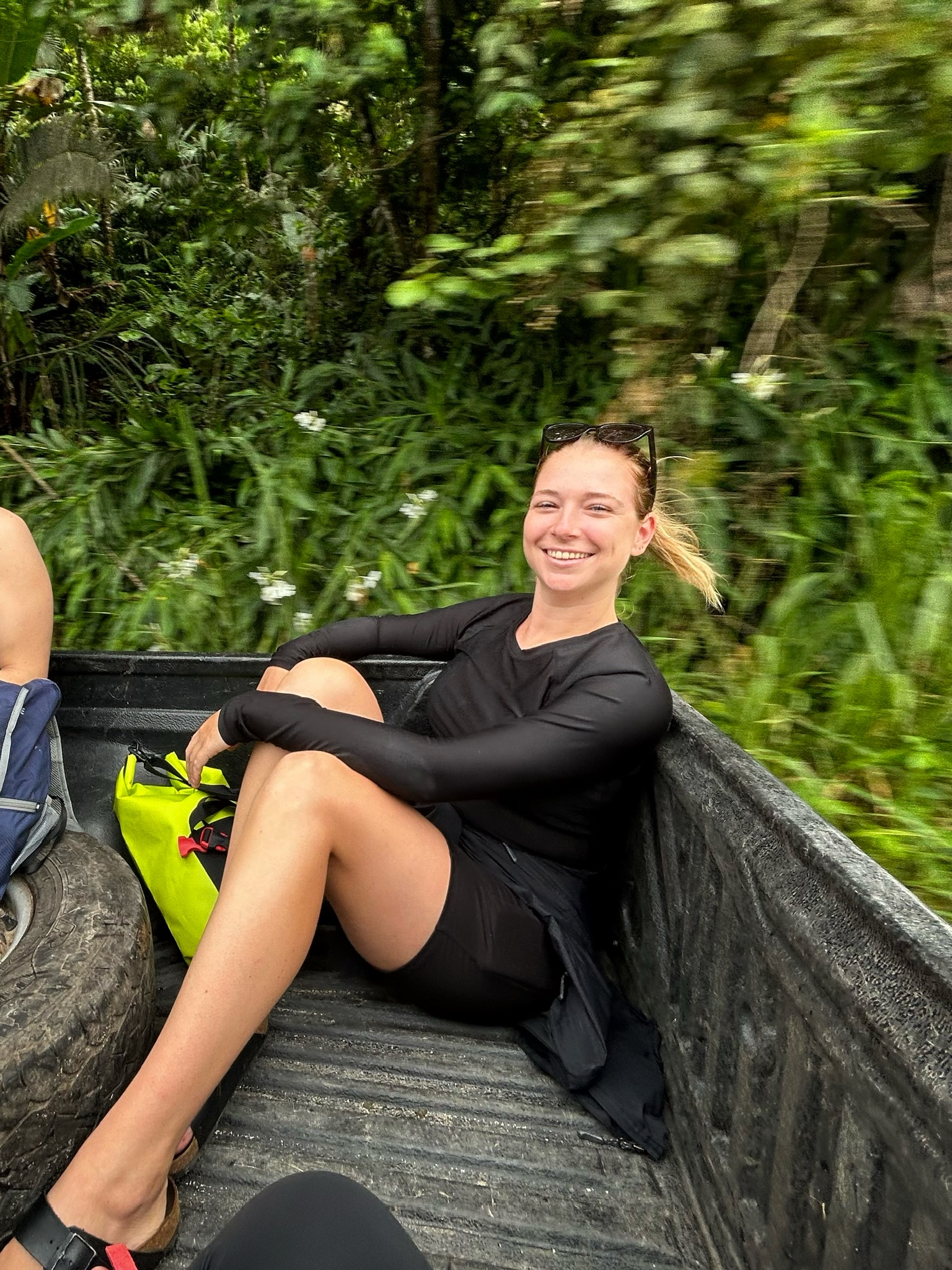
We walked down the road from our home base to catch our pickup truck to the put in site, and the girls of the group got to sit in the bed of the truck- ‘like true Ecuadorians’ we were told- as we rode about fifteen minutes down the road.
Fiona -looking pretty cool as we sped down the road.
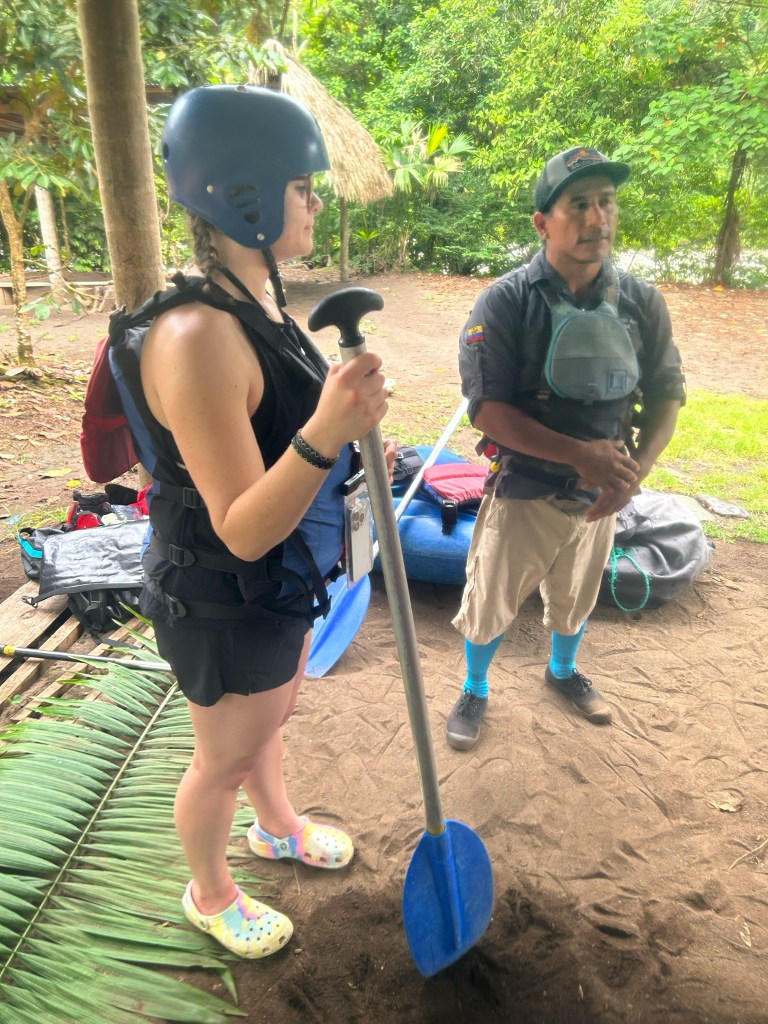
Gregory and Ryann modelling the latest whitewater rafting fashions
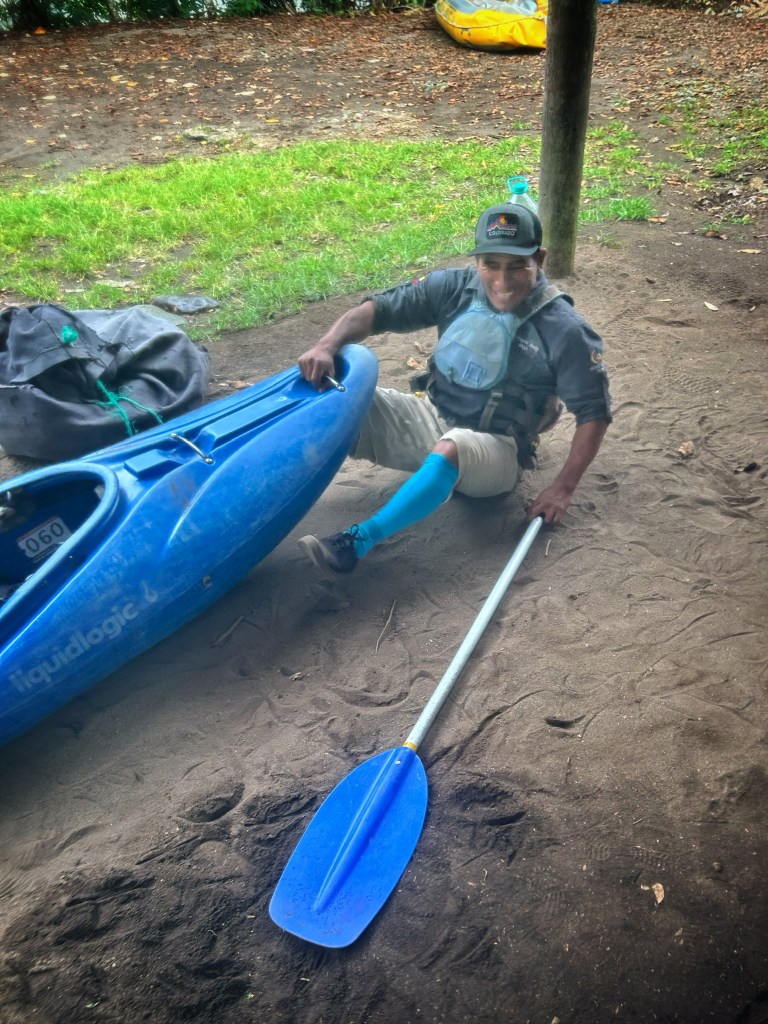
Gregory showing us how to hold on to the rescue kayak if we were to fall in the river and couldn’t get back to the boat.
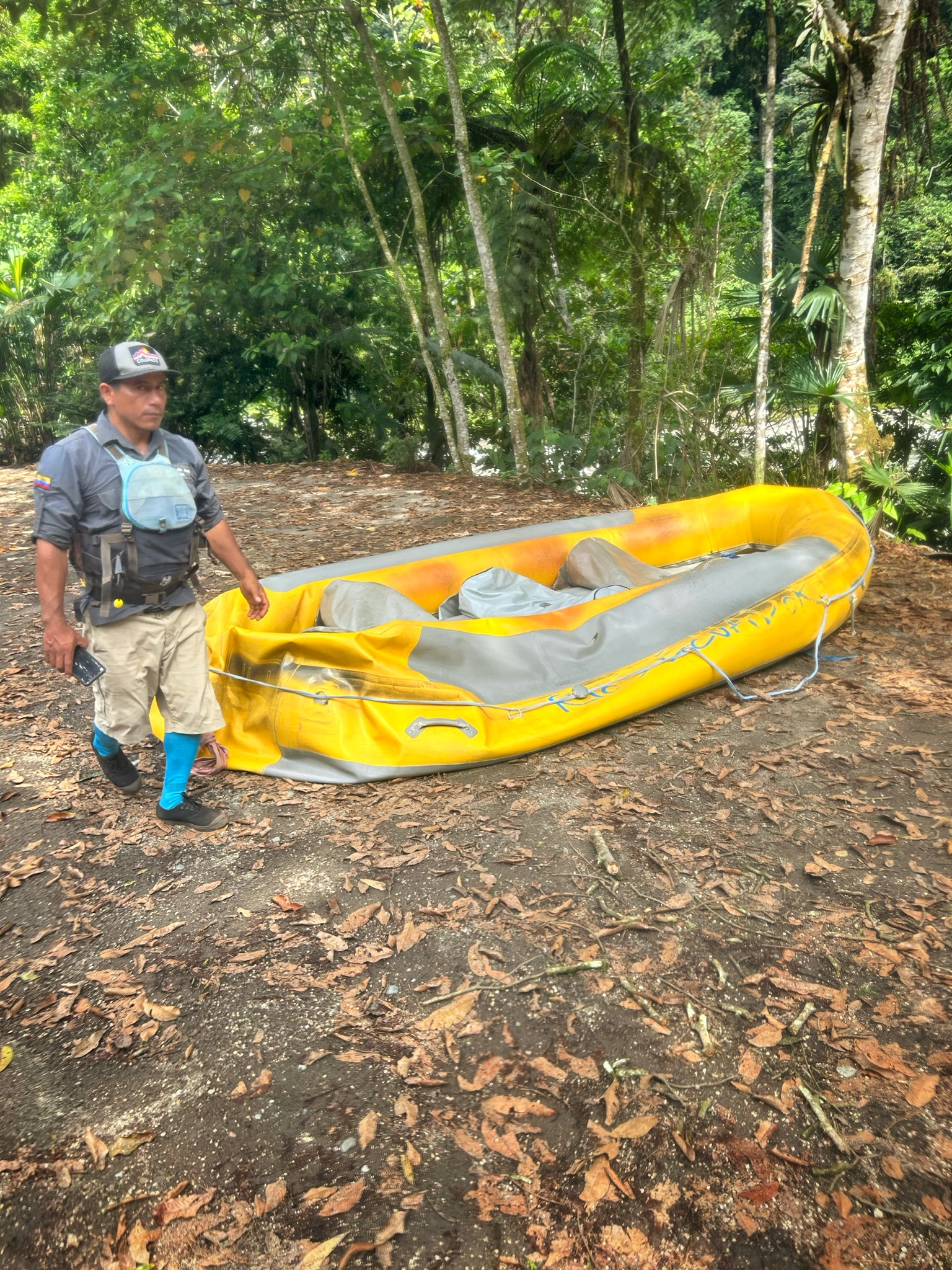
Our guide Gregory (who also went by the nickname “Tuti”) went through all the info about what the river was going to be like and all the safety protocols and instructions we needed to follow, and we were getting familiar with our gear and proper terms and instructions he would give us, rescue/safety, etc) while another member of the staff was putting our raft down the chute into the water. Suddenly we heard a huge bang. We knew it probably wasn’t a good sign that Gregory and all the other staff members at the site immediately stopped what they were doing and all went to see what the noise was down the hill.
It was our raft splitting open along one major seam and deflating. 😳
We were assured there was nothing to worry about and it was an 11 year old raft that had lived a good rafting life, and that we would be getting a new one- a “younger” one for our trip today.
These bamboo poles were the “chute” for the put in location to get the rafts easily to the water.
As another larger group in their fully functioning raft took off ahead of us down the river, the crew that had been working on our boat left in the pickup truck to go get the other raft. We waited down on the shore and wandered along the mix of sand and rocks until our replacement, aka ‘stunt double’ raft arrived with our guides and we got on our way down the river.
Kat, our resident “pro” at white water.
There were seven of us in the raft, and then we had Emerson: our second guide travelling separately in his kayak.
Often, Emerson was down the river ahead of us, reading the water and communicating with Gregory with paddle signs for the safety of our route, and also I often caught him doing trick moves and spins as he waited for us or as he kayaked back upriver towards us.
Gregory and Emerson and several of their co-workers at Rios Ecuador are among the top teams in world kayaking and rafting competitions and had travelled around the world to do so, so we knew we were in great hands.
We were able to jump out of the boat a couple of times and swim, and it just so happened to be another magically sunshiny day for this. All in all we travelled 27 km down the Napo river with one stop in the middle to have lunch and buy some local art and souvenirs, and we were on the water for over 5 hours!
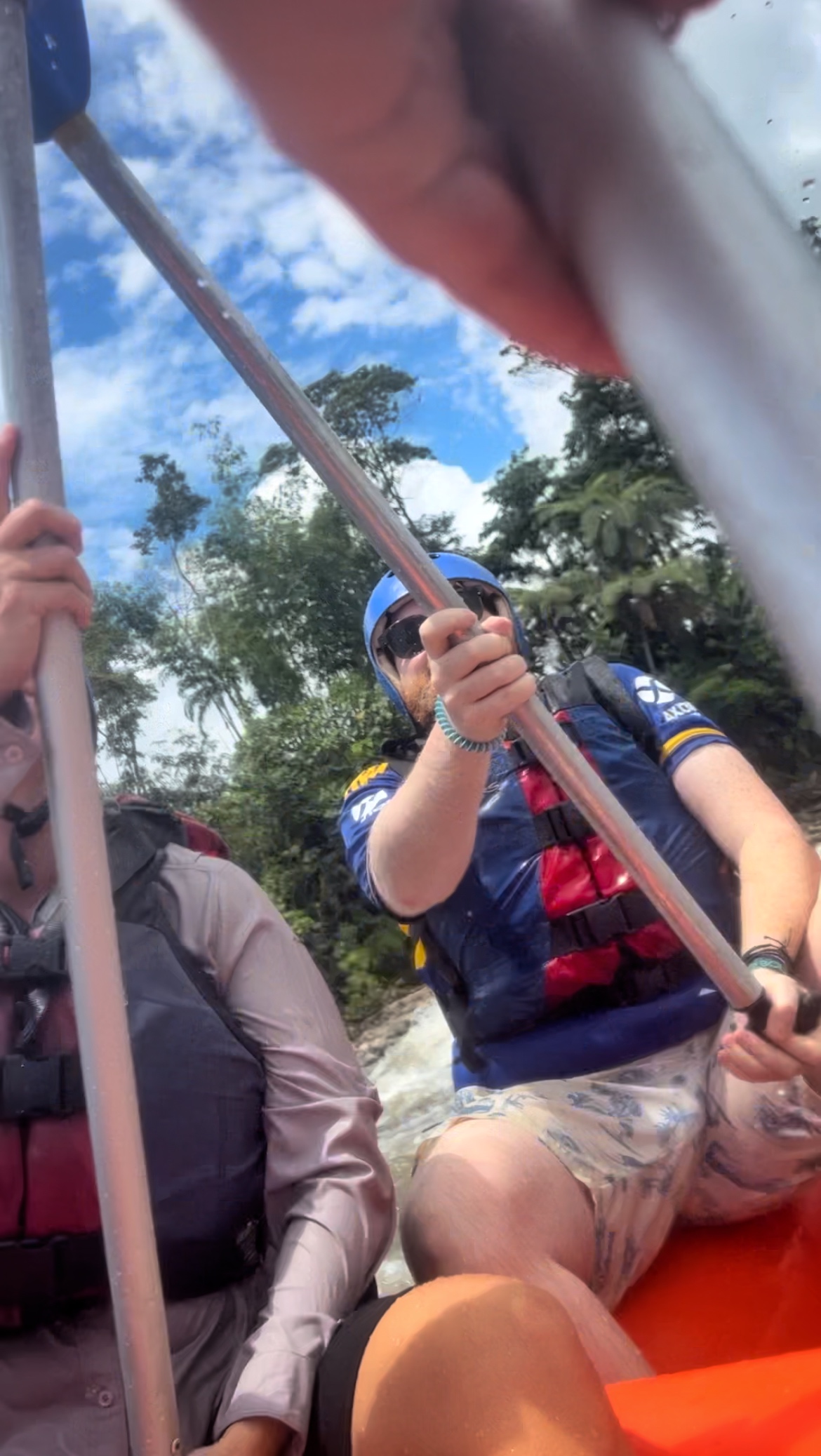
One of my favourite things along the journey was the fact that after we made it through each set of rapids, we all high-fived our paddles above our heads in celebration. It must have happened a couple dozen times that day and I loved it.
I caught this moment entirely by luck as my camera flipped around while filming!
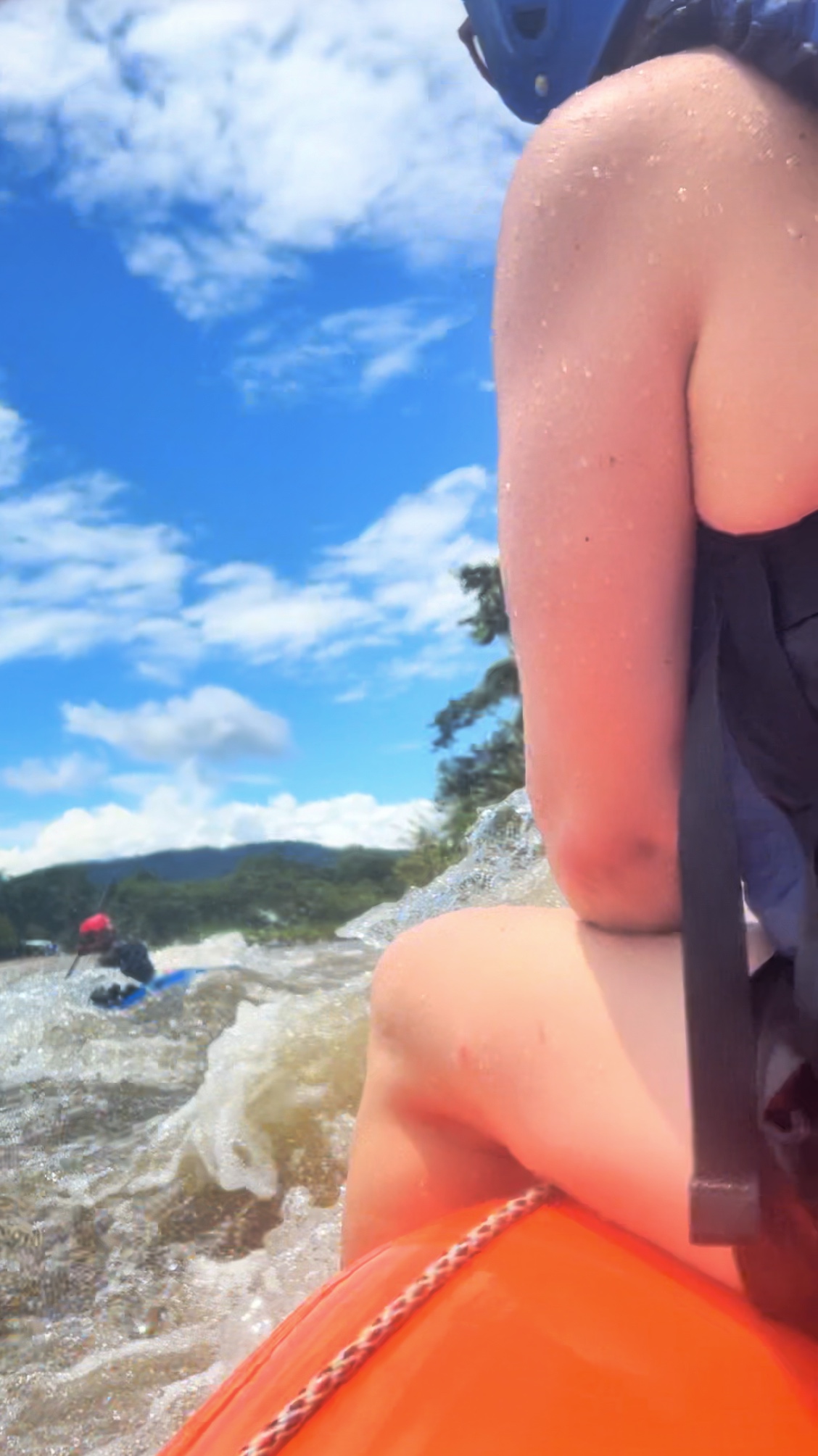
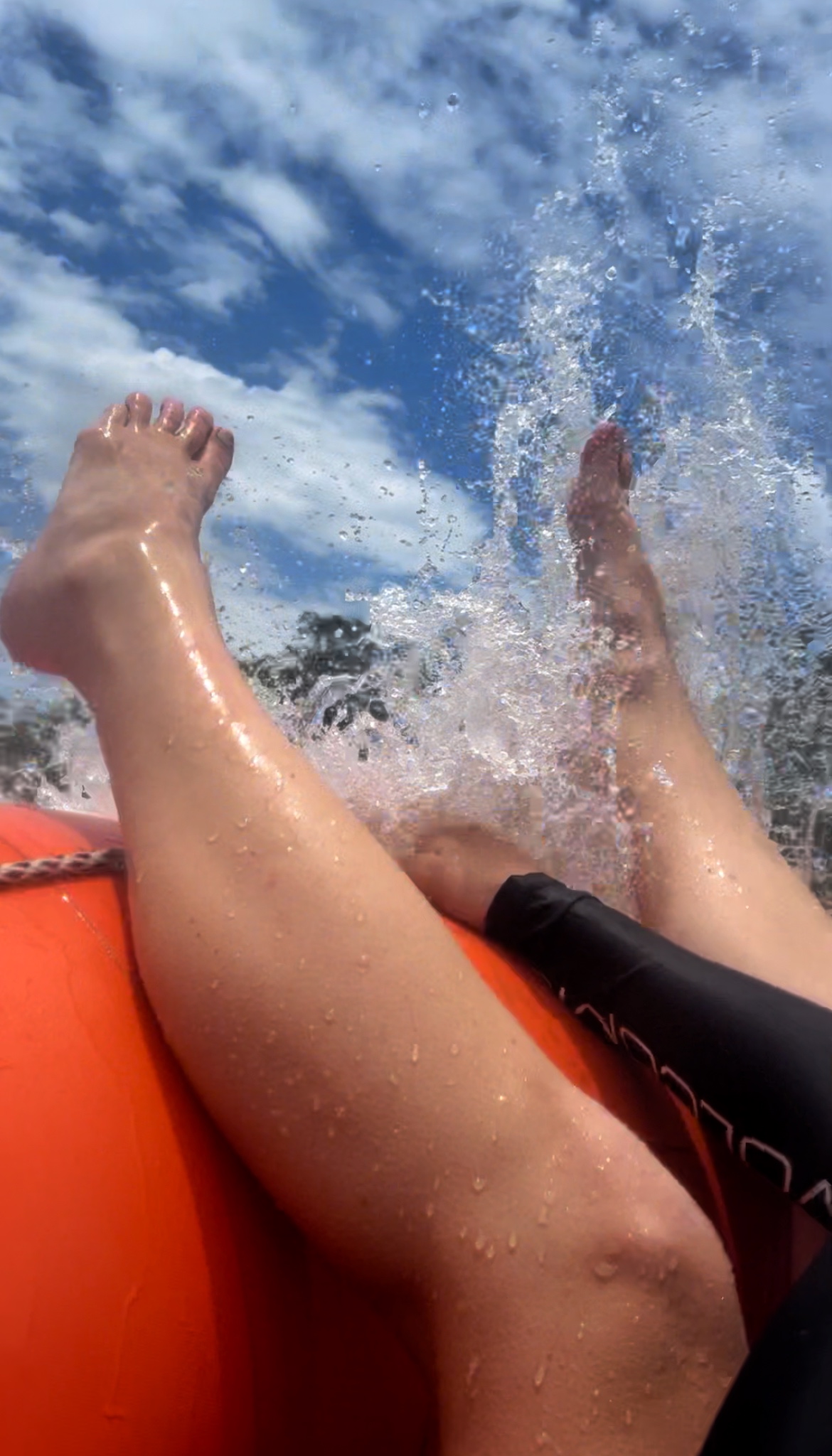
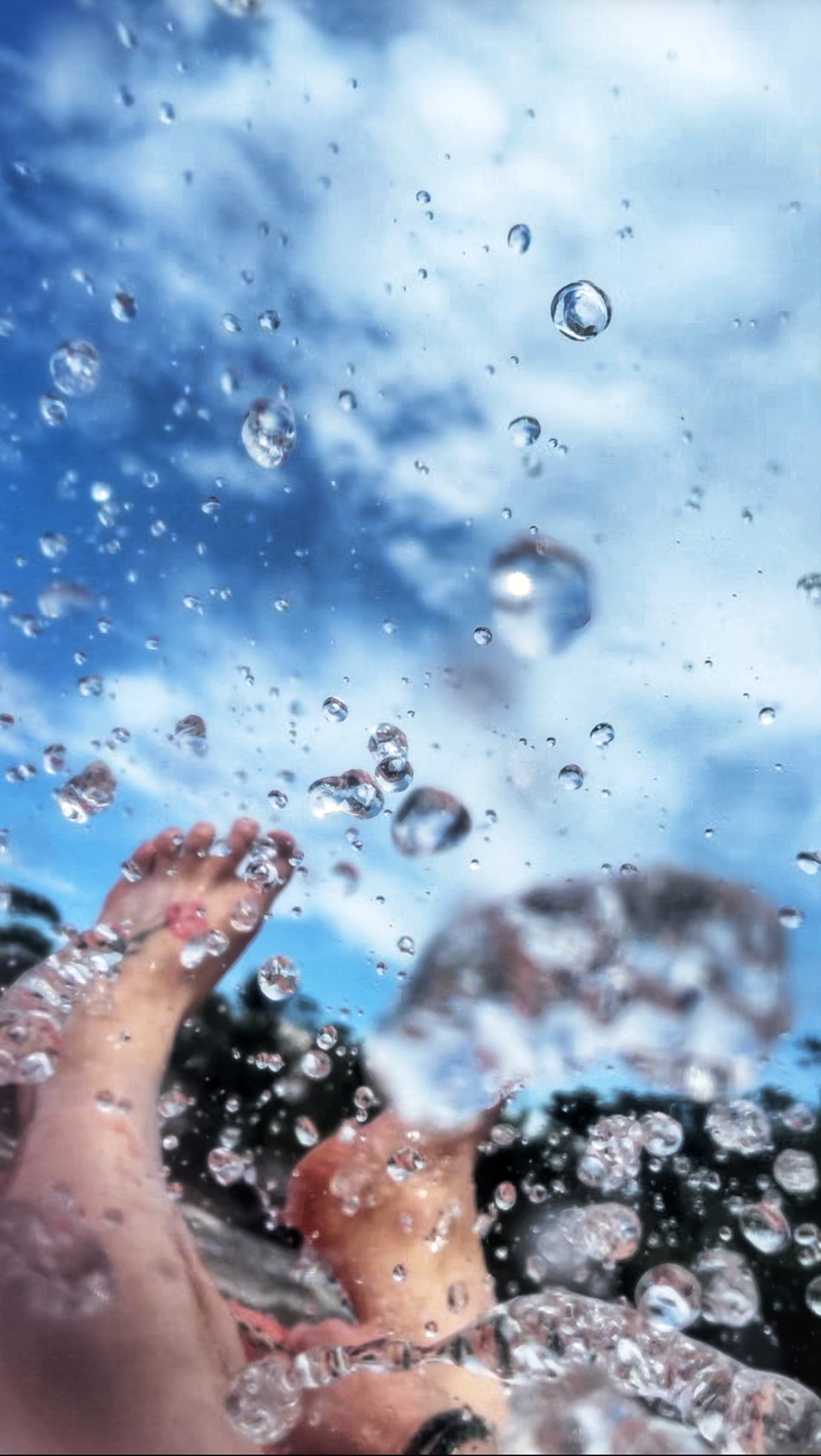
We were all given the option of taking turns “riding the bull”: you sit on the bow of the raft with your legs over the front and your ankles tucked under the front curve of the raft, holding onto the rope between your thighs at the centre, while the rest of us paddled through rapids. The goal was to hold on and tighten your legs against the raft in order to stay up and not fall back into the boat. Fiona, Ryann, Enis, and Adam all tried it, with some success, but it was always funny when a big wave bounced a person back into the boat, often still holding onto the rope but with feet sticking straight up into the air, and no ability to right themselves until we stopped paddling or were in calm water.
The photos above (and any ‘first person/in boat action shots’ are actually all screenshots from the haphazard video my cell phone caught (set to record whatever it could as we bounced and flew through the water as I am not fancy enough to have a go pro and didn’t have time or hands to ever hold it up. This are all from the folks taking turns “Riding the Bull”, all with more success than these photos suggest.
Photo 1: Ryann, Photo 2: Fiona’s first attempt/fall, Photo 3: Ryann after a good fall, Photo 4: Adam really enjoying the reclined position after his fall back into the boat.
Each set of rapids was given names, and at one section called “the Widow Maker”, Adam, the only married man in our group, jokingly refused to sit on the front, so Enis volunteered. At the moment we hit one particular wave, Enis fell back into the boat with feet straight up in the air and as I looked down at him to make sure he was okay I noticed both Fiona and Ryann floating in the river and heading past our raft! In that one moment, there were only three paddlers and our guide still in original positions in the boat and we had to continue paddling until we could help Enis up and get the girls back into the boat. (No photo evidence as my camera shut off here.)
We safely got everyone into the boat and back into their positions all the while laughing at the sudden chaos that had just happened. Amongst the laughter, our guide told us he had never seen that combination of events happen at all once, and said that Emerson, our guide in the kayak caught it all on film (though we have yet to see this and cannot wait!).
Ryann explained that she felt herself falling out of the boat and started grabbing for anything she could to save her. Meanwhile: Fiona, who was sitting just in front of Ryann, had been grinning with pride that she hadn’t yet fell out of the raft on these bigger bumps when she suddenly felt a tug on the back of her life jacket and felt herself being yanked into the water.
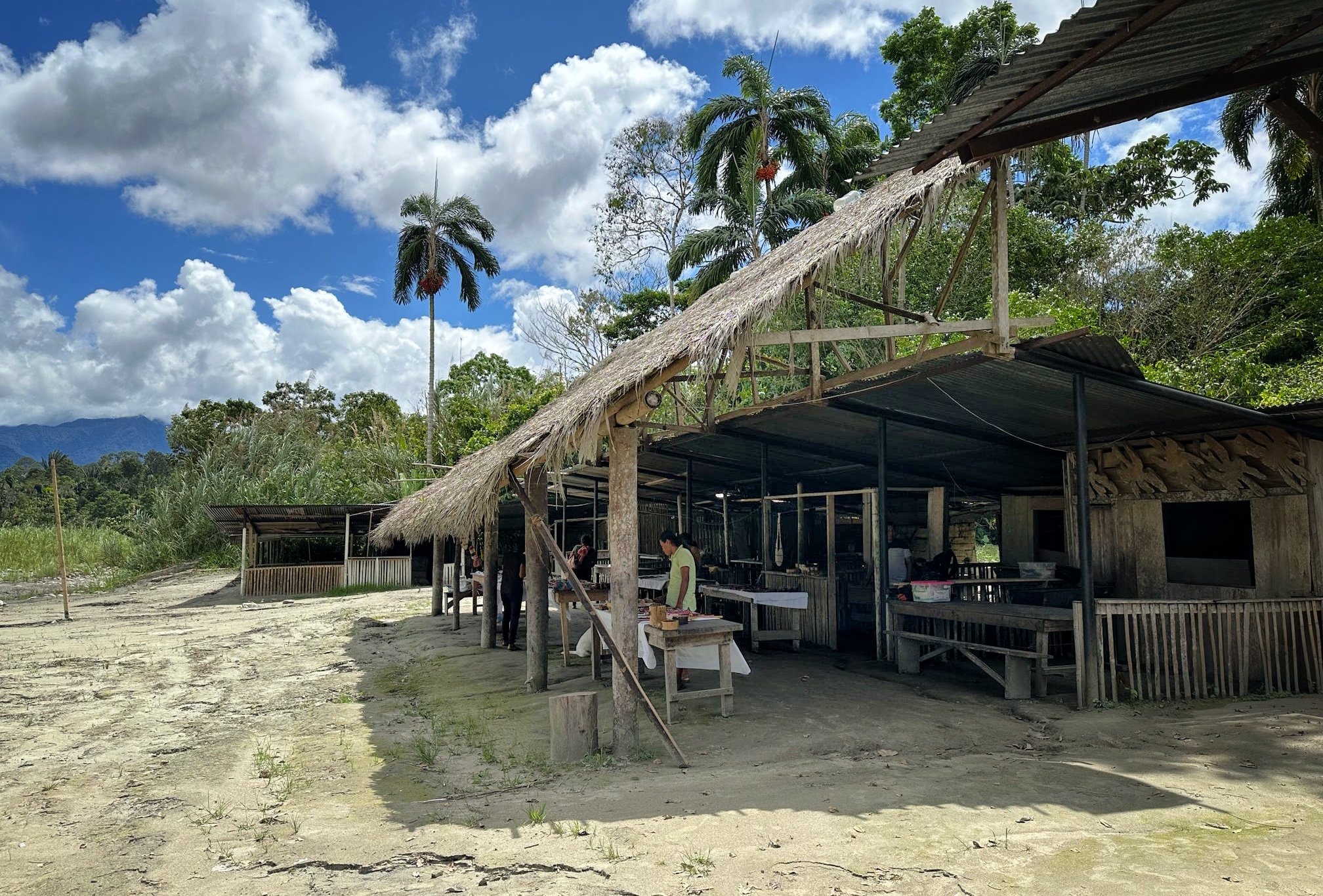
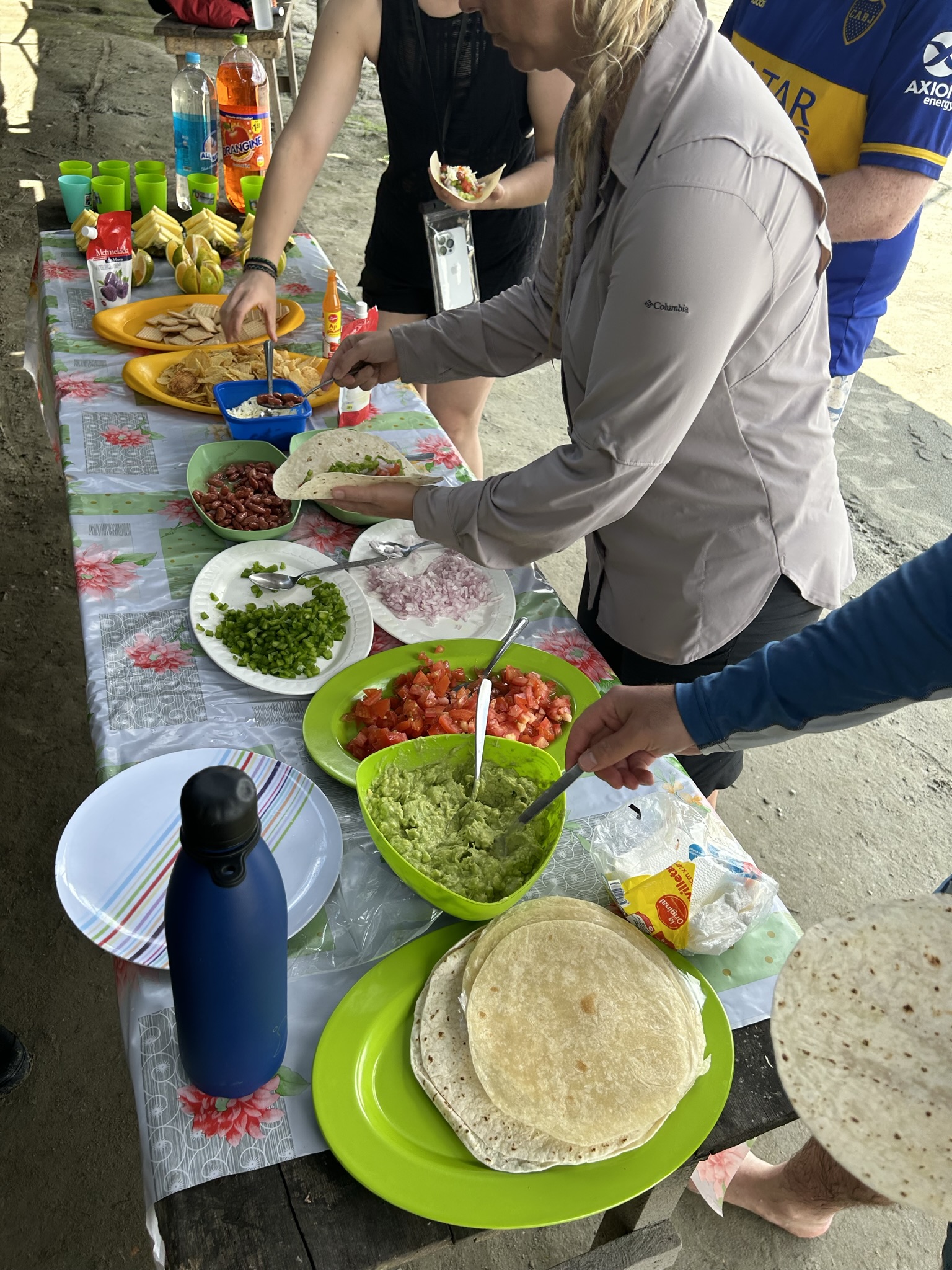
We stopped about halfway for a delicious lunch of tortillas and multiple filling options like tomatoes and avocado, onions, beans, ground beef, cheese, chips, and hot sauce. There was the most mouth-watering thick pineapple chunks for dessert, cookies, and fresh juice and water. We played with some friendly and gentle local dogs, and bought a few bracelet mementos from the locals who set up tables of local chocolate, coffee, and handmade souvenirs- beaded and woven jewelry and keychains, and wood and coconut shell containers and bowls.
Ryann took this gorgeous shot of the lunch spot and souvenir stand.
It was a nice break and an amazing, filling lunch, and by the time we left, we had even dried off a little in the midday sunshine. Adam’s clothes seemed to be the most dried out of all of us… but it would not be for long.
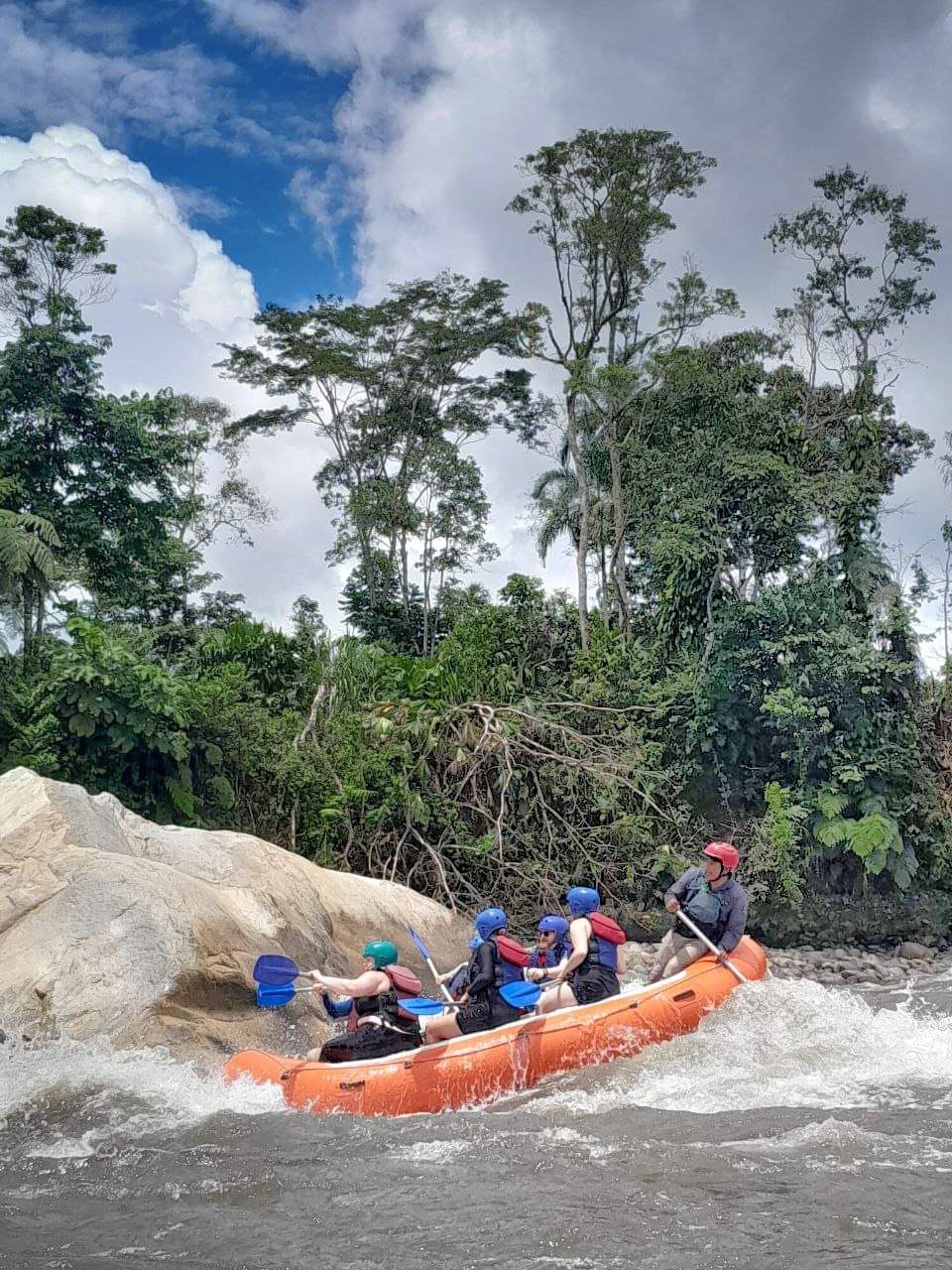
Shortly after we got into the boat for the second half of our trip, we came across some rapids and Gregory asked us if we liked surfing, and a few of us answered with an enthusiastic “yes”. He helped us guide the raft back up the river a bit and to the base of a large boulder and a long shelf of curling water. I now know this spot would have been considered a “hydraulic” which is a small and less powerful “hole” where the water reverses back on itself and is not safe for smaller rafts -but for us it meant we would sort of spin in place and ‘surf’ there on the curl of the water, but I think all of us in the boat would describe it more like a wall of water dumping into the side of the raft closest to the downward current, filling the raft with water and slamming the full power of the rapids into the faces of whoever was on that side of the boat, particularly in the front. As the two people in the front, Adam and I can assure you there’s not much like the feeling of being practically waterboarded by a river. We all laughed and squealed with shock and amusement as we kept turning in that spot for what seemed like forever. And someone joked “Adam, did you say you were completely dry just a few minutes ago?”
A lovely action shot of us “surfing” aka filling the front half of the boat with all the water of the river. I drank so much river water I think I’m now part Ecuadorian fish.
We finished the day by hauling our raft up onto the shore to the crew’s truck, and celebrated the end of the adventure with cold beer and sodas, realizing that we all got a lot of sun and unique tan lines…
The many exciting stories from the day were dramatically retold by yours truly (unanimously designated by our rafting team) over dinner that night with the rest of our group.
Another ‘bonus’ memento from the day was the completely unnecessary broken toe I got while getting back into the boat simply after a swim midway down the river and as I was getting in, kicking a rock. The rock won, needless to say, and I was a bit of a hobbler the rest of the trip as it tried to heal without any proper rest. 😬 I think that I finally have the motivation to invest in some good water shoes for the first time since I bought my very first pair of teevas for summer camp in 1997.
An evening in a hammock overlooking the jungle was the perfect way to end that day of course, and prepare for another highly anticipated part of the week- an animal sanctuary the following afternoon! (That, and a sheepish visit to Estella in the kitchen for some aloe vera application.)
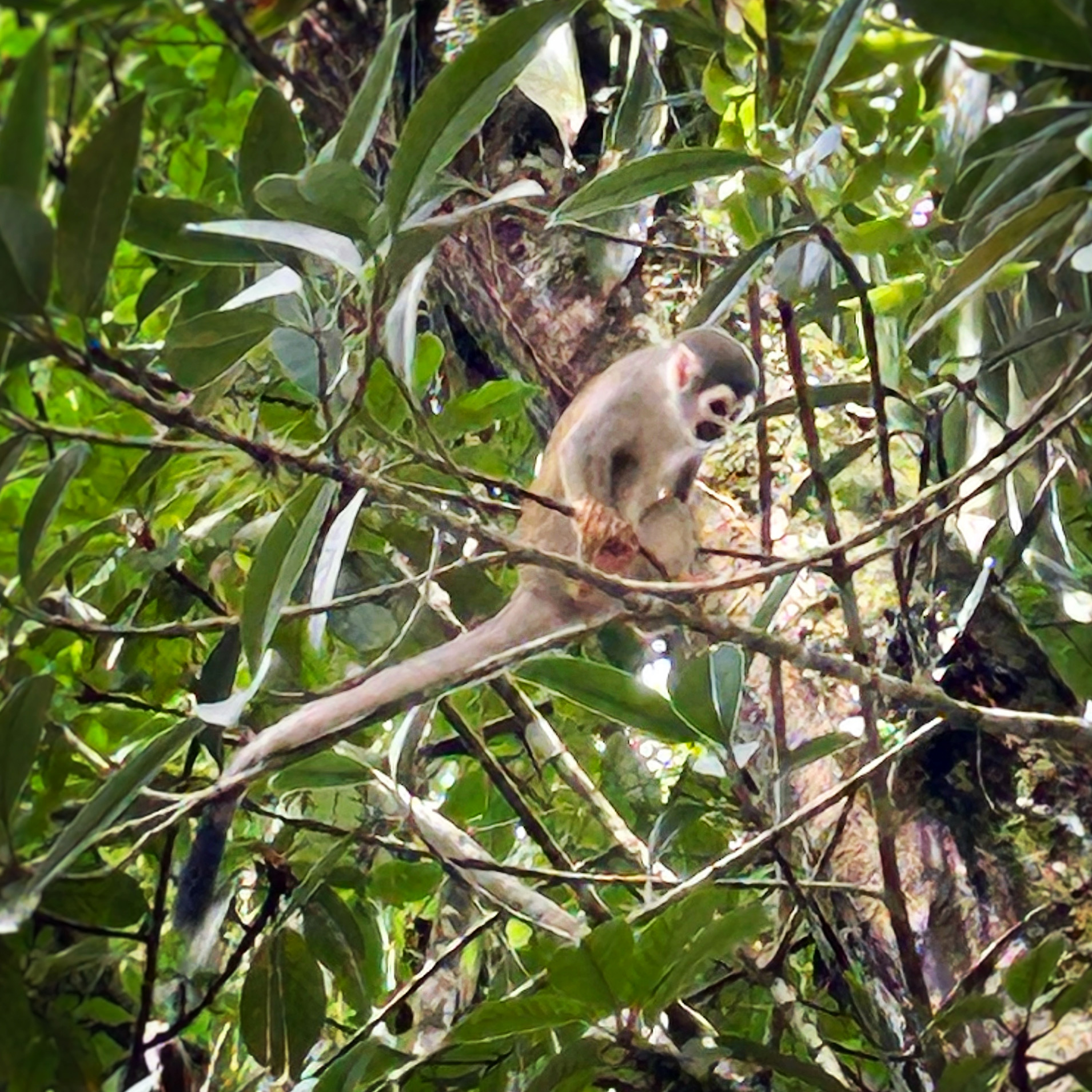
First and foremost let it be said, squirrel monkeys are one of the cutest things on the planet. I hope you get to see one close up in real life someday. At the start of our activities the next morning we got to wander through a beautiful park with a plethora of squirrel monkeys and we were able to feed them slices of banana to entice them to come down from the treetops (where the teensy tiny baby monkeys stayed, but watched with curiosity). They patiently took turns climbing down the vines and branches to politely take the banana pieces from us with their hands – or on a couple occasions, very gently with their mouths – and then scamper up the trees to eat them.
We also wandered through an old site, overgrown and left unfinished with an ethereal tropical vibe.
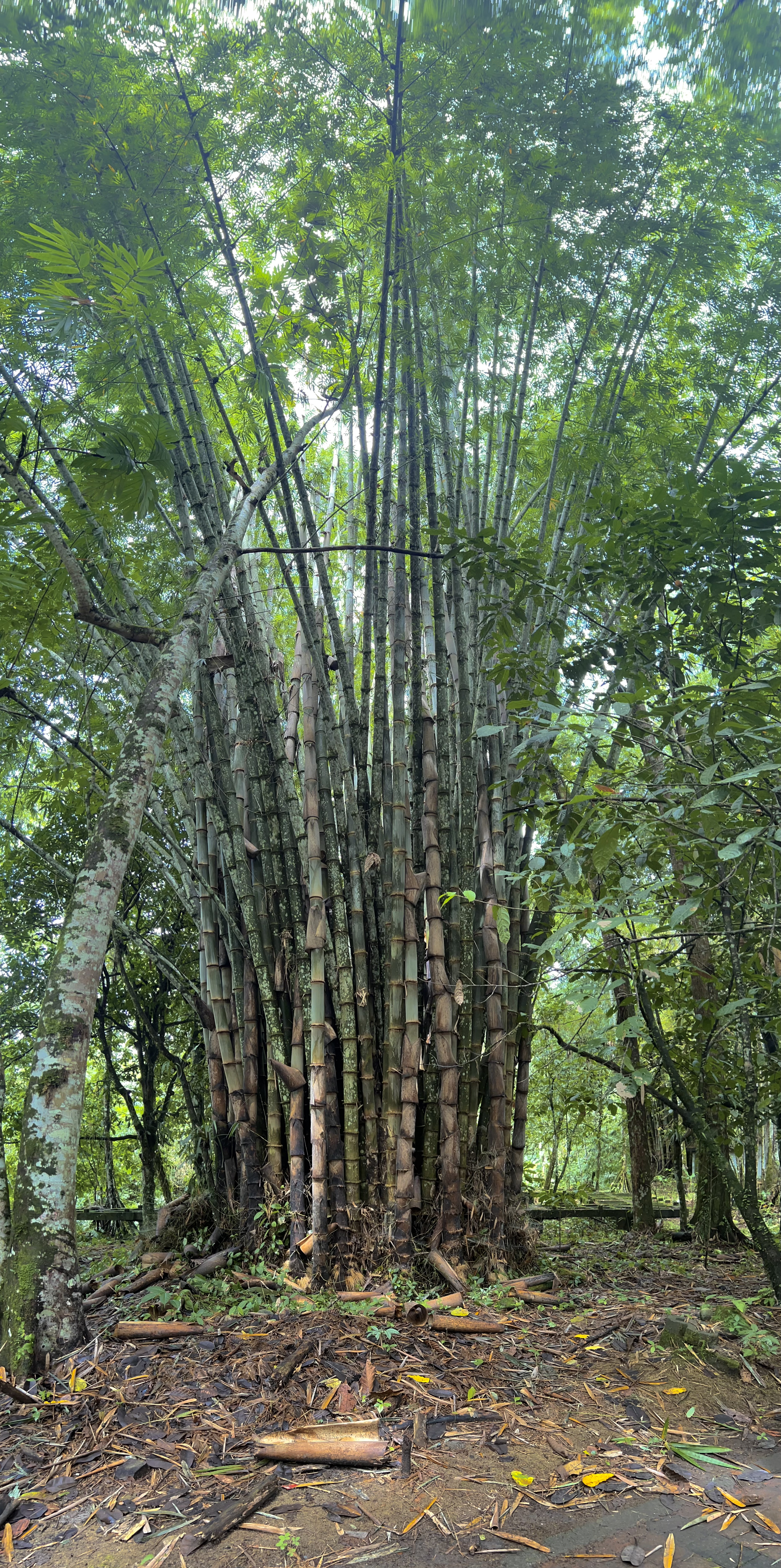
the bamboo here was some of the tallest I have ever seen.
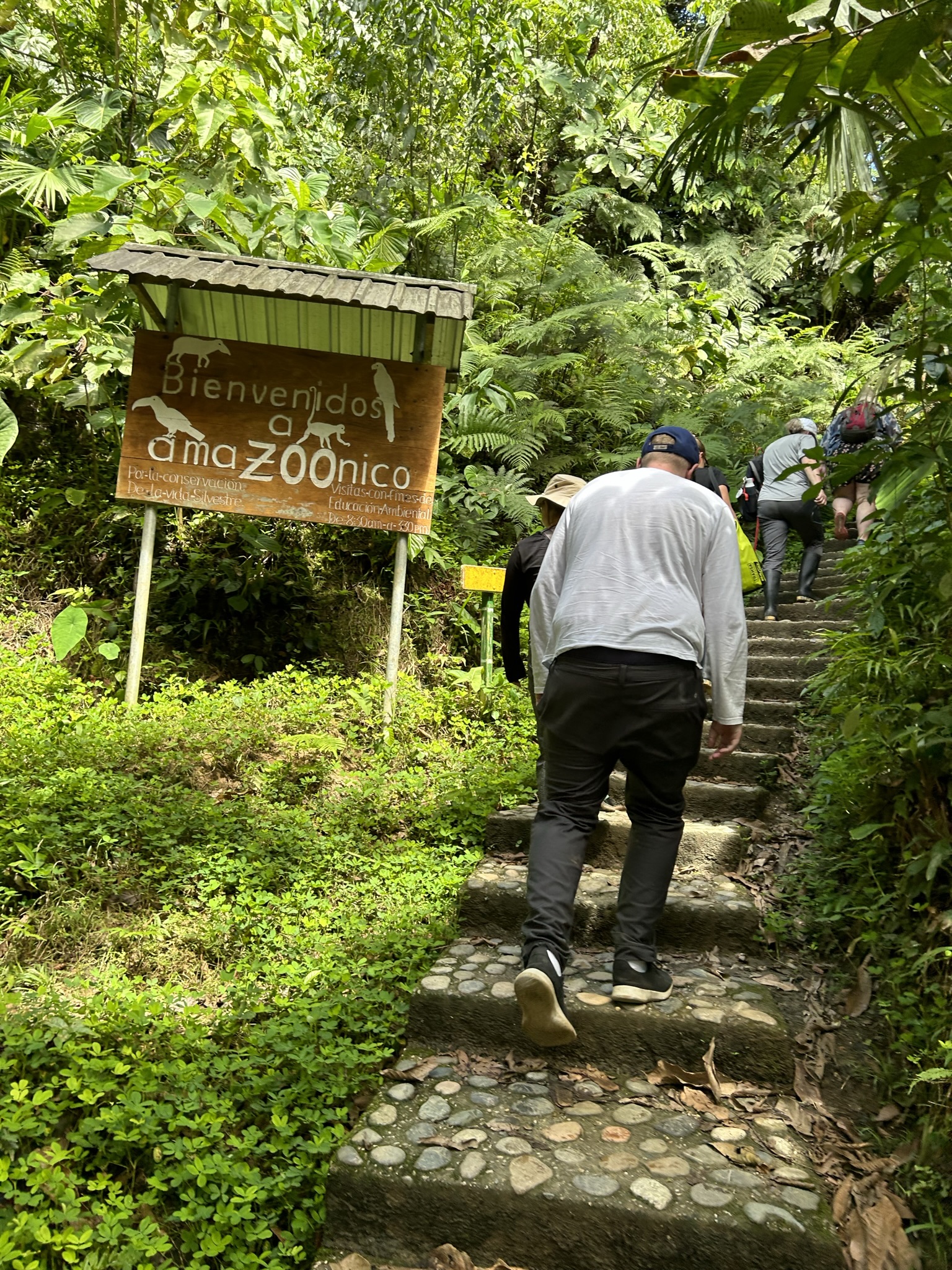
A motorized canoe took us further down the Napo river that we had rafted the day before and we arrived at the Amazoonico Animal Wildlife refuge for the afternoon. This not-for-profit organization is run primarily by volunteers and relies on donations even though it is the biggest organization of its kind in Ecuador.
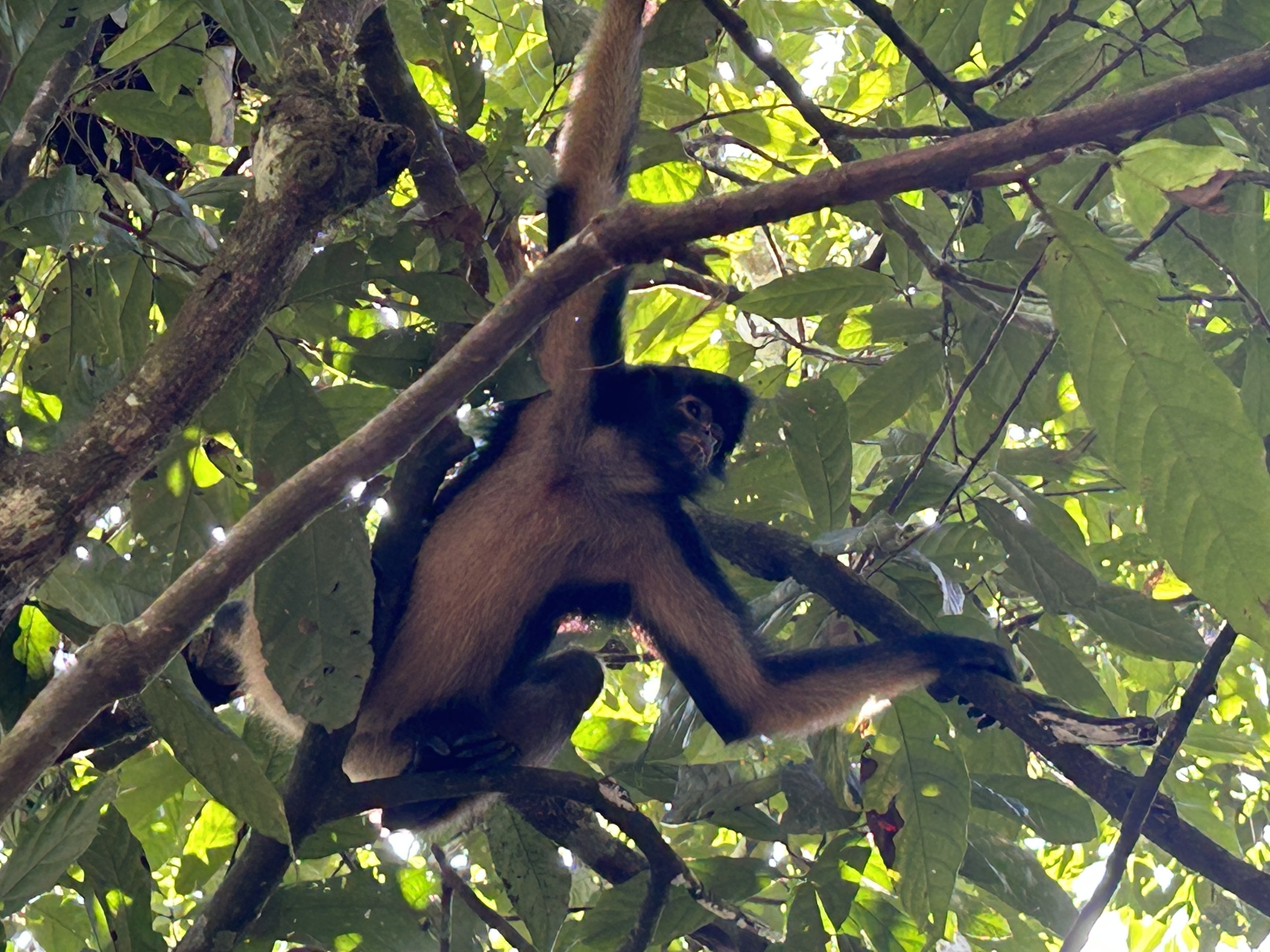
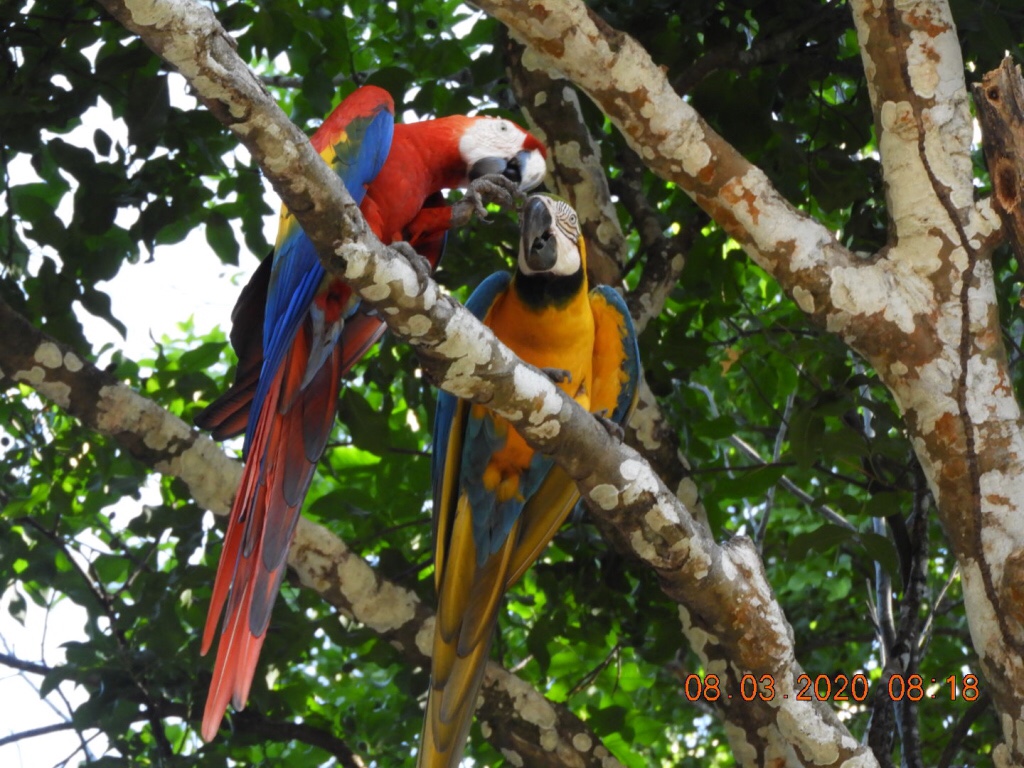
We got to watch a couple incredible rainbow-feathered macaw parrots wander around the ground -protected by the dogs on site who are apparently a little scared of the birds-, we were all delighted by a baby spider monkey just casually chilling with his mom (and when he got a little too exploratory his mom would grab his tail and pull him back to her side).
At one enclosure we were greeted enthusiastically by a beautiful female toucan -named Kevin- and many curious parakeets and parrots, a couple hanging upside down eating bananas, we got to peek at an anaconda called Esmeralda, catch sight of ‘pecari’ (similar to wild boar), and even come across wild tortoises lumbering along the forest floor.
Occasionally huge (wild) spider monkeys would swing across the branches above us, which encouraged us to move along quite quickly.
Most of the animals here have either been rescued from illegal trafficking, from being pets or even from labs or animal testing facilities, and there were some very sad stories about the cruelty of humans to these amazing creatures. The major goal of the refuge is rehabilitation of the animals so that can be released back into the wild, so they maintain a strong habit of minimizing direct interaction between humans and animals (particularly with birds and monkeys), but many animals are unable to go back into the wild either due to major injuries or having been kept by humans as pets for so long they have been become tame/habituated to humans and no longer able to survive on their own. It was an eye-opening experience and I was grateful to learn about this place.
This was the muggiest, hottest day of the trip, reminding us all how truly in the Amazon Rainforest we were, and we all practically wanted to swim back to our starting point, definitely looking forward to the cold water showers back at our home base.
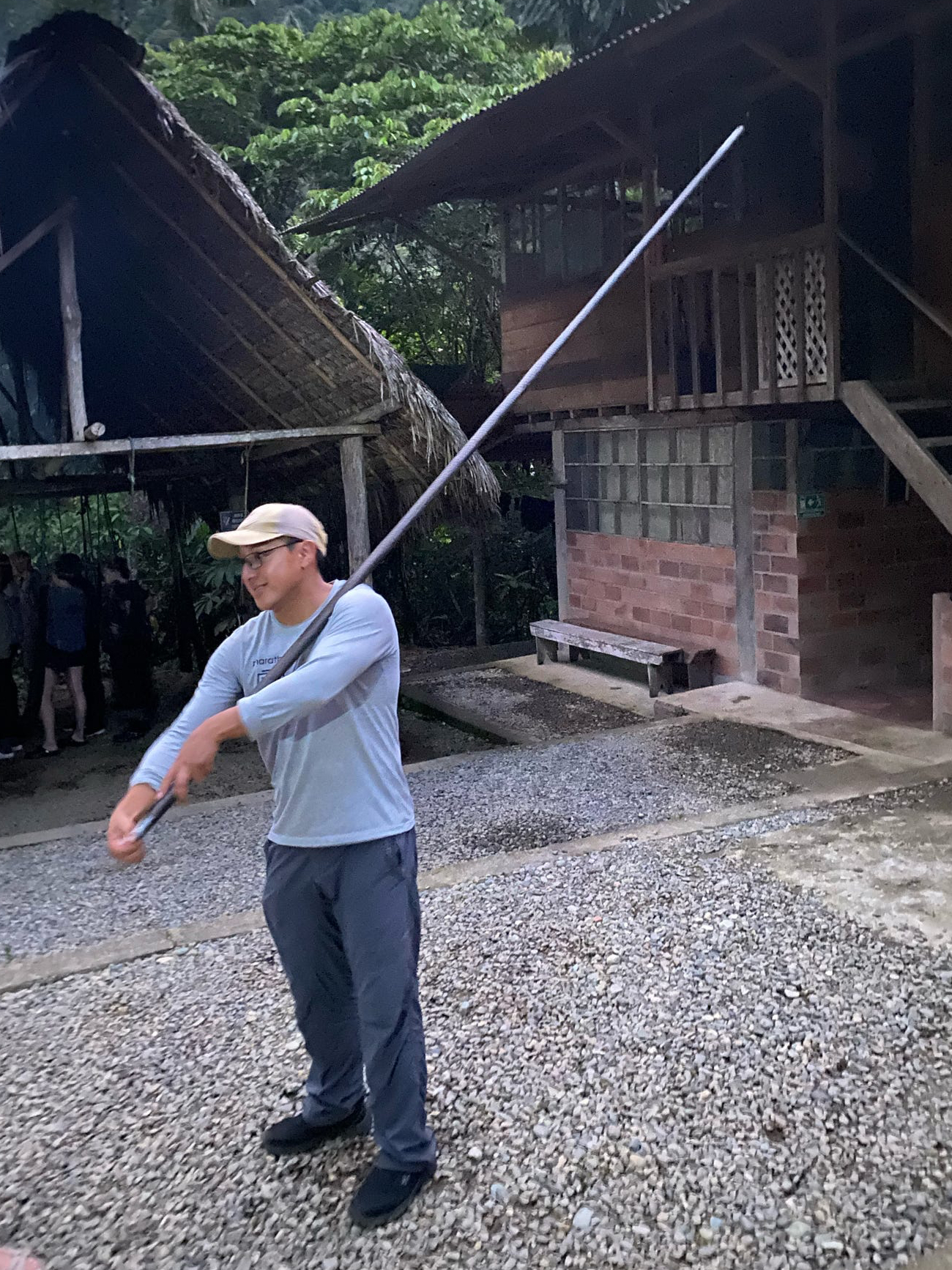
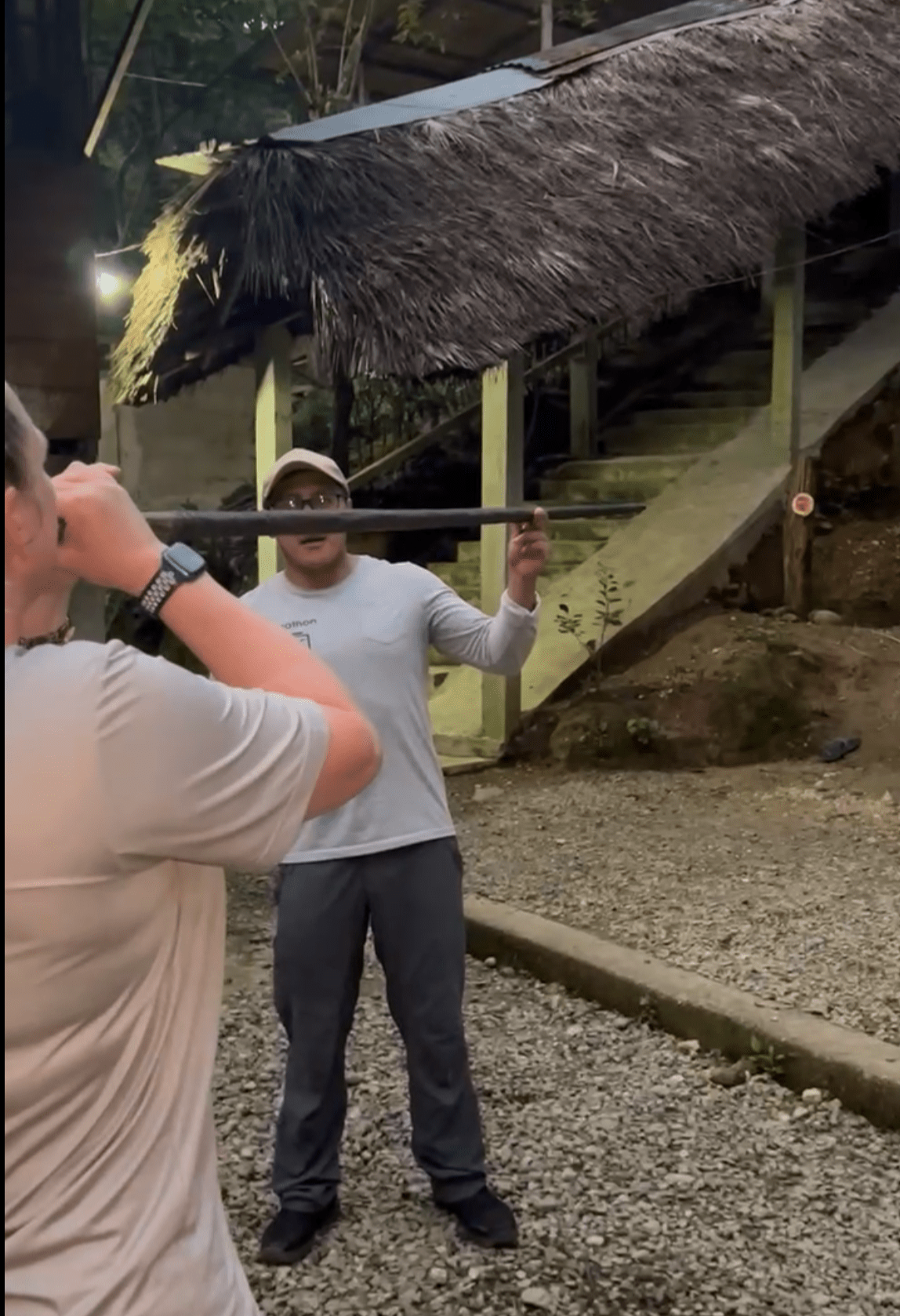
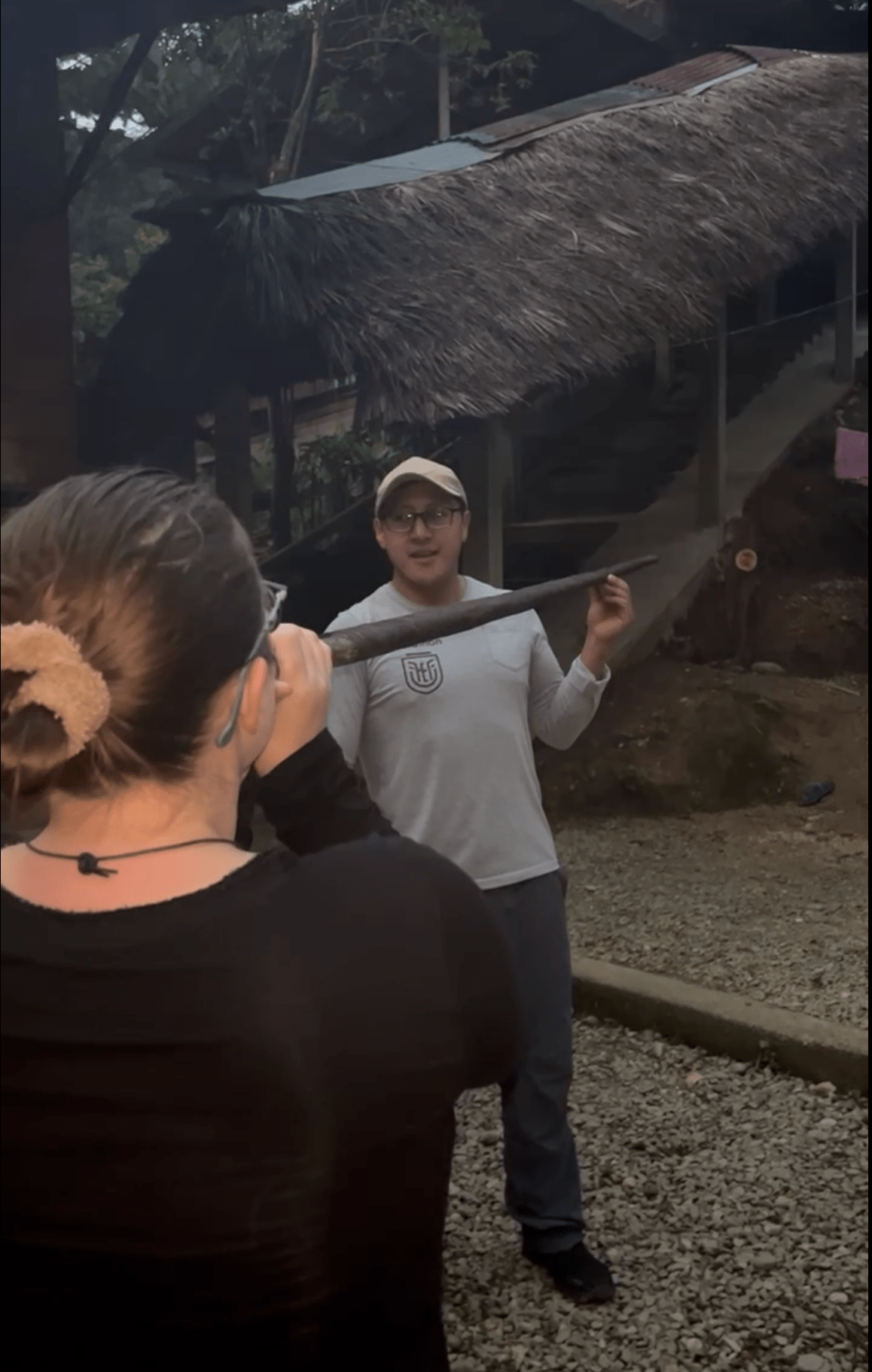
That night before dinner we got to try out firing blow darts at a watermelon bullseye, and with two attempts each, I think we all wanted to spend more time to hone our skills because it was fun and exciting to try! The hardest part that a few of us tried out was holding the blow gun ourselves without help. At 10 feet long, the long wood ‘pipe’ was quite heavy and tricky to hold while both aiming and preparing to quickly and forcefully blow the tiny bamboo-skewer type ‘dart’ towards our target. I think if I had a third try I could have hit the target (as the dart lands lower than you think it will) and both of mine shot deep into the stump just below the watermelon disc.
Of the entire group, Danica was the superstar/insta-pro, hitting the watermelon bulls-eye twice! She was honoured with a prize/gift from Delfin, a mysterious package of banana leaves tied with vine.
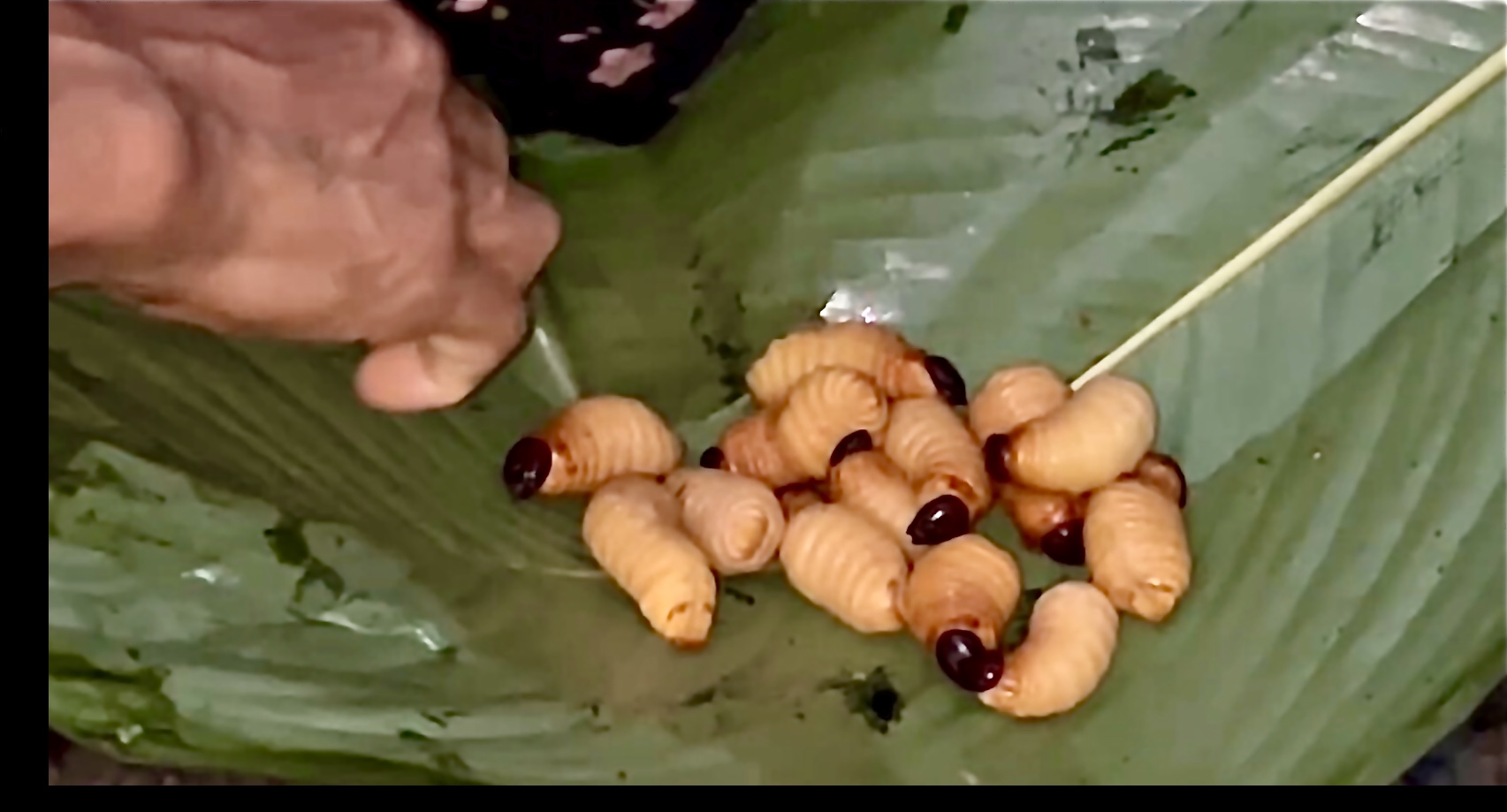
Danica’s worst fears were realized as she reluctantly undid the tie and opened the leaves to reveal a bit pile of squirming, crawling, yellow grubs.
Delfin prepared and fried up the grubs for everyone, and a small handful of the group tried them out, myself included. I think the hardest thing was the fact that once cooked, they pretty much looked the exact same as when they were alive, just not squirming… The cooked inner texture was like that of soft scrambled eggs and sort of had that flavour, along with almost a bacon and shrimp or scallops flavour mixed in. Another unique experience not to be forgotten.
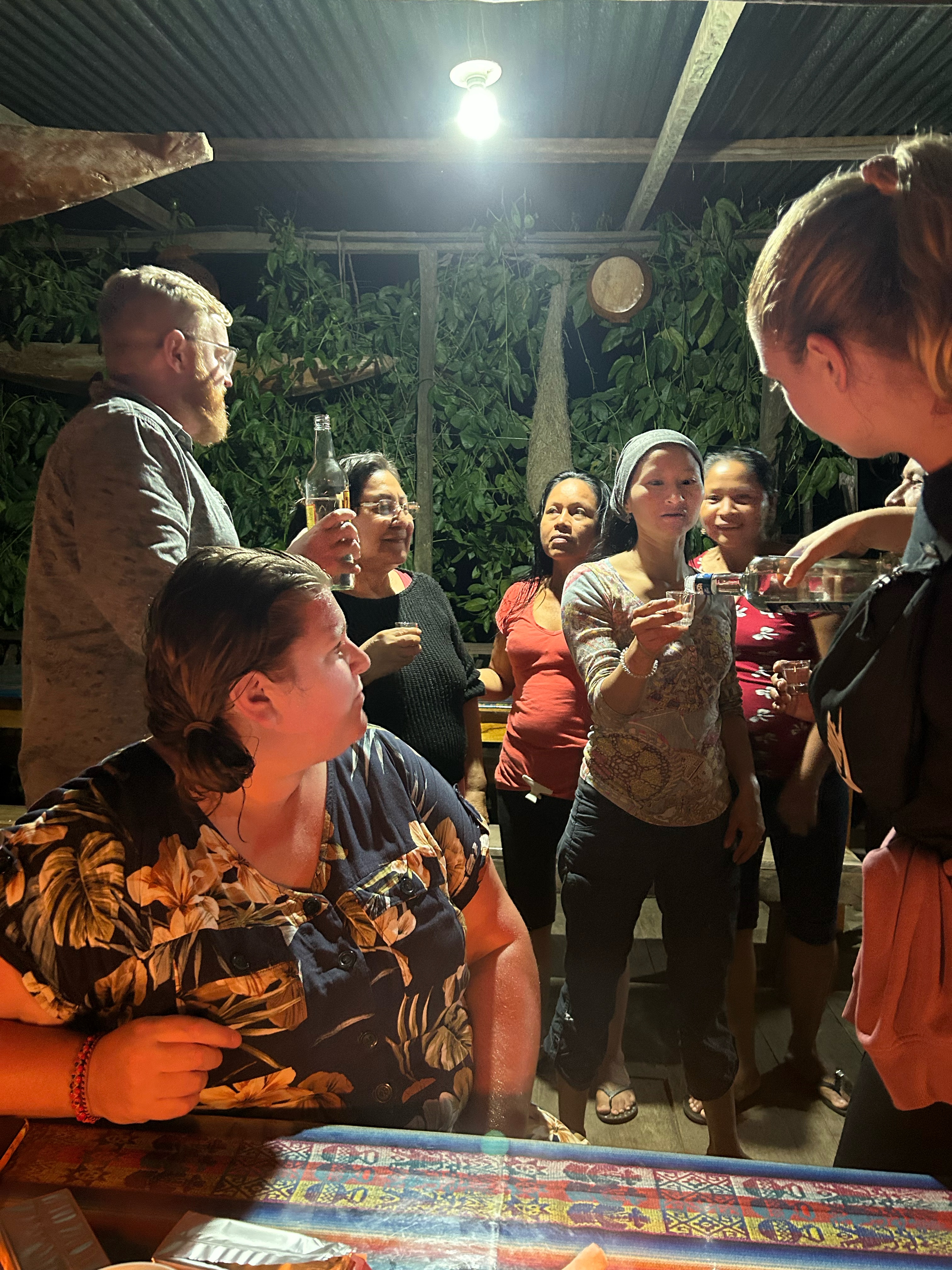
That night after dinner we shared drinks with the family and staff at our home stay, and learned a local toast in both Spanish and Quechua- the local indigenous language. In Spanish: “Arriba, abajo, al centro, pa’ dentro!” (Which means ‘Up, down, to the centre, inside!’) The video below has the Quechua version.
We had all felt so welcome here and we all hugged the family members before we left the next morning with huge gratitude for their welcoming and generous hospitality.
It’s encouraged to tip the local guides/hosts by G Adventures and we were all more than happy to give the family an envelope with great thanks for taking so much care of us all week, and I also was able to sketch and paint a postcard with my personal thanks to give Delfin and Estella.
Our travel back to Quito began early the next morning with a bittersweet departure from the jungle at 8am, a private van trip to Tena, a transfer to a huge public bus that included two Spanish-dubbed movies and several washroom stops, and a second transfer to another private van in Quito to get back to our hotel for 2pm. Many of the group then hired the same driver to go to the Centre of the Earth museum, and a handful of us stayed at the hotel and enjoyed our first hot shower in a week (and I was able to blow-dry my hair as well and had dry hair for the first time in 6 days!), and I think several people definitely went for naps.
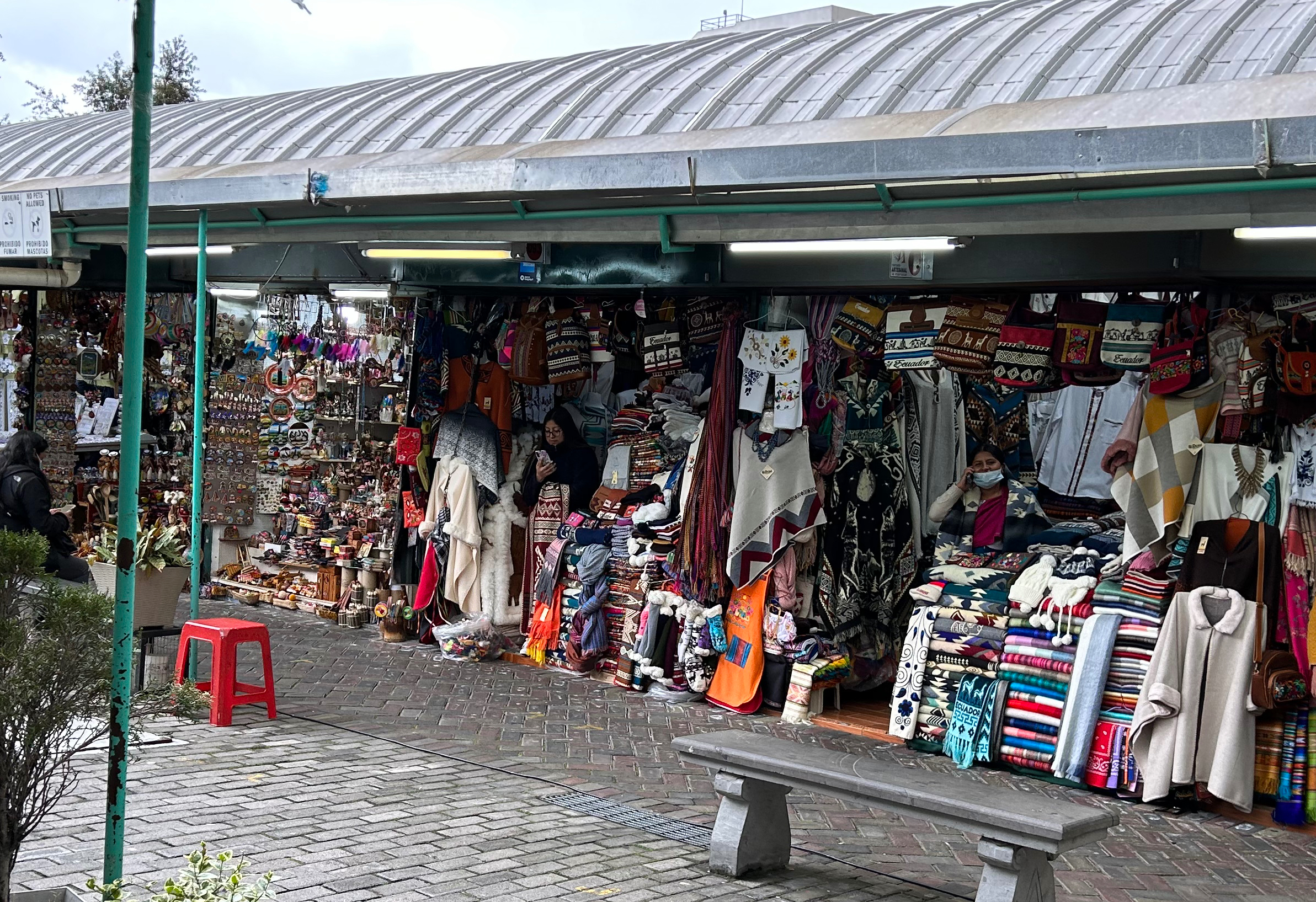
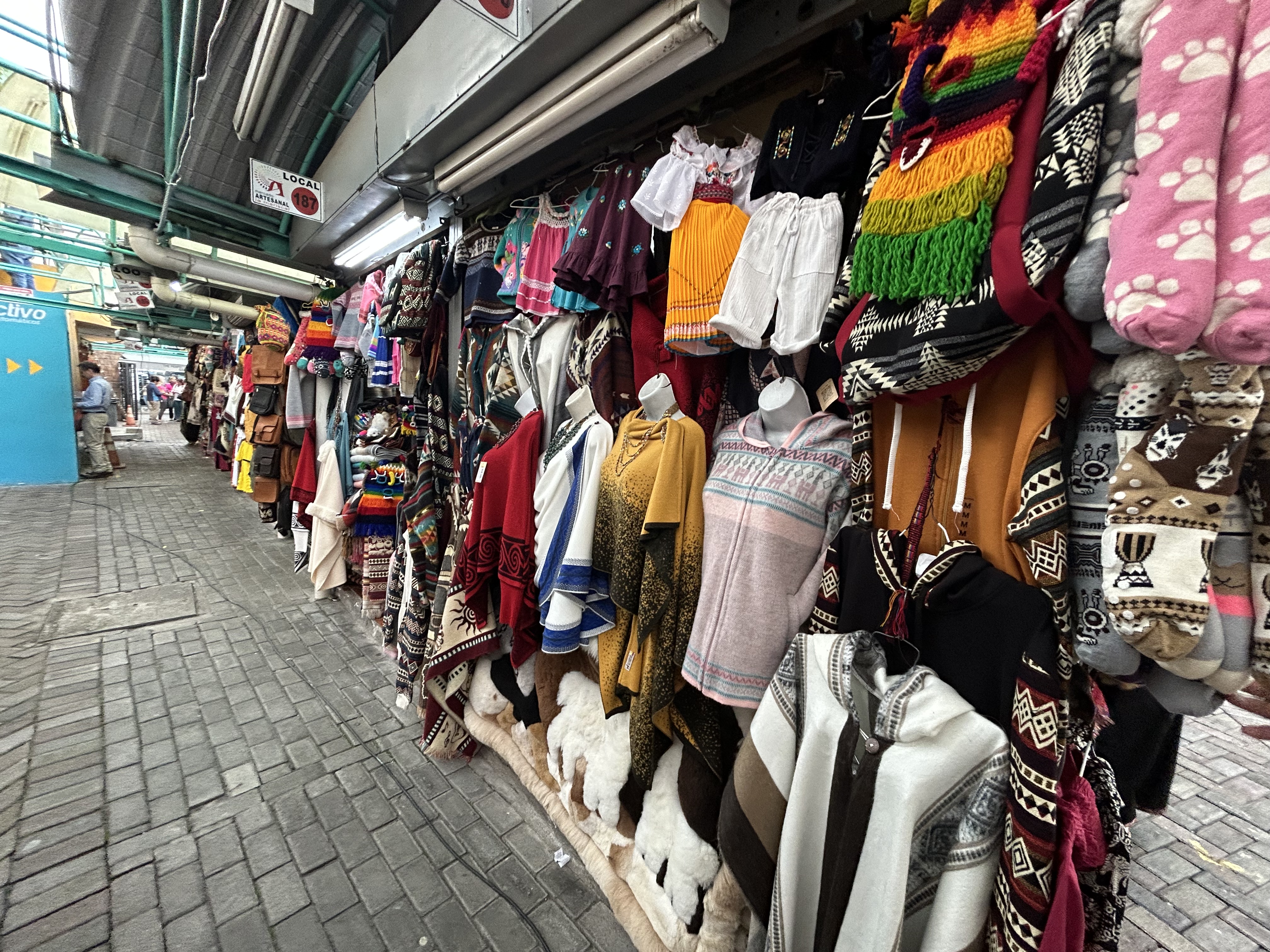
Fiona and I walked over to the local artisan market to search out some fun souvenirs and see the local art offerings.
Honestly I have never been more tempted to buy sweaters on a hot day than after seeing what was available in terms of beautiful alpaca wool ponchos, sweaters, scarves, socks and hats for very reasonable prices.
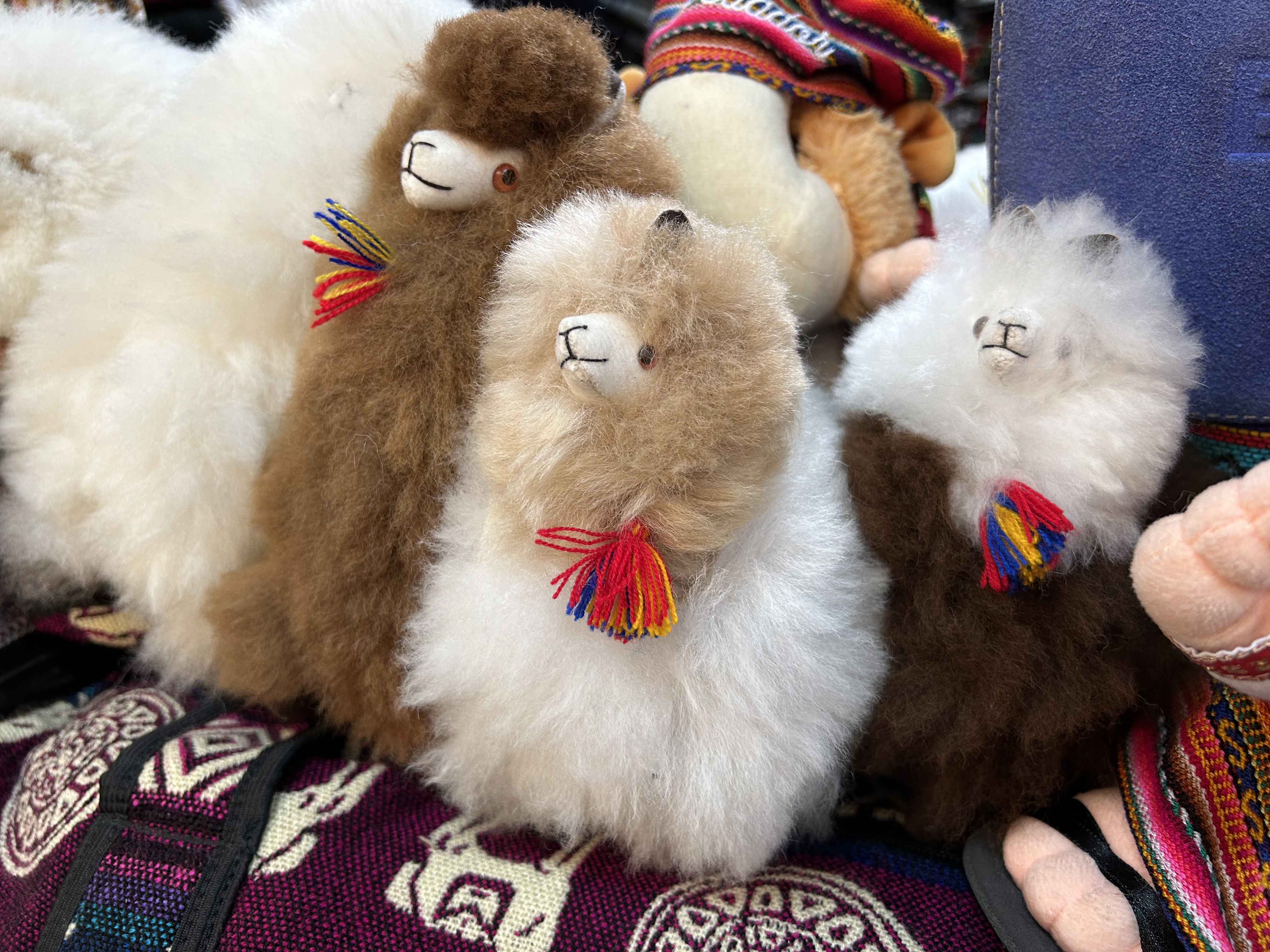
But also I felt compelled to purchase a full herd of alpaca stuffed animals that were so soft I wanted to cuddle in a pile of them.
There were beautiful hand-painted bowls and artwork and collectibles/souvenirs of every size and style, plus lots of beautiful silver and stone jewelry.
One final dinner altogether with the group that night was both a celebration of the week we had spent together and a farewell, too, as we all would be going our separate ways the following day- some continuing on exciting journeys and some heading home. Did some people try the local delicacy of Guinea pig at dinner? Perhaps…
We all shared numbers to stay connected through WhatsApp and Fiona suggested Photo Circle to share all our photos and videos. If you haven’t heard of Photo Circle, it’s pretty brilliant: it keeps all the media in one place for you to access (in much higher quality than WhatsApp) and you can keep/download what you like! (And no I am not sponsored -lol)
Well, I think this post is freaking long enough so my last day-tour adventures to come next! 😎
The world is definitely a surreal place right now, and being on vacation in a foreign country a seven-hour flight away from home during a world health crisis is definitely the most conflicting experience I have ever had.
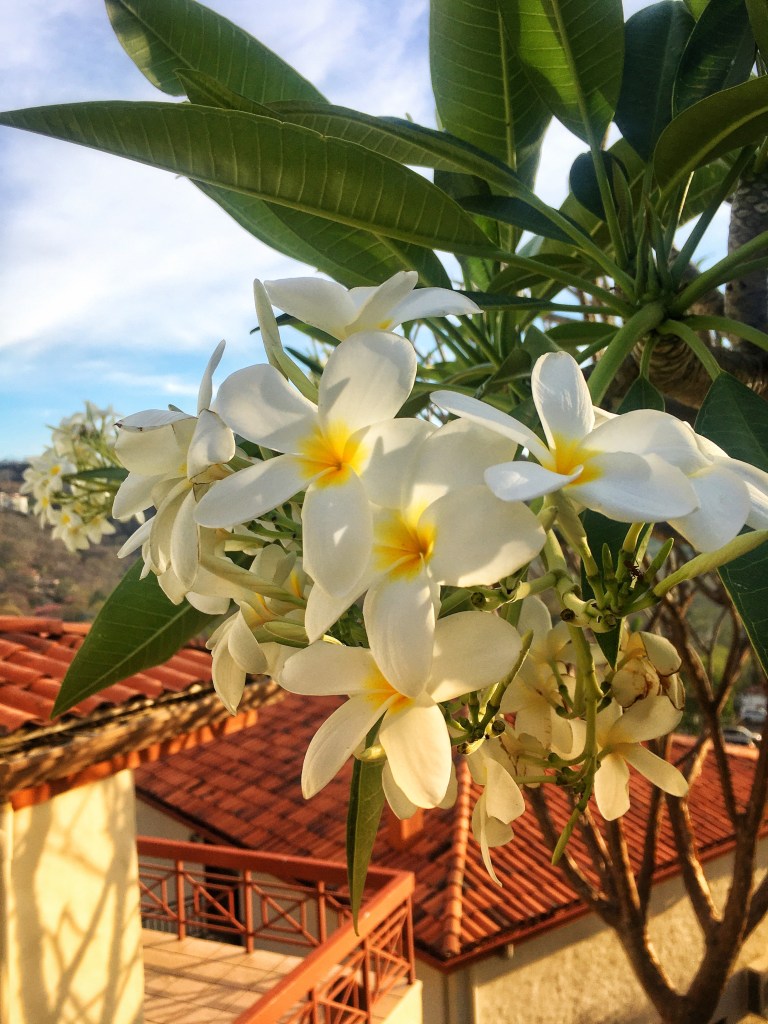
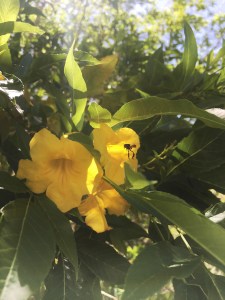
A frangipani tree blooming (and a sweet reminder of Bali)
Now, to be fair, the trip didn’t begin with such a sense of tension.
Our March family trip to Costa Rica had been booked in November 2019, an amazing gift from my generous mum and her partner, Orville.
I knew that I would have the month of March completely free so I decided to extend the trip by one week and do some solo exploring once my family went home, so my return flight was booked separately.
Near the end of the first week of March of 2020, the number of cases of covid-19 in Canada was less than 40, and the only travel advisories were regarding avoiding non-essential travel to China, Italy, and Iran.
We felt confident we would do all that we could to remain safe as informed & proactive travellers. We armed ourselves with plenty of soap, hand sanitizer, alcohol wipes, and an added air of caution about not touching anything or anyone unnecessary, and we headed to the airport for a red-eye flight.
We arrived in Liberia, Costa Rica on March 6, 2020 at about 7am, and drove to our resort, still sleepy and adjusting to the time and temperature, and folded ourselves into the shaded hammocks by the pool. When we left Calgary, it had been about -4 degrees Celsius. In Costa Rica it was +34.
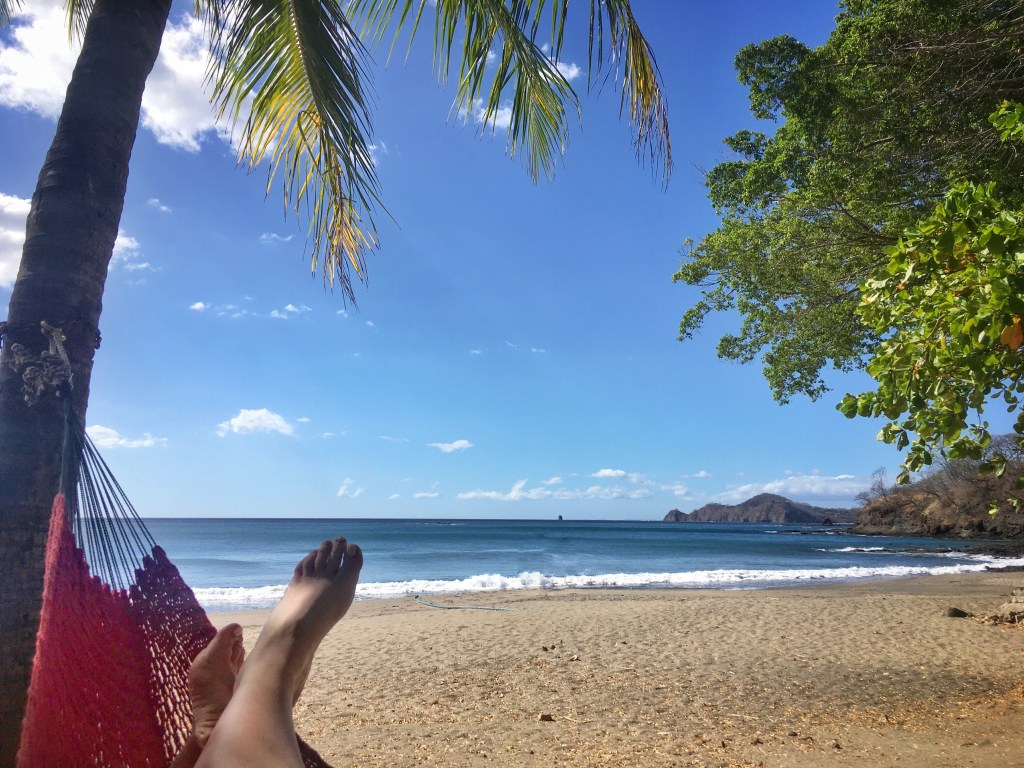
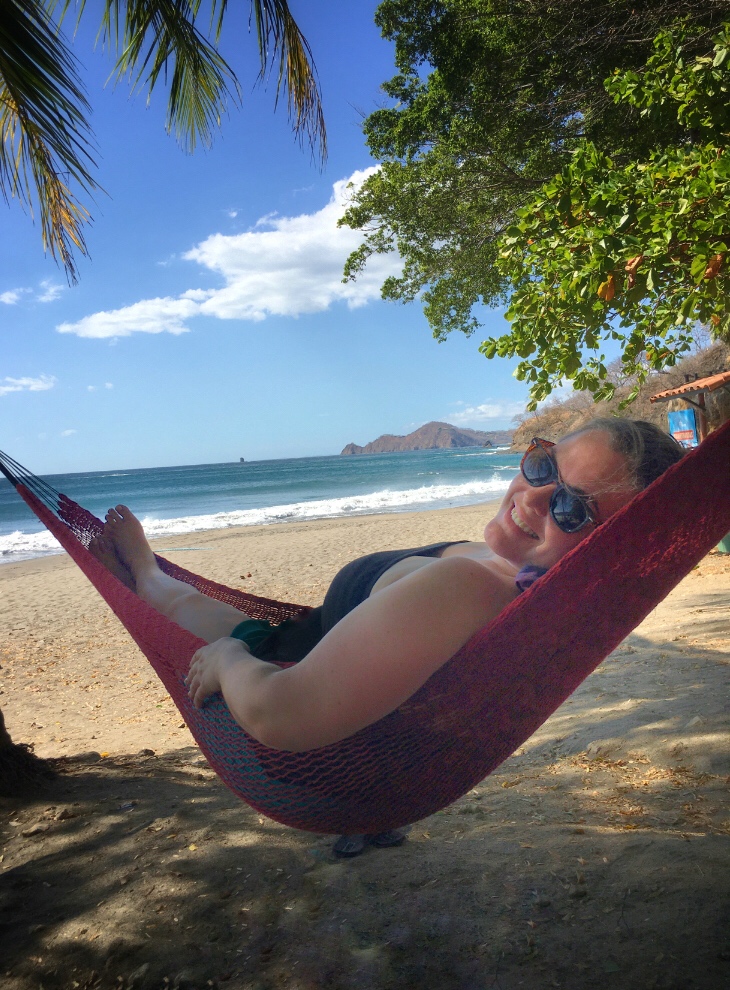
Hammocks are one of the greatest inventions of all time, by the way.
Pina coladas aren’t too shabby, either… 😉
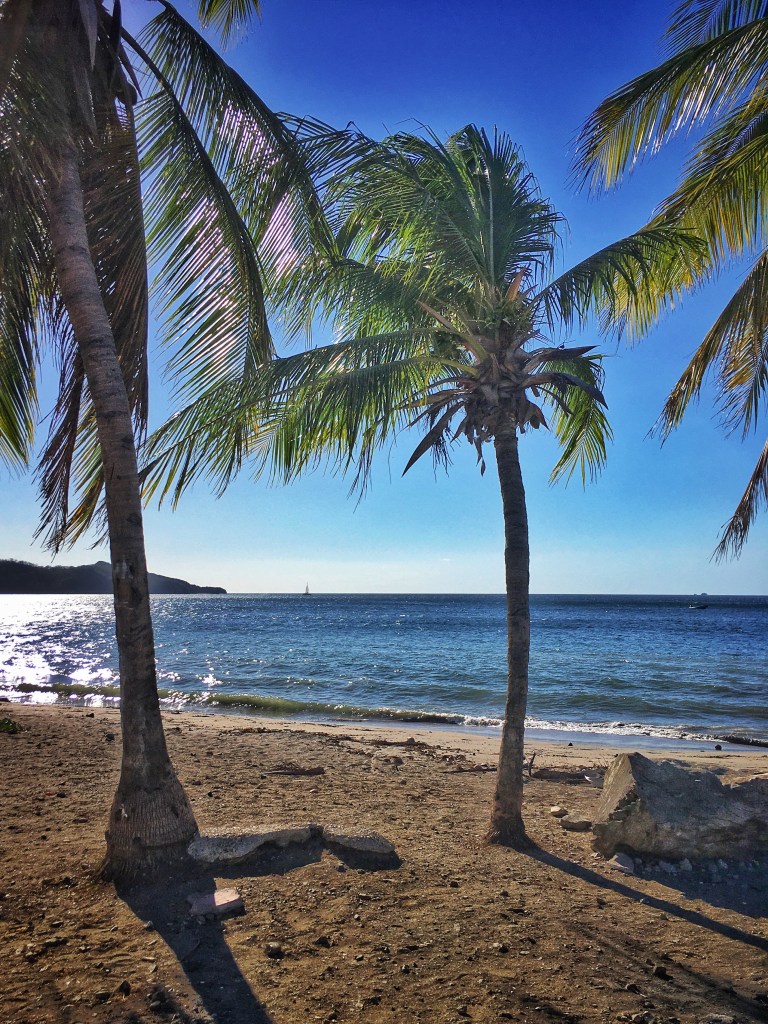
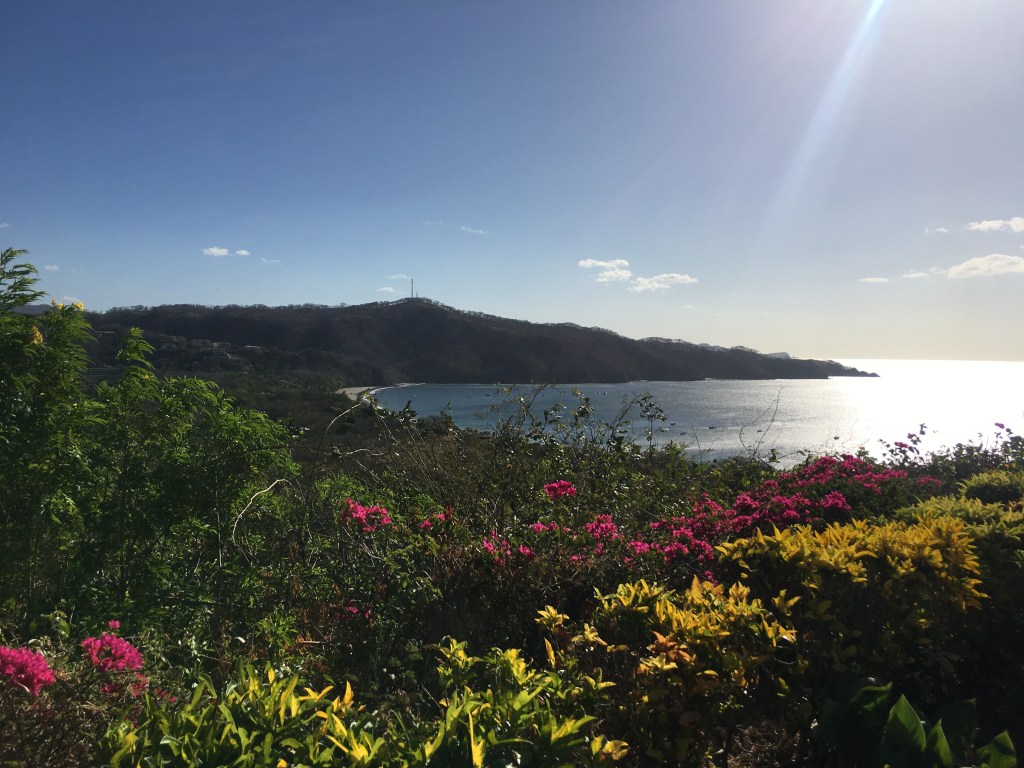
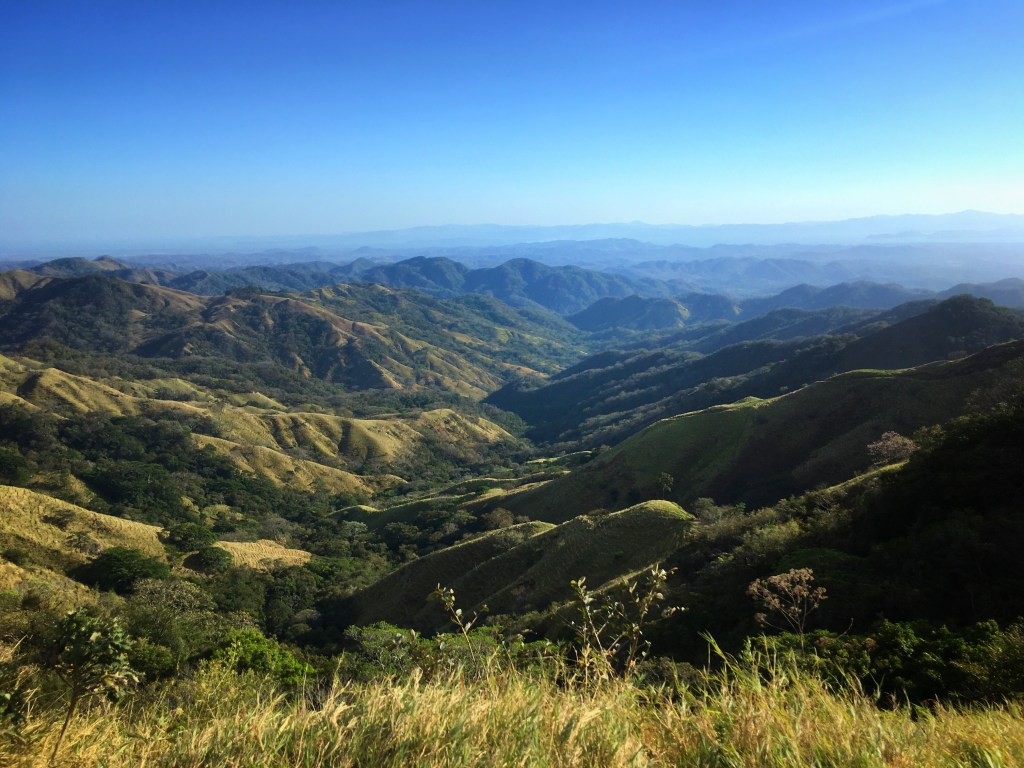
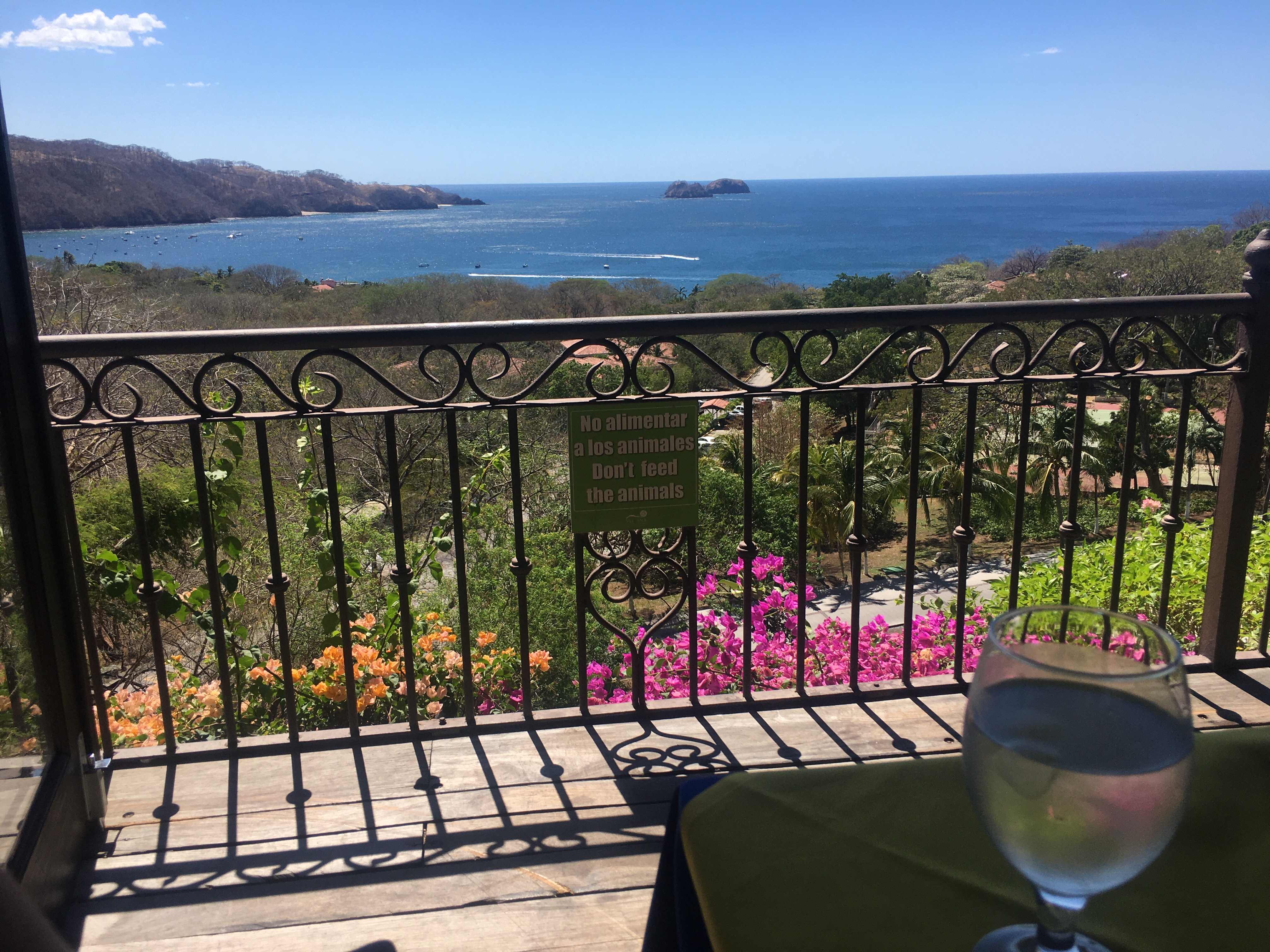
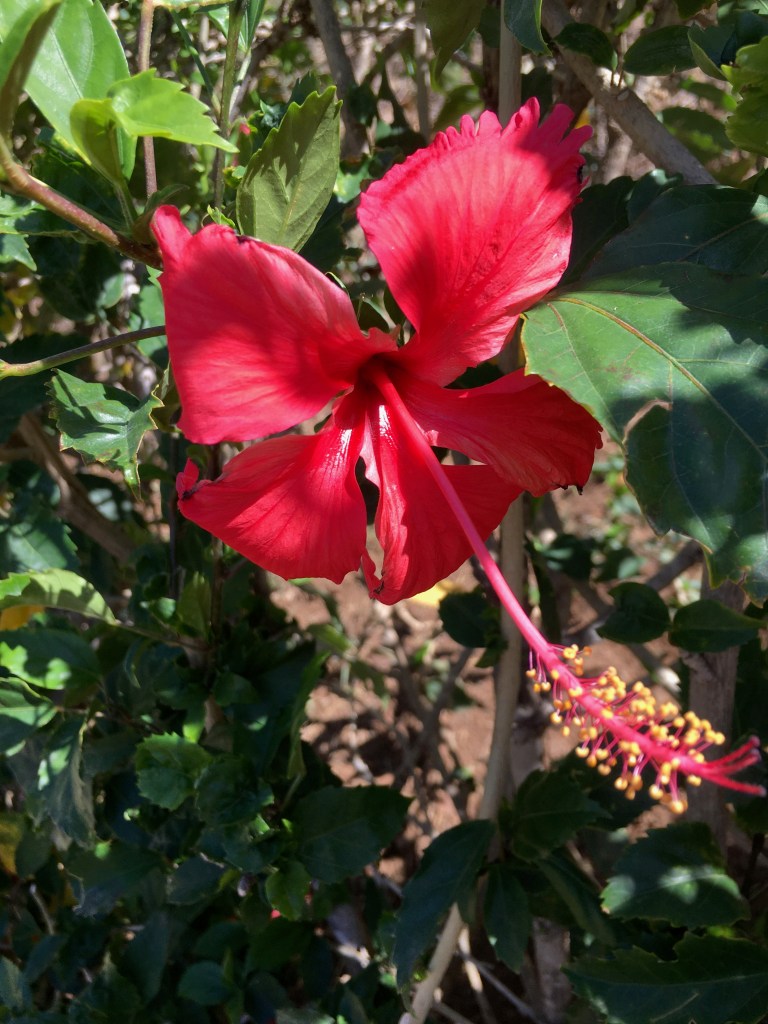
We stayed in the area of Guanacaste, at Playa Hermosa on the Pacific side of Costa Rica, where it is nearing the end of the dry season. Aside from the hibiscus bushes, palm trees and manicured gardens trimming the edges of the resort property, the view of the hills and landscape around us was primarily brown; almost entirely scratchy bare-branched trees and dry grass. We were informed that they even have forest fires occur at this time of year and there were some hazing smoky days while we were there, strangely reminding me of summertime back home.
The local fruit stands were always full of delicious choices, and we loved the local mango and pineapple, and even tried new-to-us fruit like purple starfruit!
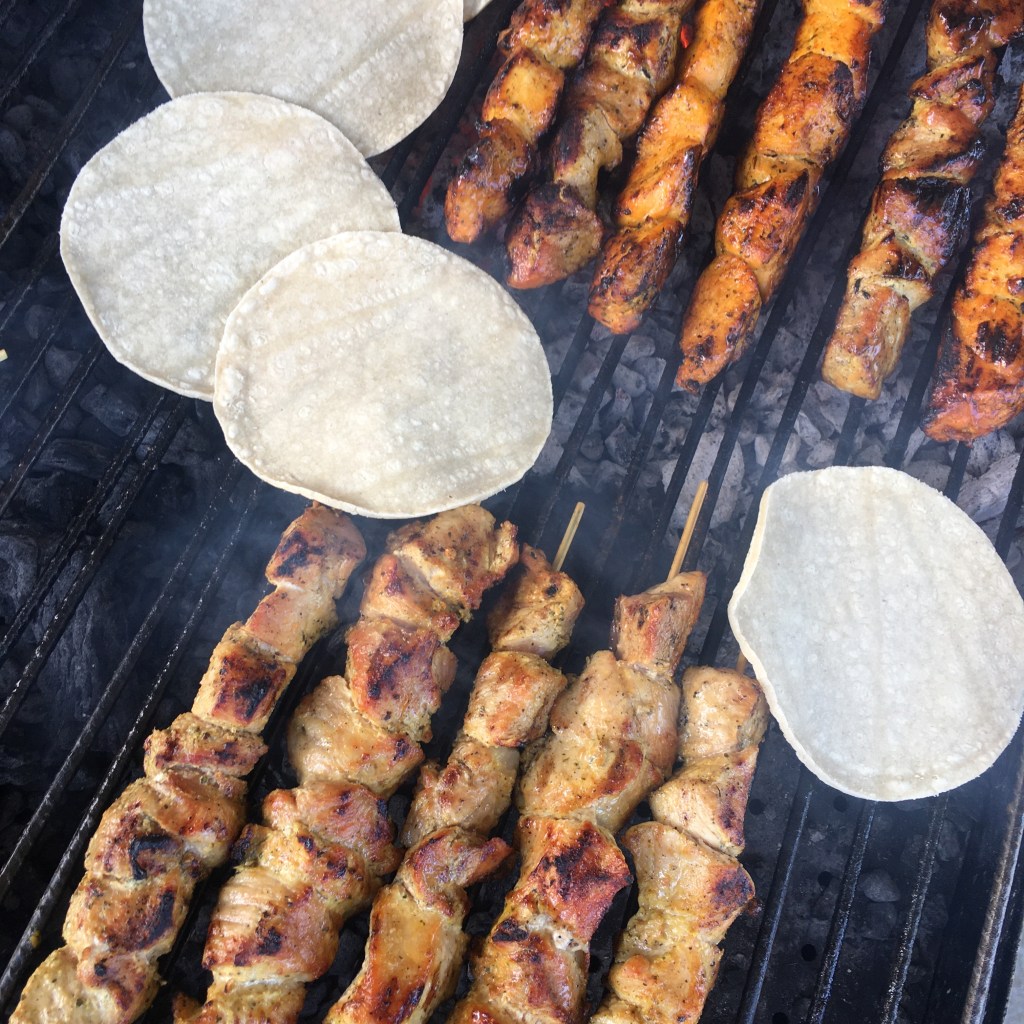
Our first adventure was on Saturday, when we had a tour booked to Monteverde and the Selvatura Adventure Park for ziplining. On the way, our amazing driver and tour guide Harold pointed out some beautiful photo op spots and promised to stop on the way home, in addition to finding a little spot in a town on the way to get a snack of delicious chicken skewers and grilled corn on the cob.
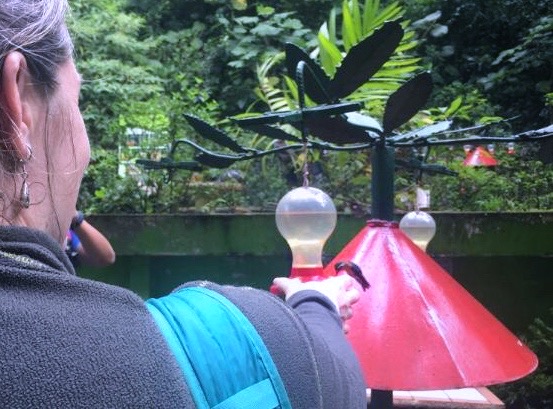
As a bonus to the day we got to watch dozens of shimmering emerald and sapphire feather humming birds flutter around feeders at the edge of the bridges trail. If you were patient enough and stood at a feeder with your fingers balanced between a couple spouts, there was a chance a tiny jewel-tone humming bird would use your hand as a landing place! I couldn’t believe the magnificent rush of joy when one bird’s micro feet perched on my knuckles as it drank out of the feeder! It felt like such a gift. 🙂
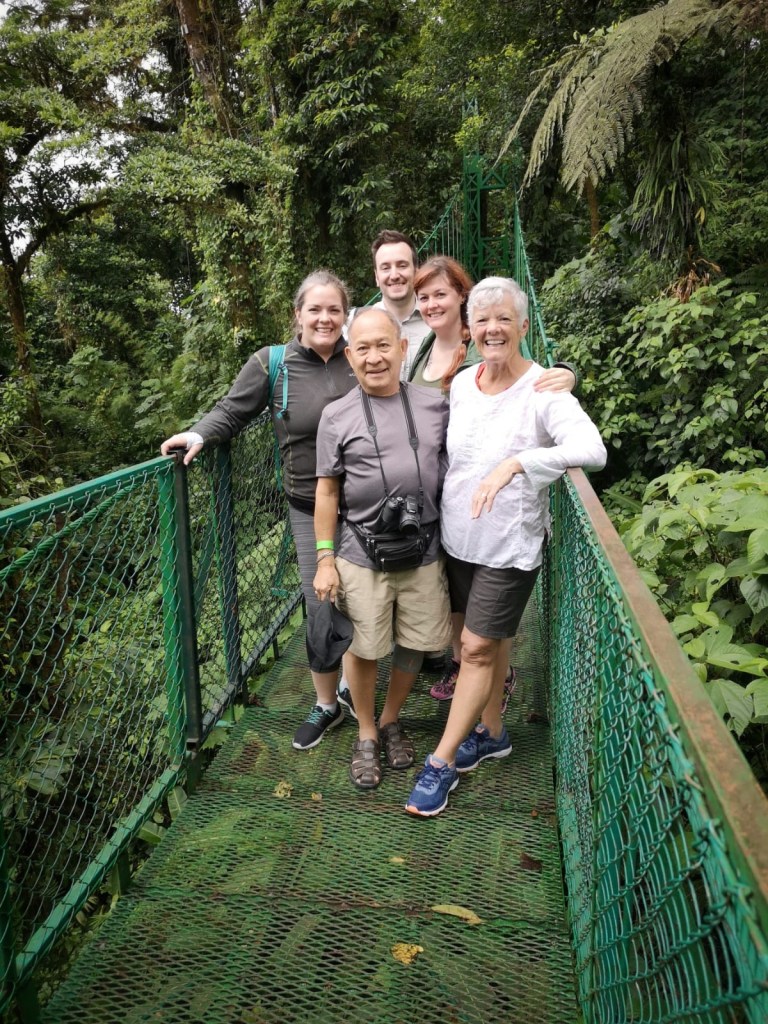
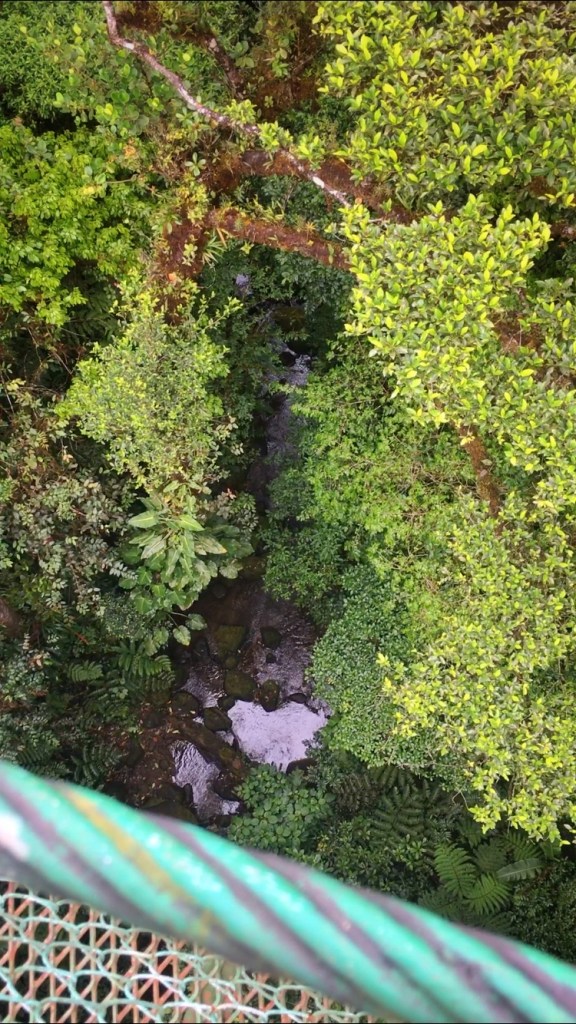
We spent almost 90 minutes walking back and forth across the cloud forest through numerous suspended bridges, marvelling at the view and the height we got up to, occasionally hearing the whiz of zipline travellers passing through the canopy on either side of us. It was misty and surprisingly cool up in the mountains, and even rained while we ate lunch before heading out to zip line. (We agreed we would all highly recommend bringing something with long sleeves, and windbreakers/rain jackets just to be safe!)
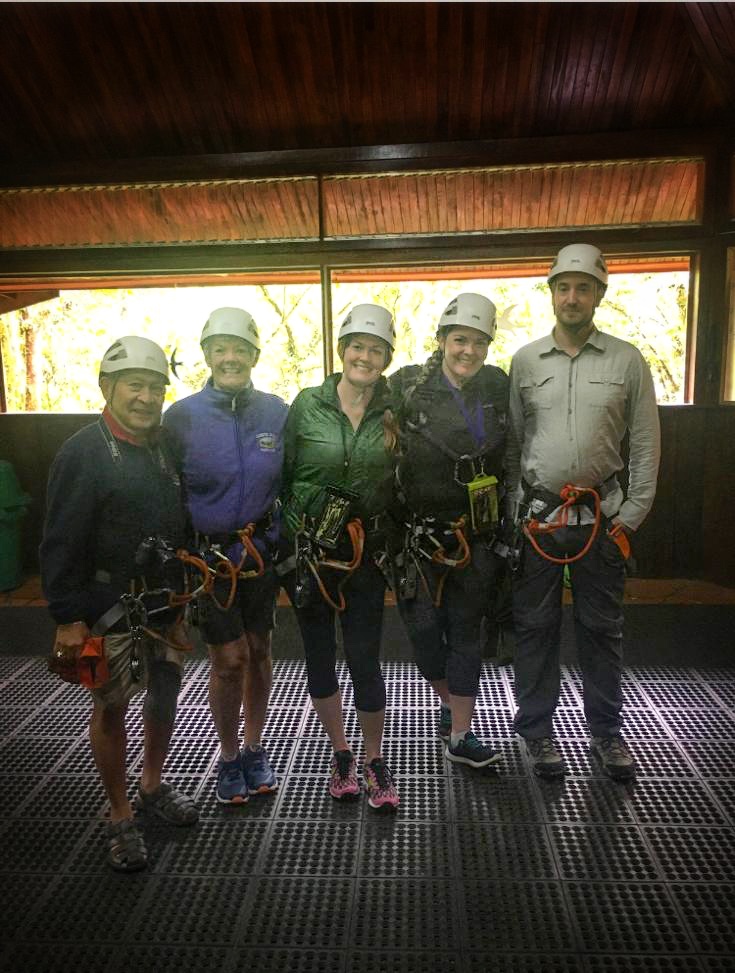
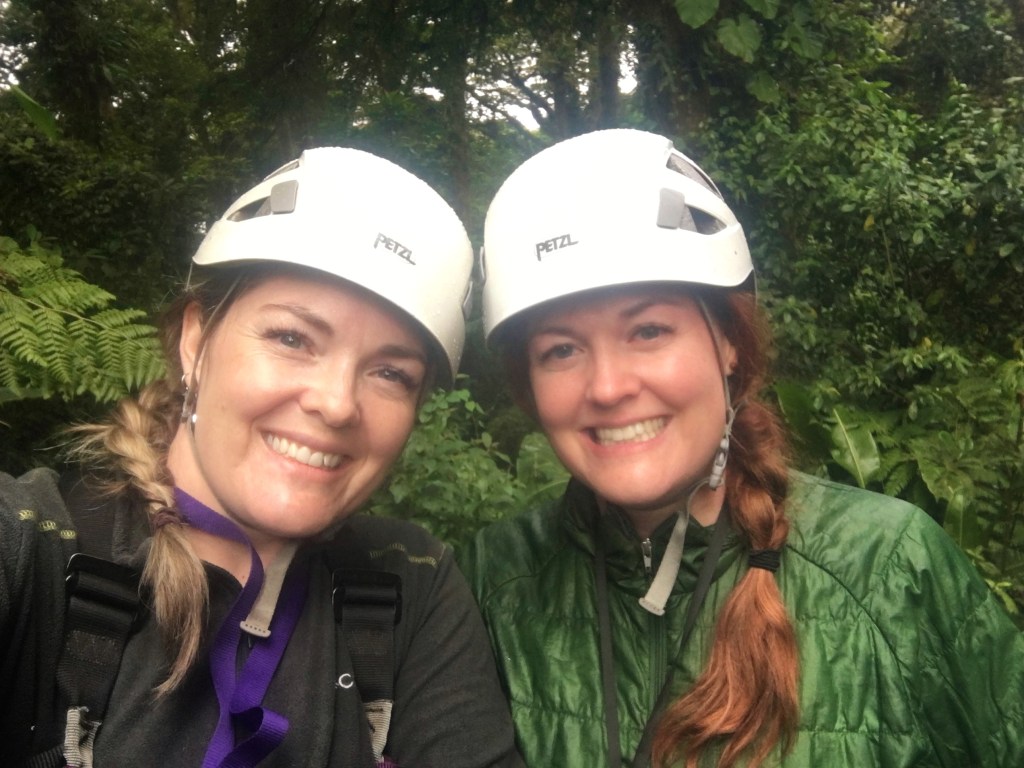
After some hot Costa Rican coffee to warm us up we then geared up for ziplining. I still marvel at my fearless mum and Orville suiting up for this thrill seeker activity!
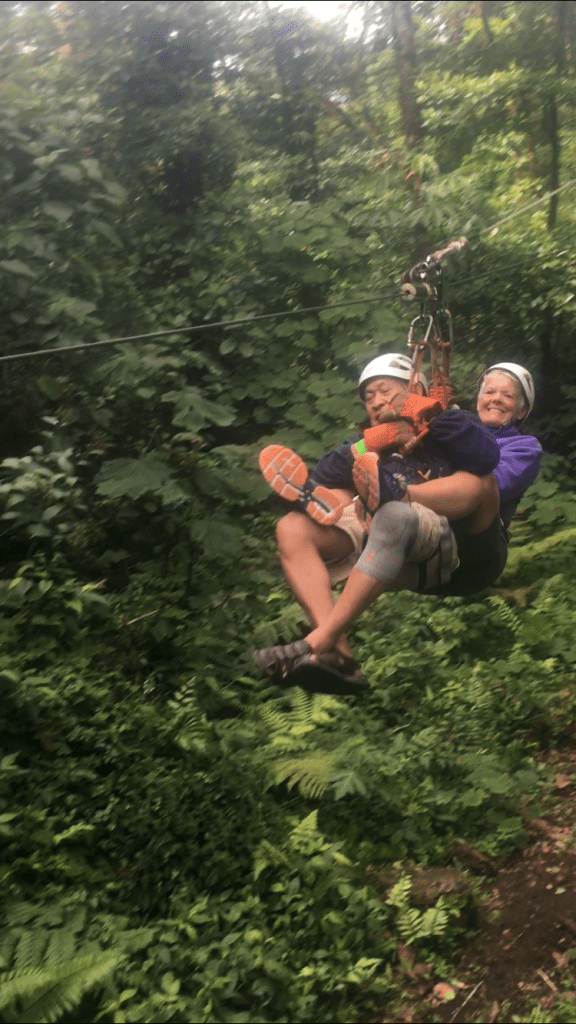
There were 13 lines and a lot of hiking in between platforms, so this trip is not for the mobility-challenged adventurer! A few of the lines were short and quick in little zigzags through the canopy, but a couple were much longer and even required pairing up with a zip line buddy to get across with your combined weight.
I was the odd man out in our group so I spent two of the long trips across clipped to one of our guides. This is the first zip line I have done where we were given gloves and were taught how to keep from spinning by holding an ‘okay’ sign with our dominant hand up above and behind us and brake ourselves by pressing the thick reinforced leather palm of the gloves onto the wire.
I have always thought the best lines are the longer lines where you actually have time to look out at the view and down at the tree tops below. The whir of the trolley rolling over the cable and the wind in your face became this wonderful humming underscore to a view that was hundreds of shades of green and gilded with trailing mist and clouds. Disappearing through the low mist on one particular line made it feel like we were entering some mystical place for a few seconds.
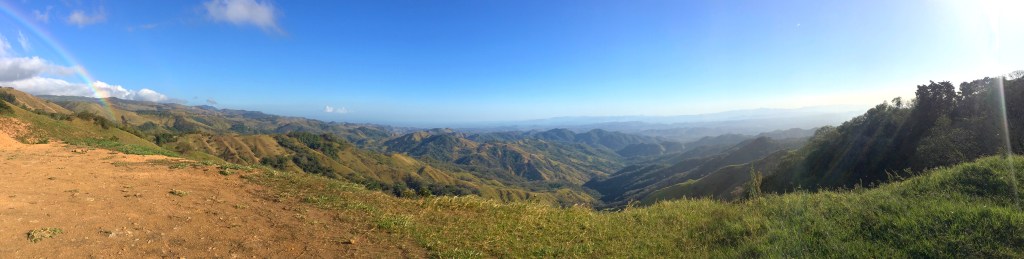
By the end we really wanted to go back to the beginning and go through it again! We left absolutely delighted and still felt like we were flying as we stopped for photos to admire the mountain and valley view, complete with a rainbow to frame the scene.
It was an incredible day, and we thought Harold was such a great tour guide we made sure to book him for an adventure later in the week.
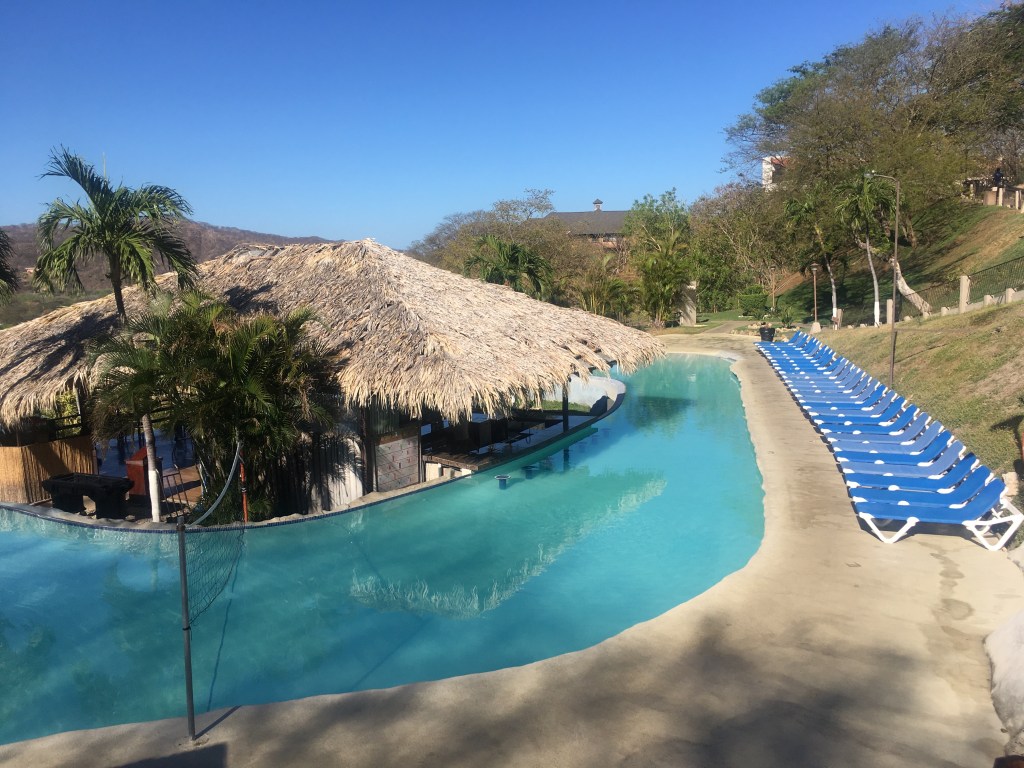
I relished the quiet early mornings at the main pool, as the daily blaring party music had not yet been turned on and all you could hear was the bird calls and bubbling water jets of the pool. This was a great time to see flocks of lime green parakeets flitter around the treeline, and see pretty little kiskadees swooping around the pool.
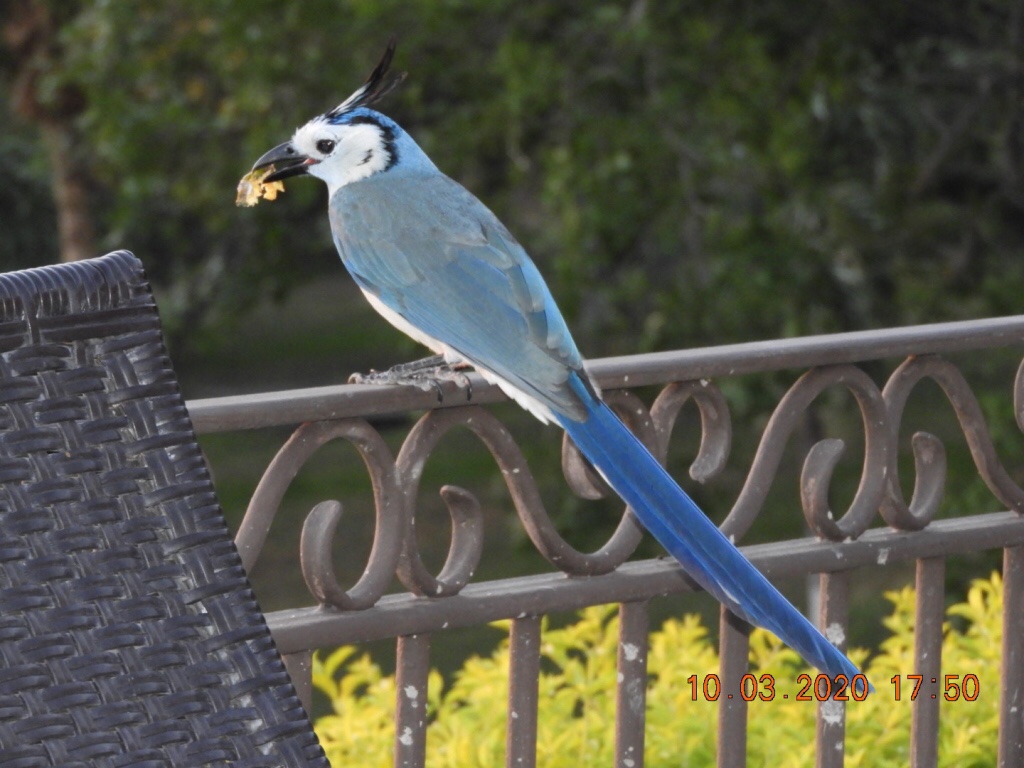
Seriously, the birds here are all beautiful. Even the scavenger black birds (aka ‘great-tailed grackles’) had tails that looked like swooping black ink brushstrokes, and the white-throated magpie jays (looking like a sophisticated version of the blue jays we see in Canada), had beautiful crests of feathers on their heads that somehow made them look like royalty.
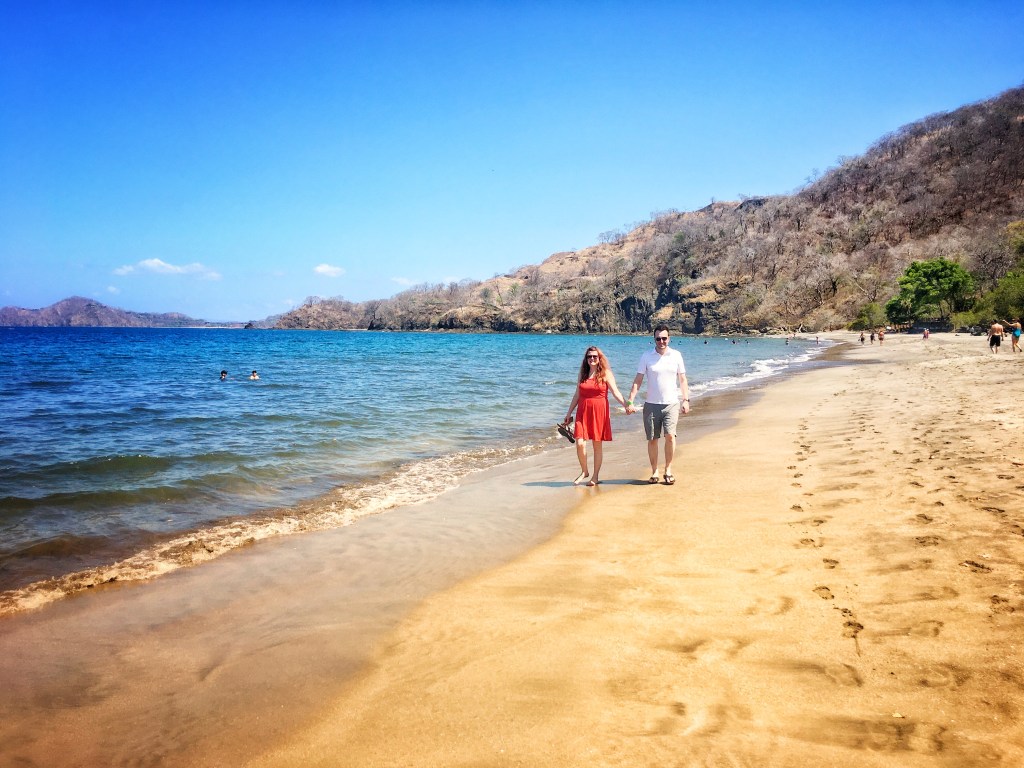
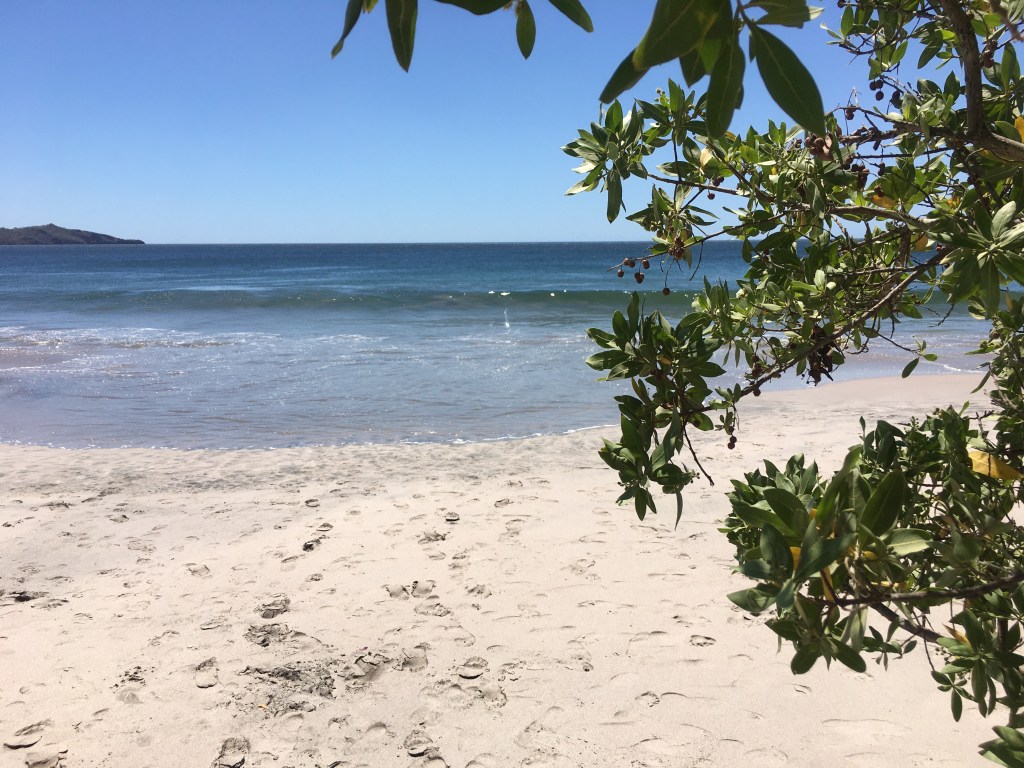
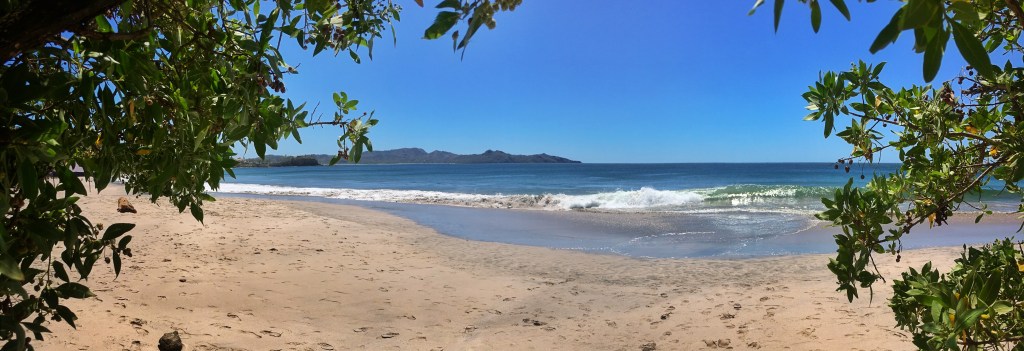
The beach at Hermosa has dark sand (it looks lighter in photos) and boy oh boy is it HOT! Thankfully, the granules are fine and smooth and once you are in the water it’s heaven. If you are lucky, you’ll catch pelicans corkscrew-diving to catch fish, and a couple times we were stunned to see the shining white diamond bellies of stingrays doing full twists and flips out of the water!
The beach has these great bending tree branches that offer sandy shade and are perfect to hang your stuff on, towels to dry, and even better to secure hammocks to dangle above the lapping waves as the tide swept in each afternoon.
There were kayaks available through our resort so of course at my first opportunity I took one out and spent about an hour following the shoreline all the way to the other end of the shore and back. The rip tides of the Pacific Coast are strong so you boat and swim with caution. My habit is always to stay along the shoreline to be safe in case a storm or wind picks up and I need to paddle in to shore.
I actually ended up joining in to play beach volleyball after kayaking, which if anyone had offered it up before as an activity I would have thought “no way- it’s way too hot” (35 degrees and all, in full sun)! Somehow the time flew and I played for over an hour with a combo of locals, tourists and the activity staff and we had an amazing time, cheered on by my mum and Orville and other folks enjoying the shade and lounge chairs along the tree line!
I love travelling with my family. On our stay-in days at the resort we had a great rhythm of meals, pool time, beach time, sunset watching, and card games. Naps were often added bonuses, and then we felt extra rested and relaxed when we went out on our exciting exploration days.
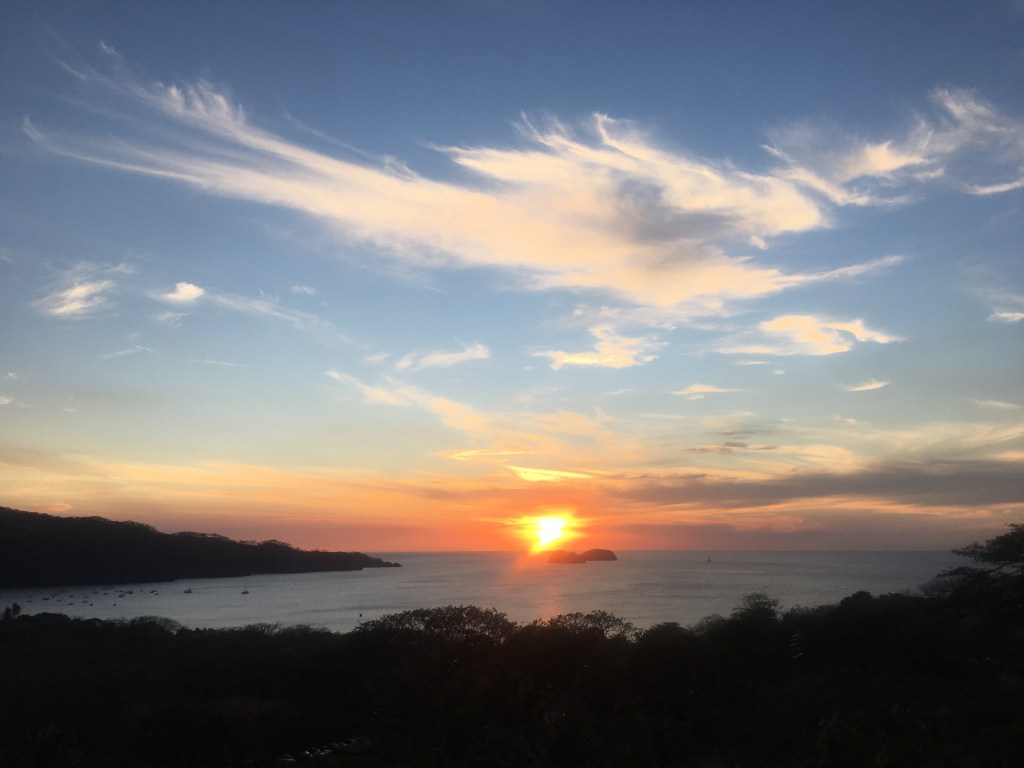
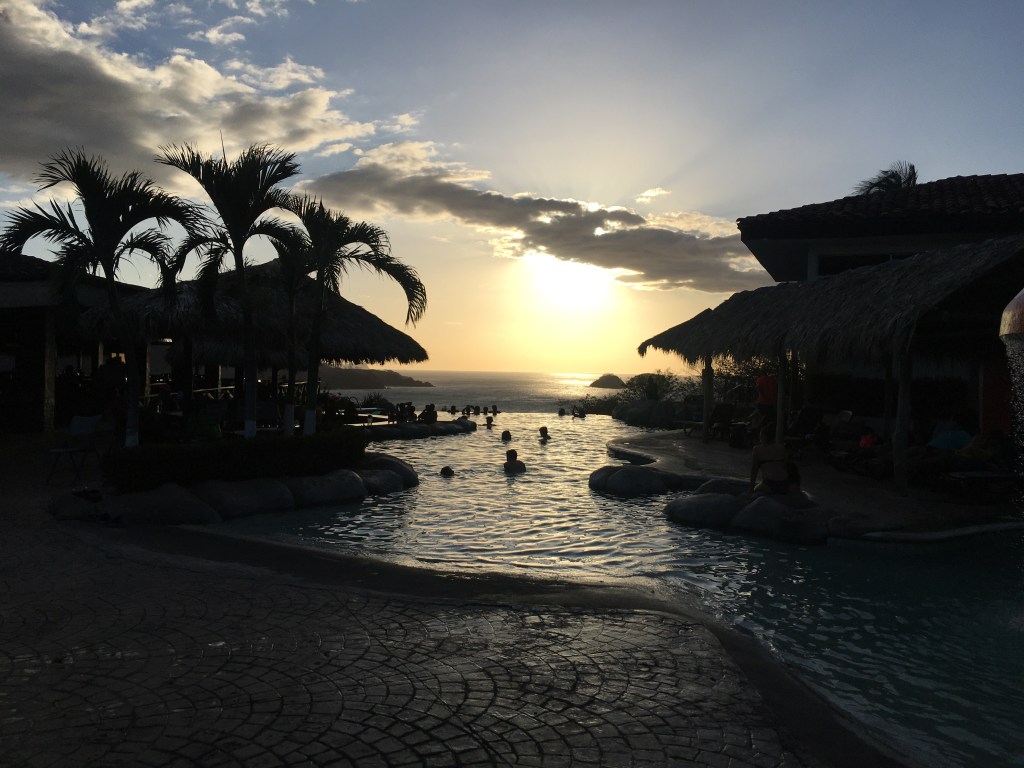
Sunsets here are beautiful, with a perfect gradation of pastels in peach to yellow to rose to periwinkle. And the vast sky sure showed off a great deal of stars after dark!!
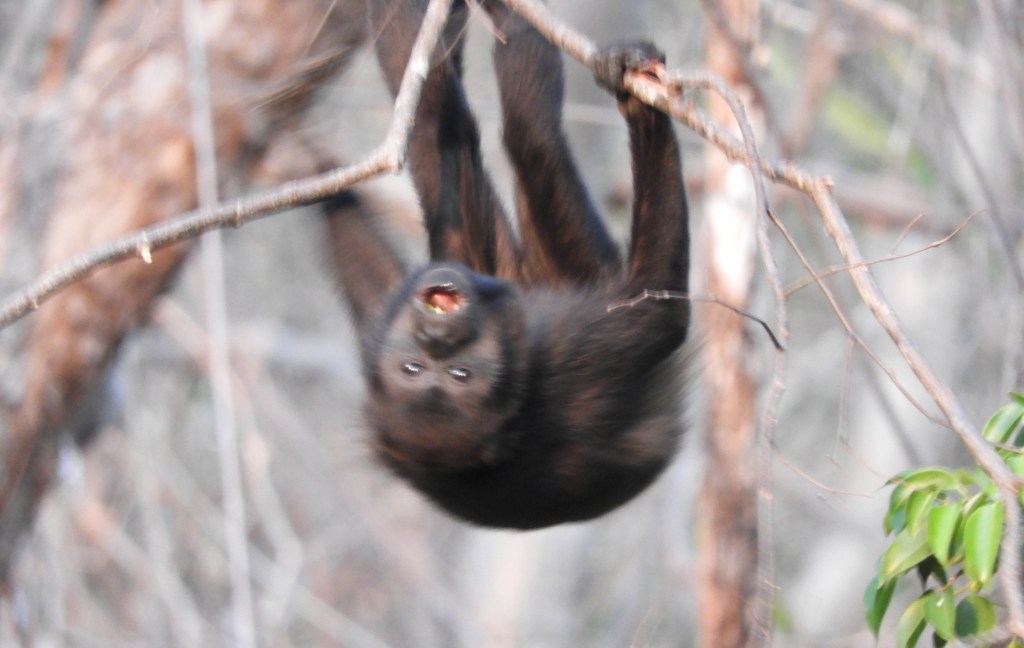
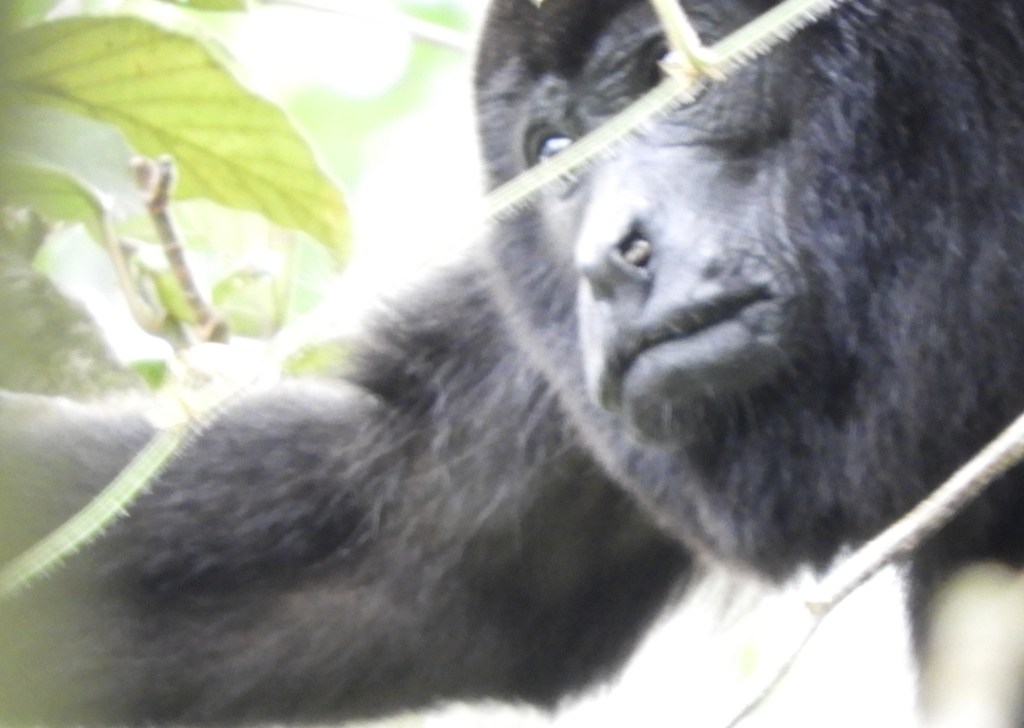
We could hear the howler monkeys call out from the treetops in the evenings and occasionally could see them jump and swing from branch to branch high up in the hills. Once we even saw them down at the beach make their way over our heads!
photo compliments of Orville
I was always on the lookout for wildlife and I regularly amused my family when I took to calling out “monkey monkey monkey!” before I was certain of what it actually was, and in two cases it turned out I was pointing out racoons and coati (a similar type of animal with a longer nose) that were regularly seen in the area. We also came across loads of iguanas here ranging in sizes from small to very large, and tiny lizards that clung to walls like magnetic decorations.
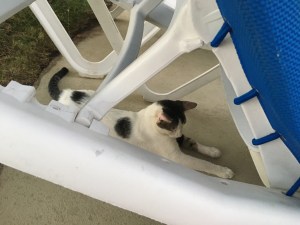
Also, many stray cats seemed to live on the resort property and were always around at meals. We named them as we saw them, and somehow the theme for naming them all became: nuts. We saw ‘Cashew’ and ‘Pistachio’ regularly, and ‘Peanut’ often joined us at the pool, hanging out in the shade under our chairs.
Another regular sighting during meals were the magpie jays. These birds were so bold they would swoop down through the windows or down from the rafters in the restaurant and confidently perch on the back of an empty nearby chair, landing on a table the moment people stepped away. We saw them steal sugar packets, bread slices, potatoes, scrambled eggs, and even a huge pineapple wedge right out of someone’s drink.
Our next adventure away from the resort was a beach and snorkel adventure, and we were told that Playa Conchal was the place to go. A whiter, shell beach was about an hour drive south of us, and then we actually had to walk in from the beach town Brasilito that is the closest place accessible by road.
We were told that we could rent flippers and any necessary snorkel gear on the beach once we got there, which was great because though we all brought our own masks, we did not pack flippers. If you have ever done that you’d know it dictates a much larger piece of luggage!
It turned out there was no place to rent snorkels but it was just as well. This month had apparently been particularly windy for Costa Rica, which was a blessing for us with the heat, but it made for choppy, murky, and cloudy water.
Staying somewhat close to shore we bobbed and kicked our way through the silt and sand curling around the black rocks and saw a couple of small schools of fish swim by, and then one zebra-striped angel fish gliding along the swirls of the sand on the bottom. And that was sort of it. I imagine you need to either be on the Caribbean coast or take a boat further out to islands off the coast to really get to prime snorkelling areas. Next time, we decided. 🙂
We dried off in the partial shade of the beach trees and drank from coconuts we bought from a wandering seller.
On the way home, our driver Luiz stopped on the side of the road to show us a cashew tree, one of the coolest things I have ever seen. Each flower produces one cashew nut that needs to be dried and roasted in order to be eaten. The fruit that grows above the nut is also edible and often made into jams and chutneys. Raw, this ‘cashew apple’ tastes like a chalky, sweet and tart and soft red pepper.
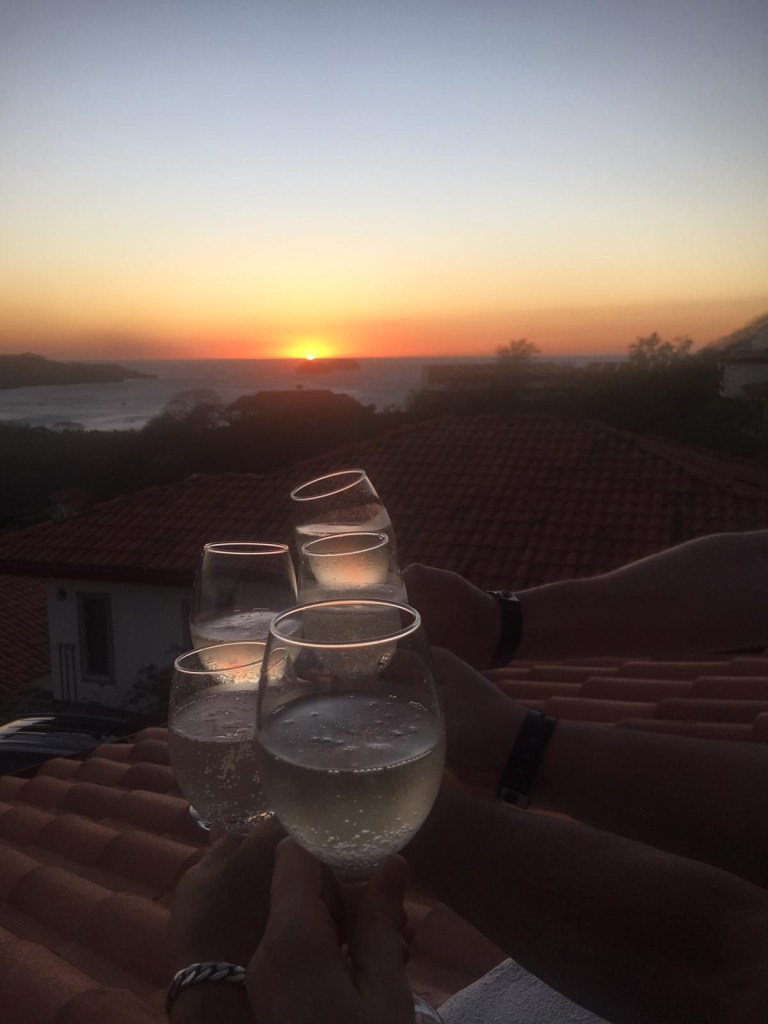
The activities team at the resort had many events planned during the day and I was asked to join into the foosball competition one afternoon while everyone else was having a nap. I love foosball so I was happy to join in. I ended up winning the tournament and I was awarded a beautiful bottle of sparkling peach wine, which we ended up enjoying on our last night all together on our balcony at sunset.
Our third booked adventure was aimed to check three boxes: waterfalls, sloths, and toucans. (Yes, those very specific things! We even told Harold that we weren’t going home until we saw all three, and we were only very slightly joking.)
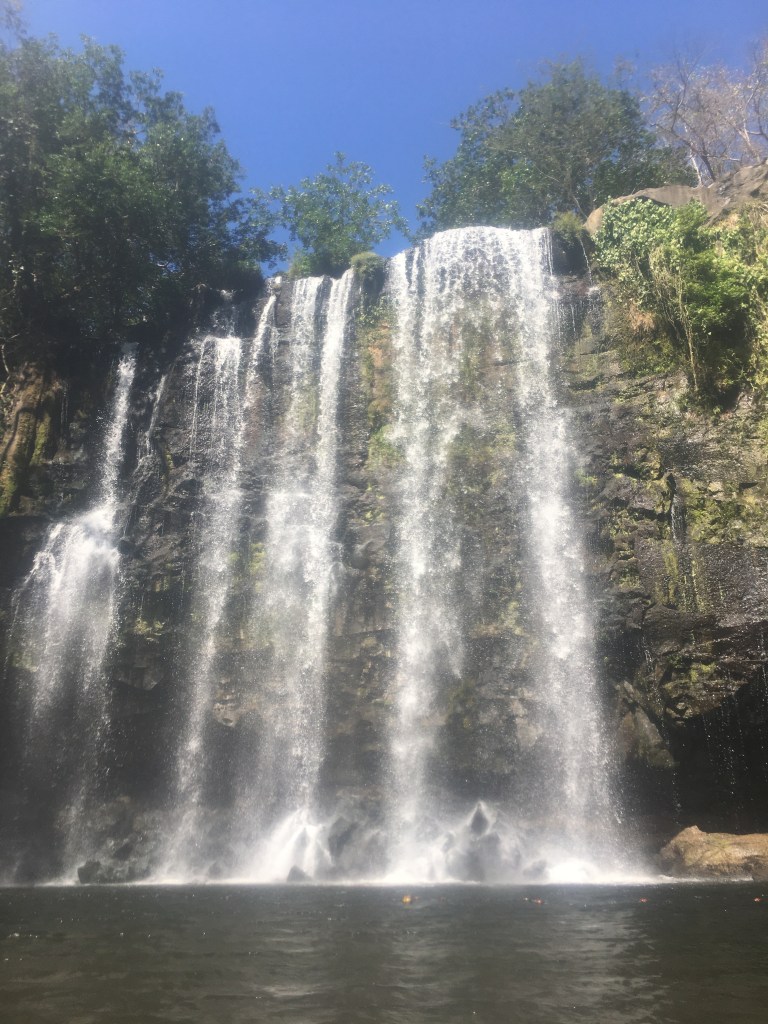
We left early in the morning to get to the Llanos de Cortes waterfall, which was only a 45-minute drive from us, and gets busier as the day goes on. The water was beautiful and we soaked and swam and floated, snapping a few photos in the morning sunshine (it was already 32 degrees at 9am), and then ventured back to the van headed towards the jungle again in hopes of catching sight of some more wildlife.
Costa Rica has a strong “no animal selfies” policy as they want to protect their wildlife and don’t want any unnecessary impact on animals and wildlife, so we jokingly took photos of toy/stuffed/souvenir gift sloths when we came across them (and we came across them a lot).
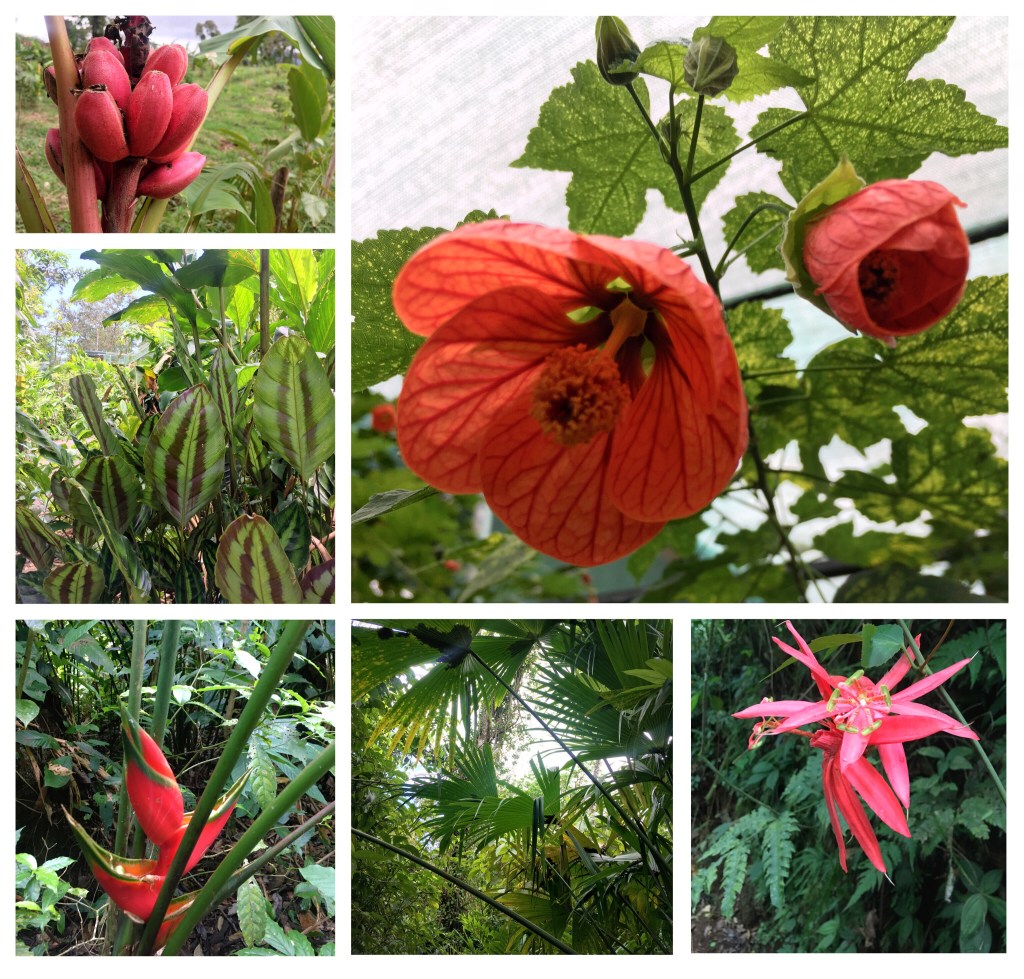
We arrived at Bijagua Ranas, a Frog observation site in the Alajuela area and were showed around by our volunteer tour guide Stéphanie. She pointed out all sorts of local flowers and plant life as we walked through the lush grenery. My favourite was the ‘maraca’ plant that holds water and a liquid between its petals that is a natural bug repellant and actually smelled wonderful in a sort of citrusy way. (Somehow I did not get my own photo so this reference photo will have to do.)
maraca (yellow heliconia)
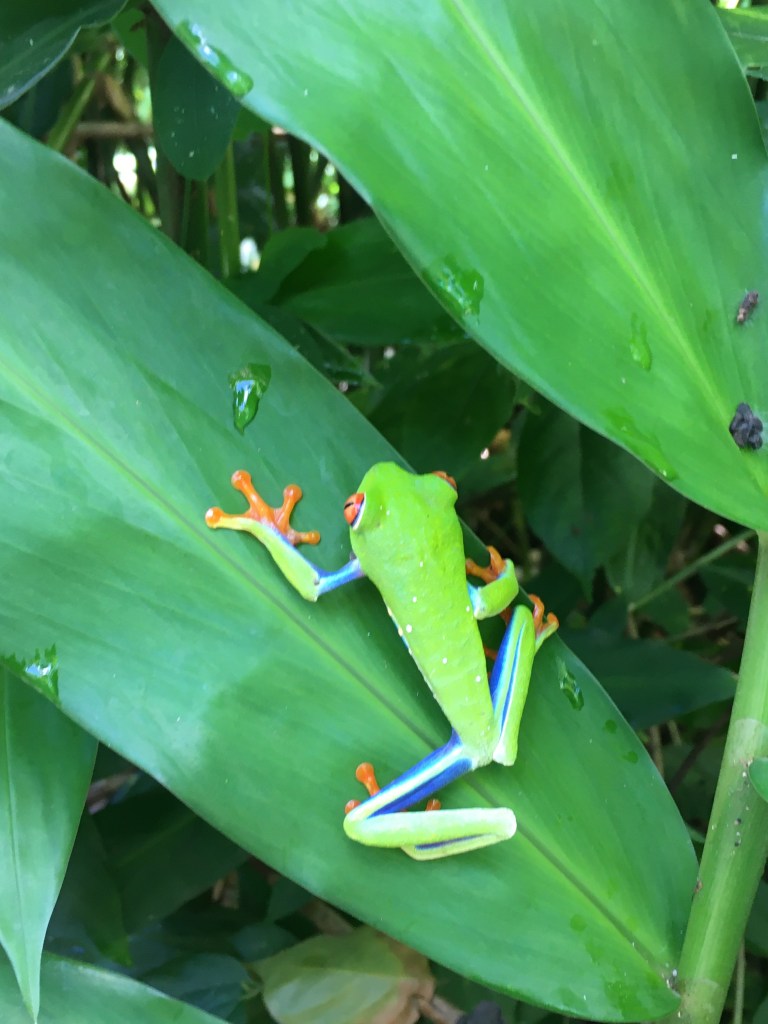
Stéphanie showed us a bright green bump on the underside of a leaf, and then she washed her hands and picked up the hiding frog, setting him gently back on the leaves so we could see him stretch out and move and it was amazing!
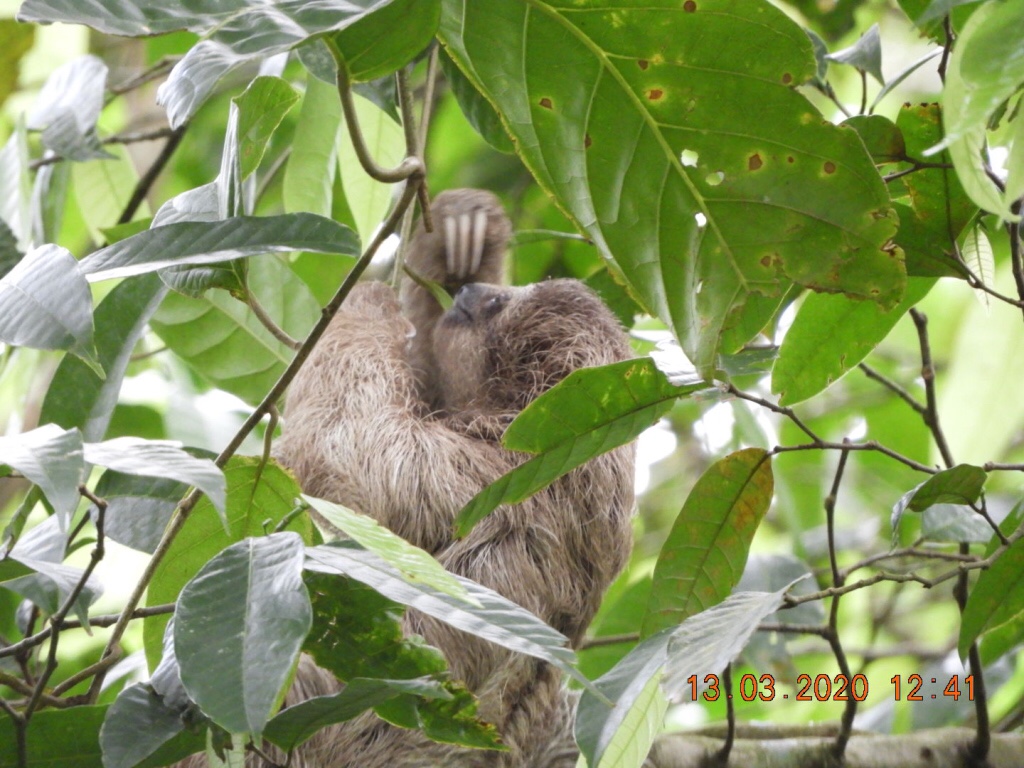
As we wandered the winding pathway we kept our eyes up to the treetops and caught sight of howler and capuchin monkeys swinging in the trees, and then one sloth, then another, and by the end of the afternoon we had seen a total of six sloths up in the trees!
another shot captured by Orville on his amazing zoom lens camera
Cute capuchin monkey! (Orville’s photo, again!)
This area is actually along a travel route the sloths take to get from one jungle area further north to another jungle further south and east of us, so there are both two-toed and three-toed sloths that regularly pass through the area.
The first sloth was a ball of grey-brown fur high up in a tree, likely sound asleep, hard to see in a photo even with a good zoom because he was tucked into the shade and was similar in colour to the branches he was wrapped around. We learned that sloths go higher up to sleep safely, and also will climb further up in trees when it rains.
The most exciting sight was a mama sloth and her baby hanging upside down and eating leaves only about 10-15 feet above us.
Photo courtesy of Orville
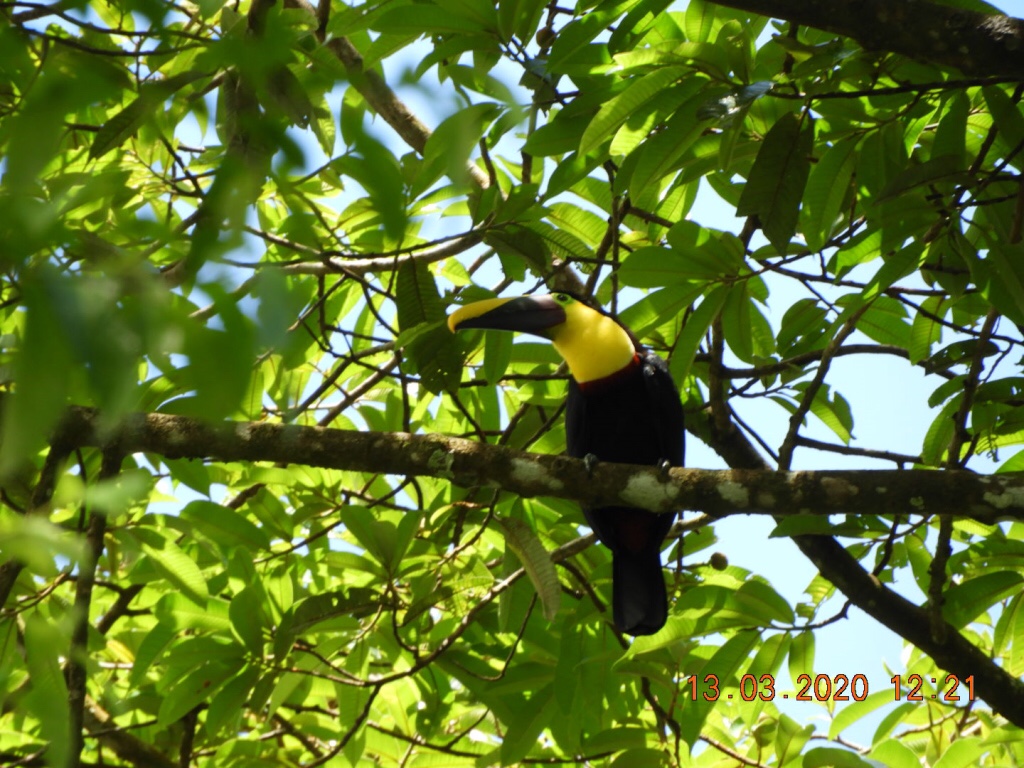
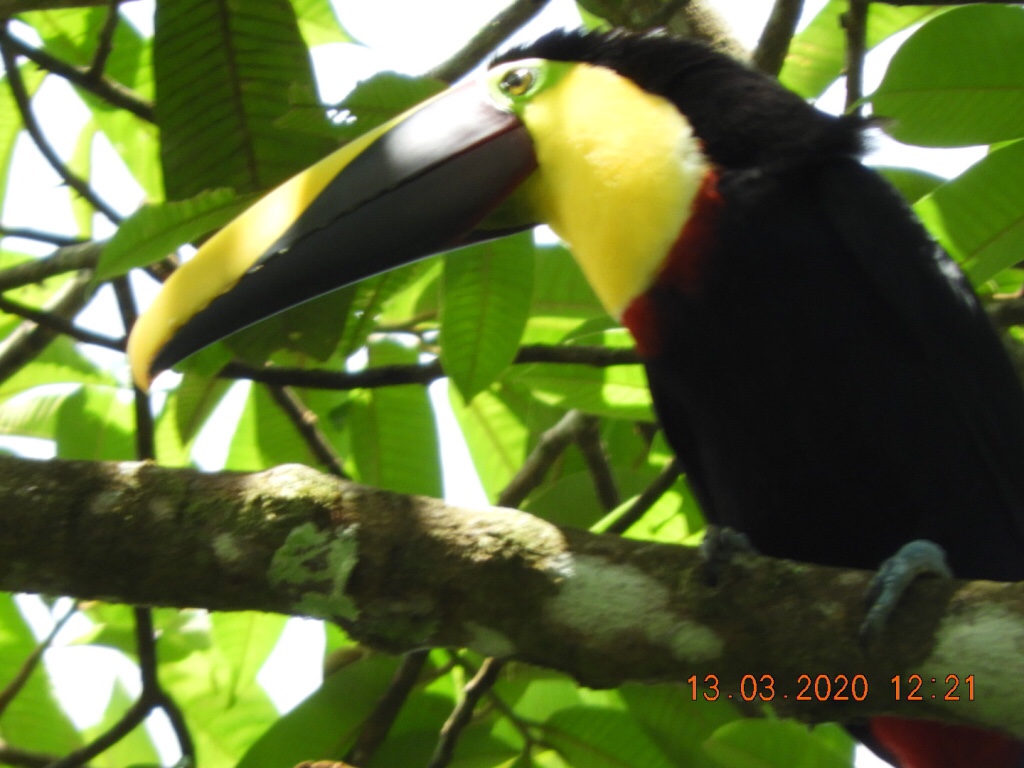
And before we left we even were able to see a toucan way up in a treetop before making our way back to the van to head home! All boxes checked! 🙂
Zoom in camera for the win!
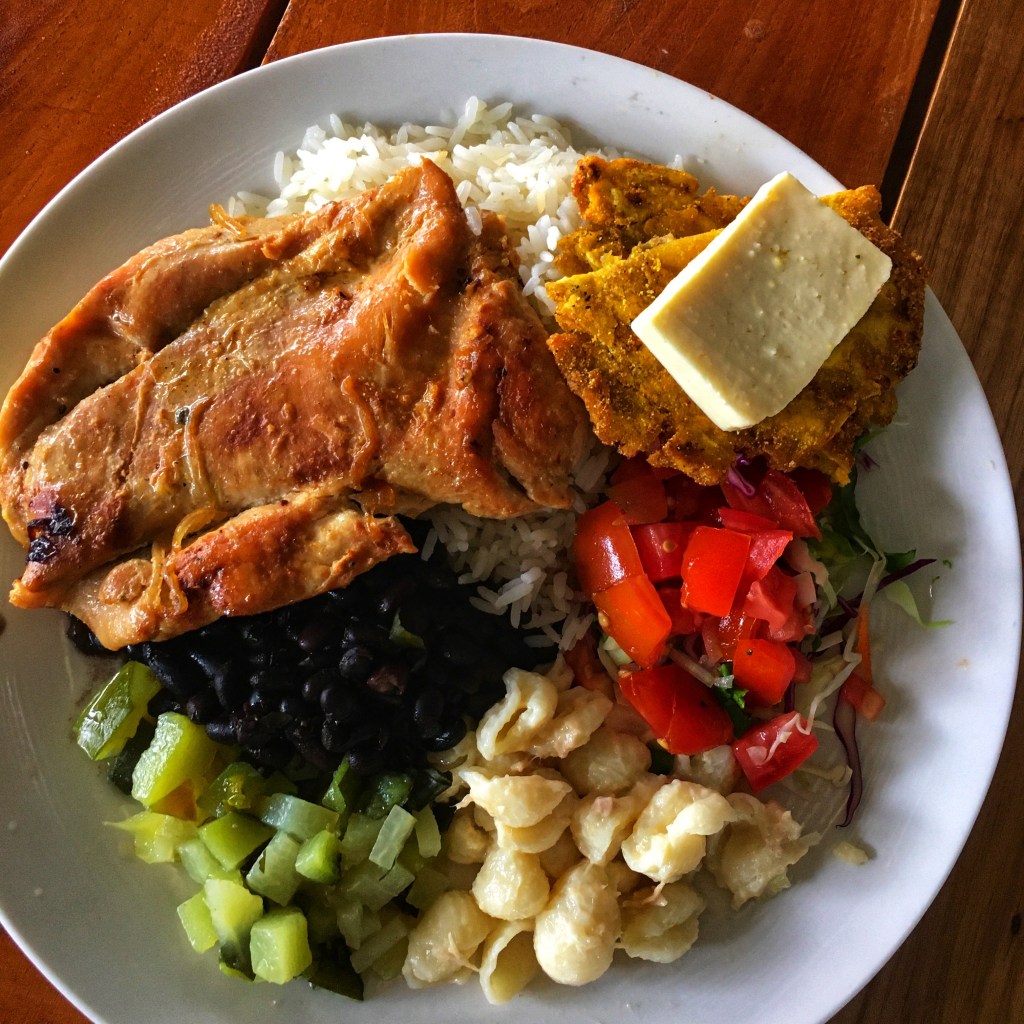
Lunch was delicious local food at a local restaurant (which they call ‘Soda’s in Costa Rica). We were given the option of chicken or fish, plantain, queso fresco, pasta and beans and rice and veggies!
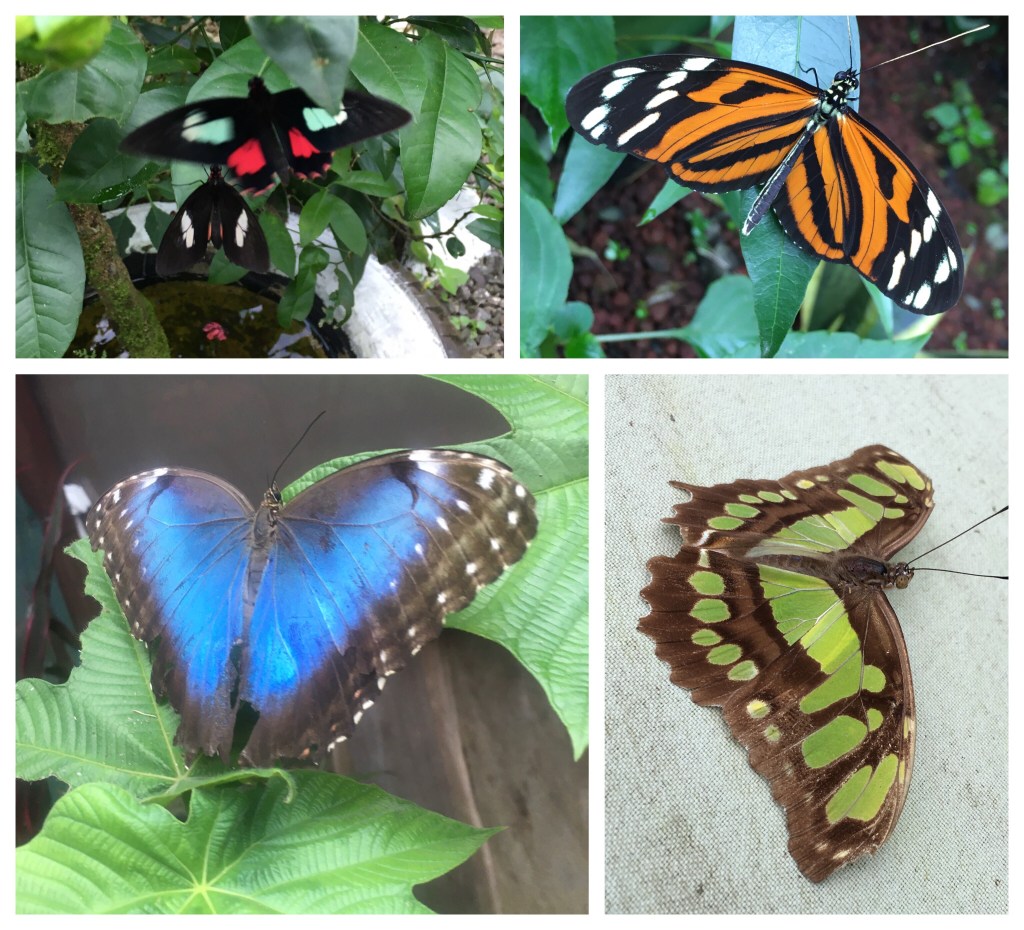
There was a butterfly enclosure attached to the restaurant so we were delighted to watch several kinds of butterflies flutter between tropical flowers and bushes and occasionally land on the slices of pineapple set out for them.
We had another beach day where my mum and sister and I went out kayaking, which was a blast! I was really surprised more people don’t take this opportunity to use the freely available kayaks at the resorts here, because it was easy and relaxing!
Shade was a vital part of beach time because the sand is so hot, so we would chase the shadows created by the trees along the shoreline as the sun moved across the sky (even if that meant changing hammocks! 😉
well, I don’t hate it. 😉
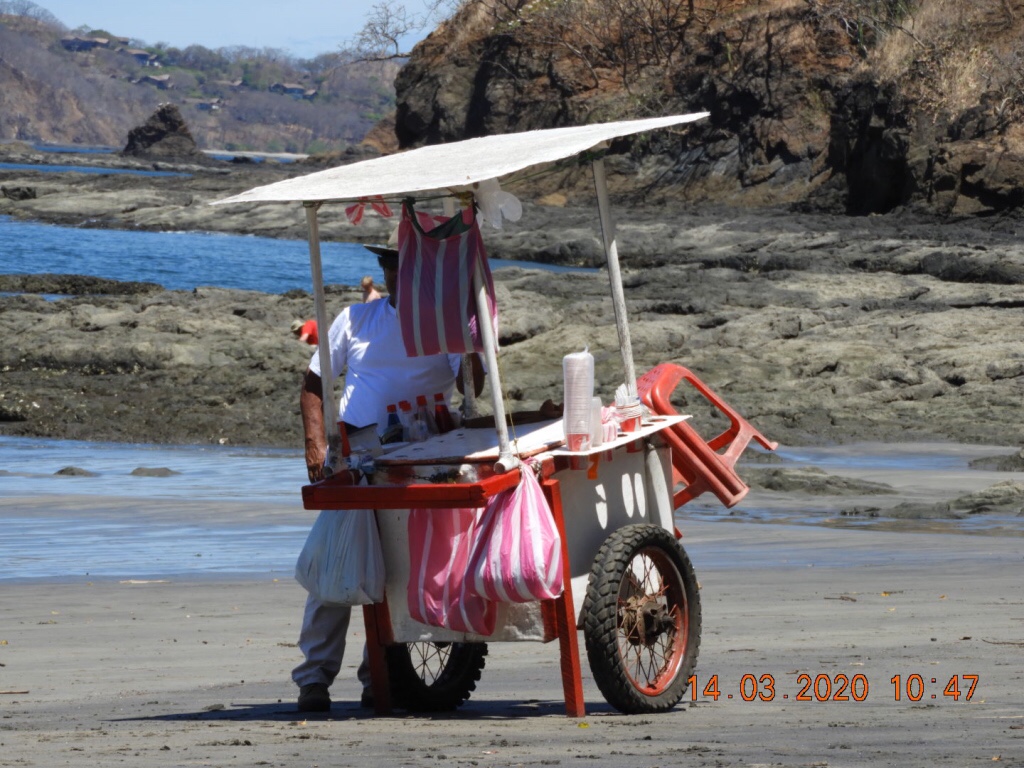
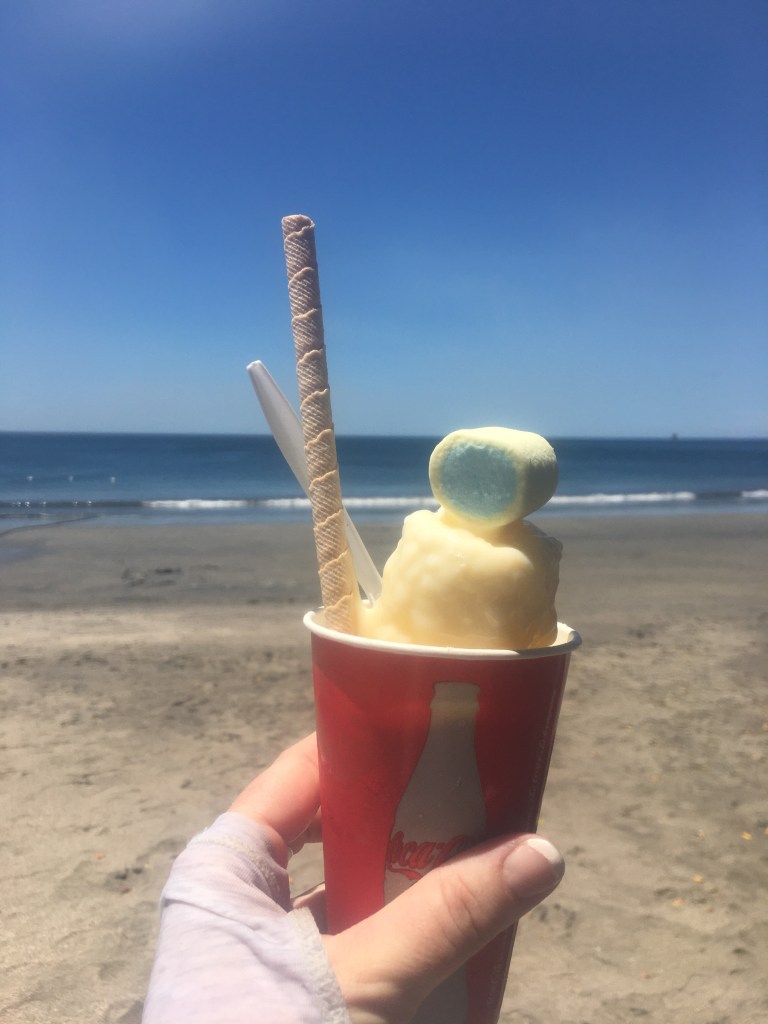
On this day, we enjoyed an iced snow cone made by a local walking up and down the beach pushing a cart that had a huge ice chunk inside. He would shave the ice into a cup, and then mix it with powdered milk, cherry syrup, coconut cream, and sweetened condensed milk! (Garnished with a wafer cookie and a marshmallow).
Unlike anything I have ever had before!
On Saturday night we went for dinner at the beachside restaurant of Aquasport, and it was one of the best meals of the trip. We shared easily the most delicious onion rings we have ever eaten and then all had different dinners, from Mahi Mahi Chaufa rice to Tuna Poke, all the while listening to live music and watching a group of kids enjoying the huge tree swing in the middle of the restaurant’s courtyard. Carly and mum had a bit of a swing before we walked back to our hotel along the shore, enjoying the smell of a couple bonfires locals had going on the beach, and the vast clear sky of stars.
Last sunset together in Costa Rica (photo courtesy of my sister)
As I bid my family farewell on Monday morning, they jokingly threatened to kidnap me and bring me back on their (likely) full flight home. I was definitely a little bit nervous to stay another week solo with everything escalating and I promised to keep in touch and stay informed about airlines and airports and border closures and look into the possibility of getting an earlier flight back just to be safe. Until then, I would get as much sun and beach time as possible before heading back to winter and self-isolation!




 Fiona -looking pretty cool as we sped down the road.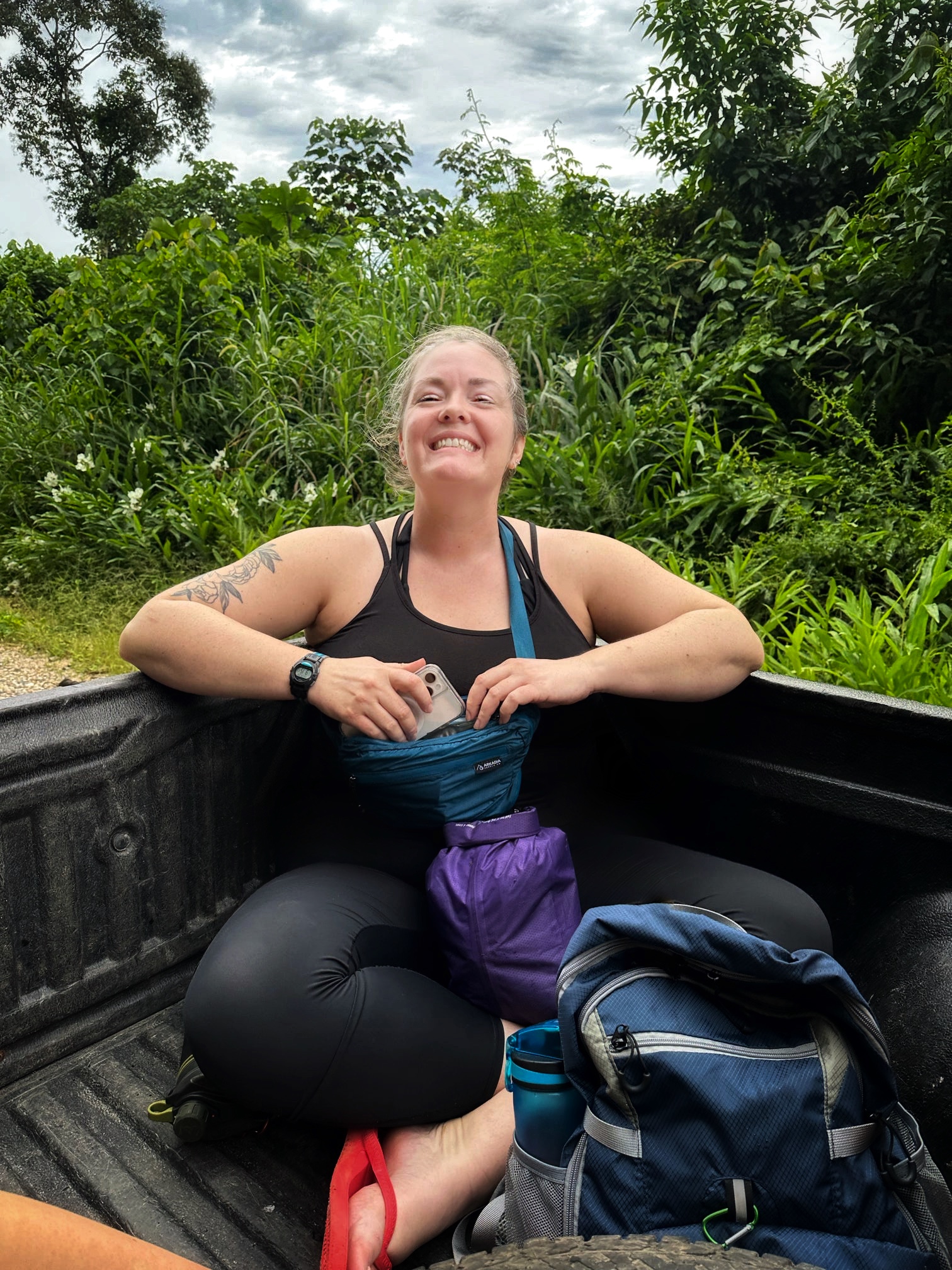
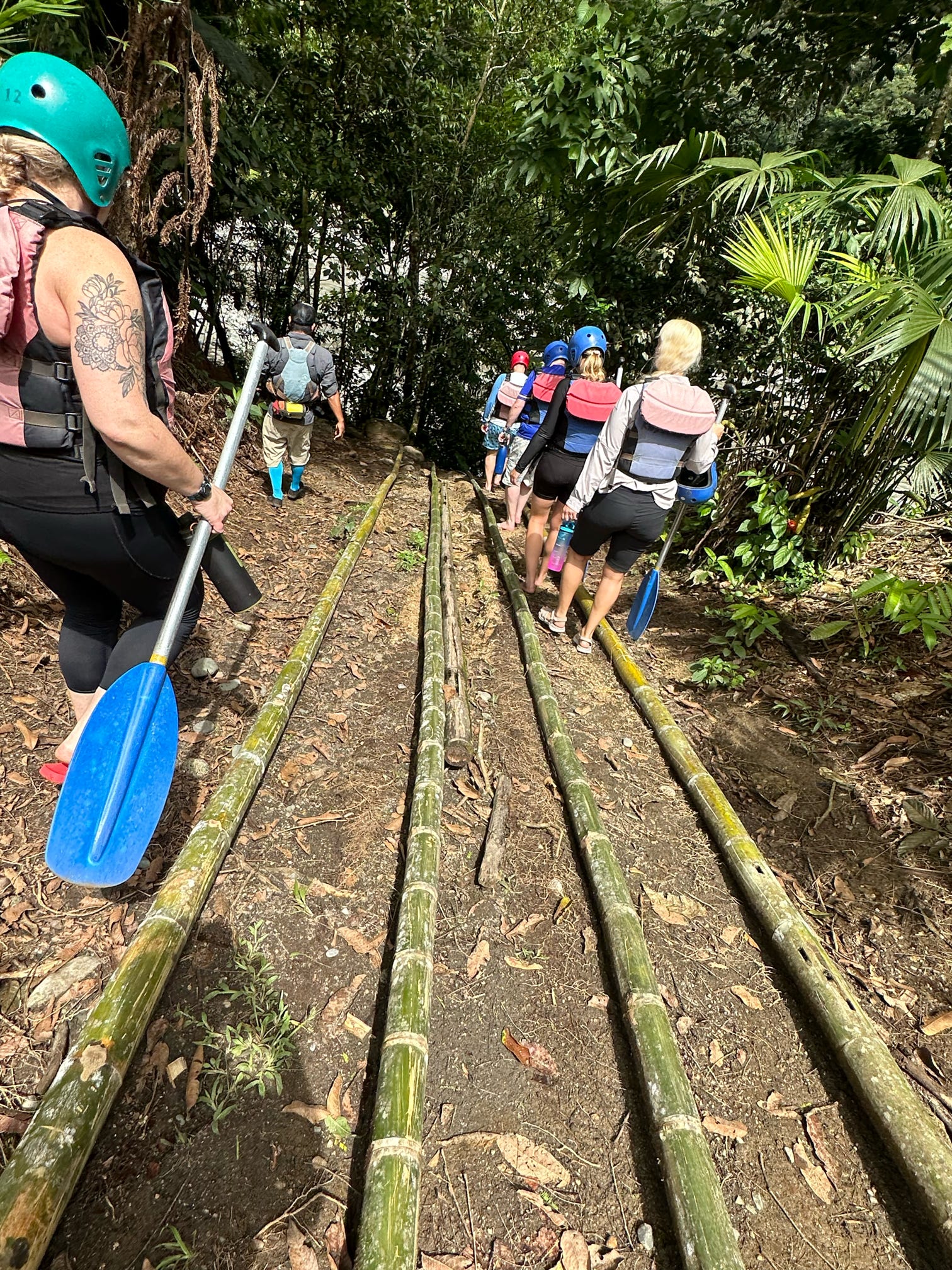 These bamboo poles were the “chute” for the put in location to get the rafts easily to the water.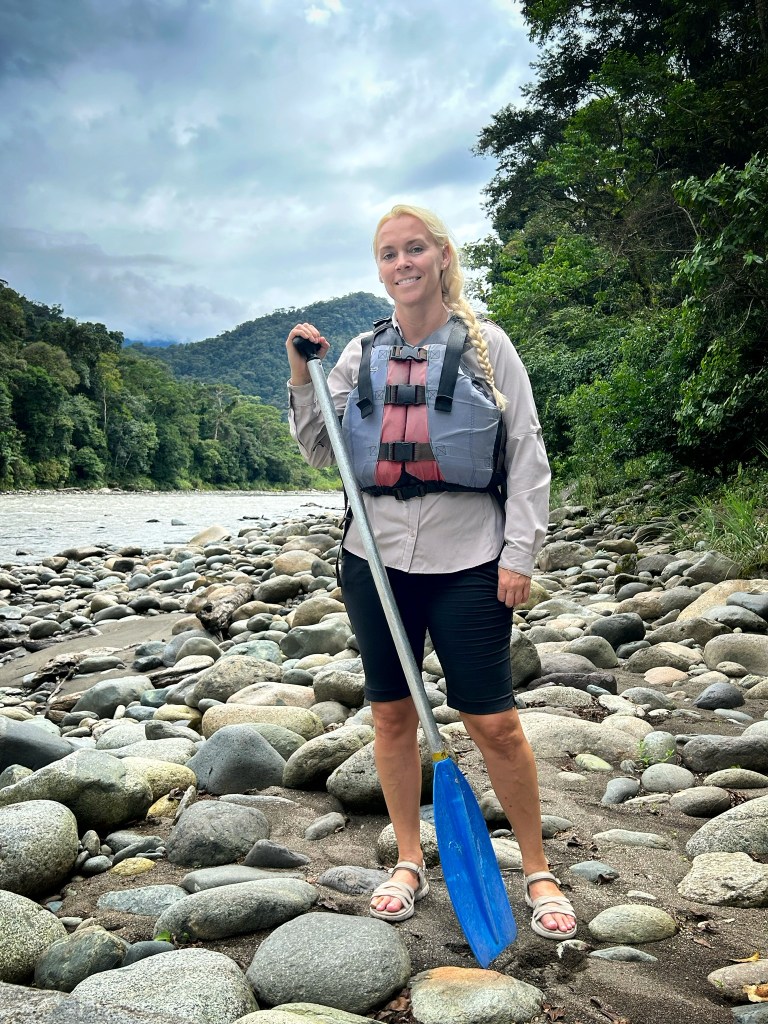

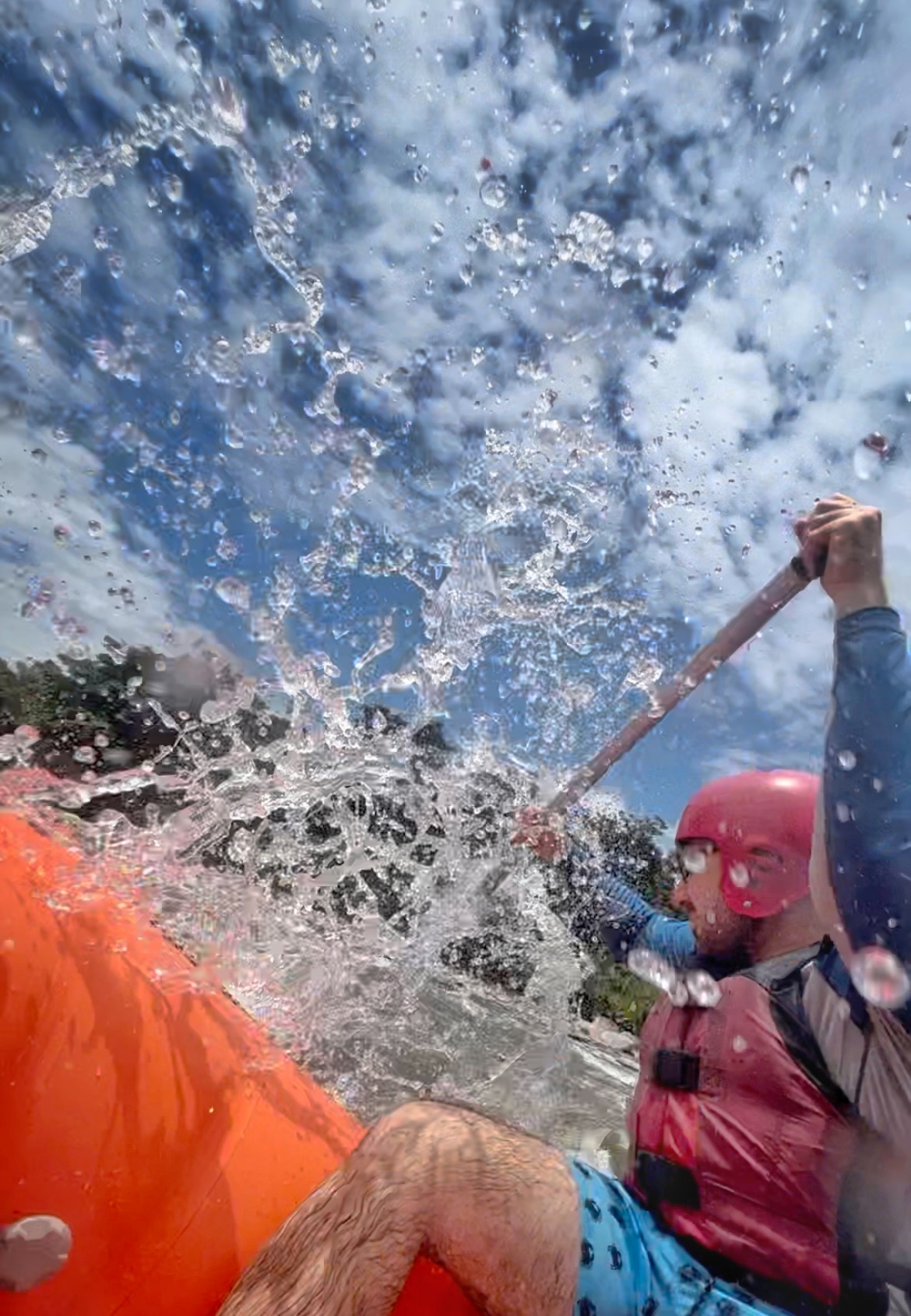


 Ryann took this gorgeous shot of the lunch spot and souvenir stand.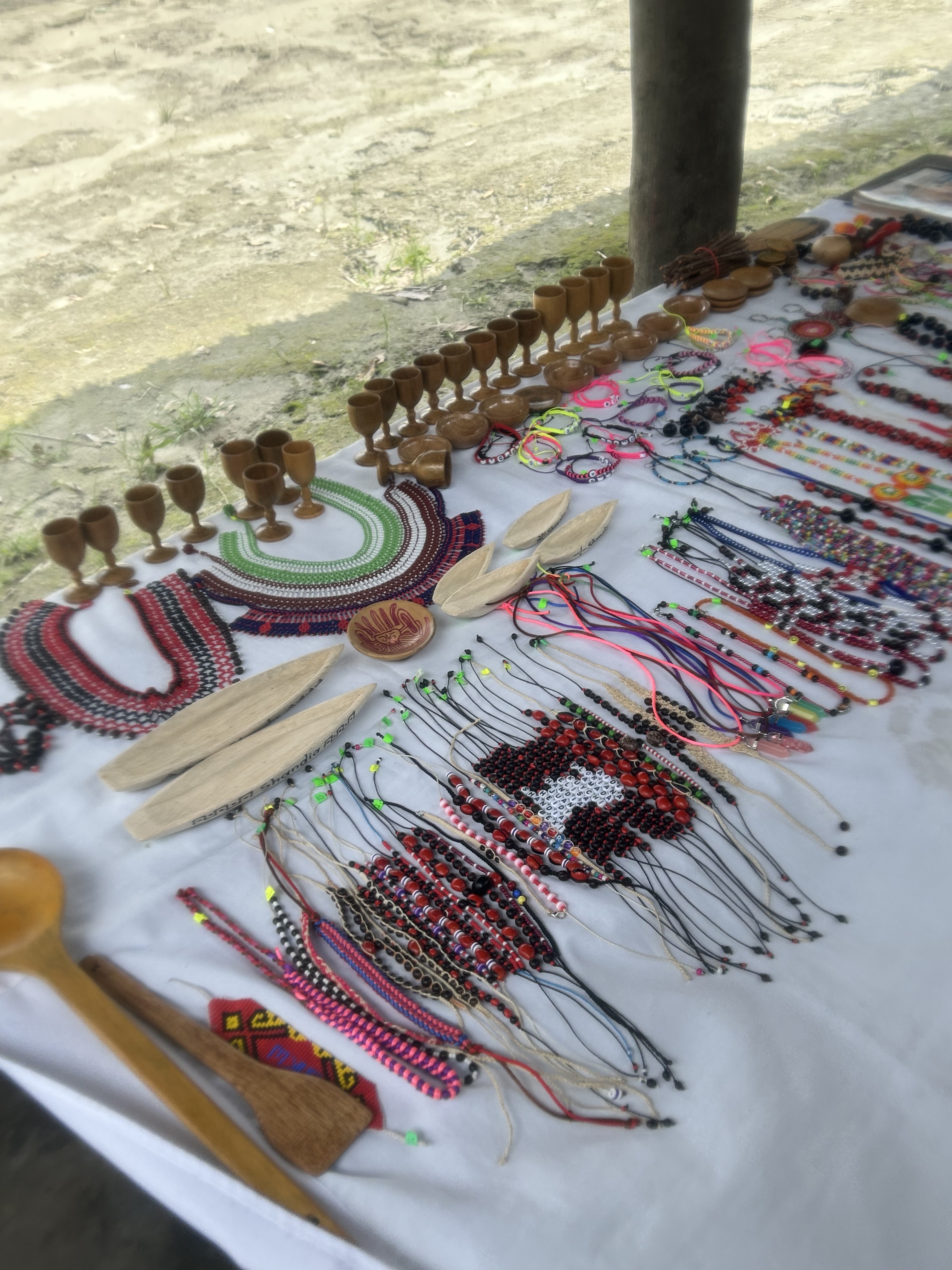


 the bamboo here was some of the tallest I have ever seen.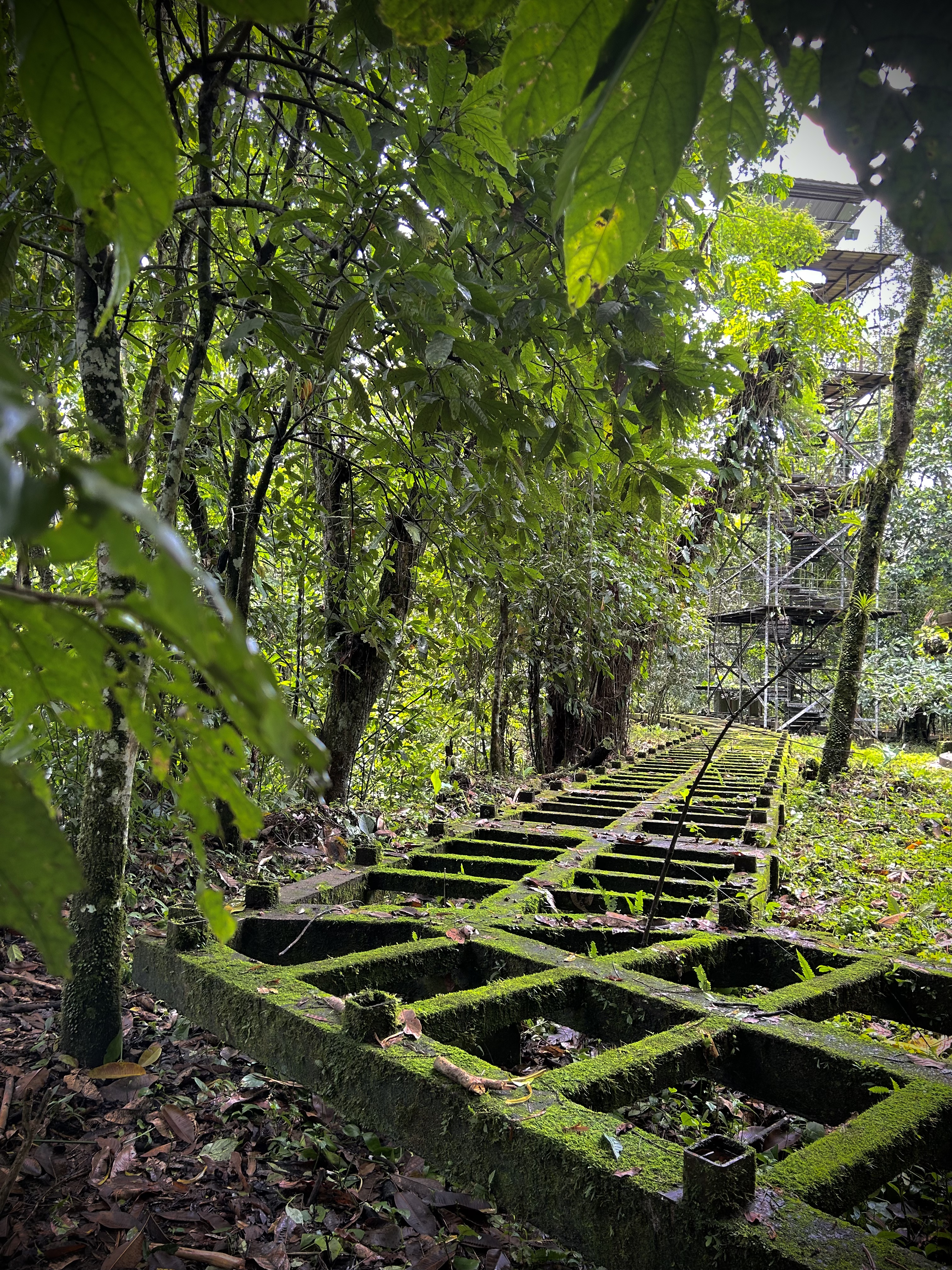






























 Nothing But Blue Skies